The study investigates the impact of the Directed Reading Thinking Activity (DRTA) strategy combined with VEE diagrams on improving students’ reading skills. Conducted at Universitas Muslim Nusantara Al Washliyah, the research focuses on semester II English students, utilizing a true experimental design. The findings reveal that integrating these methods significantly enhances students’ cognitive processes in reading comprehension. This research is essential for educators seeking innovative strategies to boost reading skills in English language learners.

Key Points

  • Examines the effectiveness of DRTA strategy on reading skills
  • Utilizes VEE diagrams to enhance cognitive processes
  • Conducted with semester II English students at UMN Al Washliyah
  • Employs a true experimental design for reliable results
Ephin Aluni
Author:Alfitriana Purba, Asnarni Lubis
9 pages
Language:English
Type:Research Paper
Ephin Aluni
Author:Alfitriana Purba, Asnarni Lubis
9 pages
Language:English
Type:Research Paper
367
/ 9
© 2019 |Published by Scholars Middle East Publisher, Dubai, United Arab Emirates 47
Saudi Journal of Humanities and Social Sciences
Abbreviated Key Title: Saudi J Humanities Soc Sci
ISSN 2415-6256 (Print) | ISSN 2415-6248 (Online)
Scholars Middle East Publishers, Dubai, United Arab Emirates
Journal homepage: http://scholarsmepub.com/sjhss/
Original Research Article
The Effect of Integrating Directed Reading Thinking Activity (DRTA)
Strategy with VEE Diagram on Students’ Reading Skill
Alfitriana Purba
*
, Asnarni Lubis
Department of English Education, Faculty of Education and Teacher Training, Universitas Muslim Nusantara Al Washliyah, Indonesia
*Corresponding author: Alfitriana Purba | Received: 02.01.2019 | Accepted: 11.01.2019 | Published: 30.01.2019
DOI:10.21276/sjhss.2019.4.1.7
Abstract
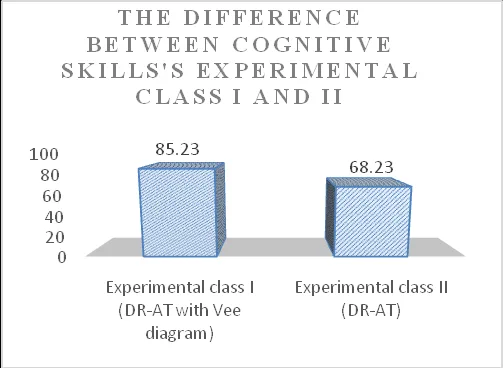
This research deals with the effect of integrating Directed Reading Thinking Activity (DRTA) strategy with vee diagram
on students’ reading skill. This research was conducted in UMN Alwashiliyah Medan in which the population was all
semester II English students. Two classes with 30 students for each were selected as the sample of the research. To
achieve the aims of the research, quantitative research method was applied with true experimental design. Vee diagram
test was used as the instrument of the research. The study showed that the integration of Directed Reading Thinking
Activity strategy with Vee diagram significantly affected students’ reading skill. The data obtained also showed that
implementing Directed Reading Thinking Activity with Vee diagram significantly affected students’ reading skill.It
could be inferred that as long as cognitive skill was activated by Directed Reading Thinking Activity with Vee diagram,
students’ reading skill will be higher since reading is a cognitive process in which the students have to increase their
cognitive aspect into (C
5
) synthesis and (C
4
) analyze in order to be able not only to understandbut also to interpret the
text well.
Keywords : Cognitive process, Directed Reading Thinking Acitivity (DR-TA), reading skill, Veediagram, synthesis and
analyze.
Copyright @ 2019: This is an open-access article distributed under the terms of the Creative Commons Attribution license which permits unrestricted
use, distribution, and reproduction in any medium for non-commercial use (NonCommercial, or CC-BY-NC) provided the original author and source
are credited.
INTRODUCTION
Reading is a cognitive process which requires
systematic activities undertaken by both lecturers and
students in order to achieve reading comprehension
satisfactorily [1]. While students are being in reading
process, they absolutely are experiencing the cognitive
process. According to Gleason and Ratner [2] readinng
is cognitive process since general cognitive process are
involved in learning to read as well as in all learning, in
which if the cognitive process experiences dysfunction,
it absolutely causes reading dissability. Gleason and
Ratner [2] also stated that prior knowledge, coding and
encoding system, associative learning, and serial
memory are the essential elements of cognitive process
situation during reading comprehension. Hence, the
cognitirve process the students actively process all the
information during the learning process through the
effort of students in storing the informations, and
relating those with the previous knowledge they have
[3]. Keat and Ismali [4] pointed out that cognitive
process becomes relevant to performance in reading
activities. The lecturers have three essential tasks for
teaching reading, namely; investigating students’ need
to decide the appropriate strategy [5]; creating the
innovative strategies to activate the students’ cognitive
and giving the students the opportunites to involve in
reading process or in short, strategies before, during and
after reading activities [6]. On the other hand, the
students need to also understandthe command; make
use of inferences and ideas given; understand author’s
motives and activate their cognitive skill in order to
scrutinize validity of claims in a critical sense [7].
Constructivism theory stated that all students have skills
to discoverthe problems found during reading process
[8-10]. In other words, the lectures have to let the
students involve actively in all the processes through
engaging them during reading activites. EFL students’
reading comprehension skill in UMN
AlwashliyahUniversity is unfortunately still considered
below the average [11]. The study also found that
students in Muslim Nusantara University who take
reading subject are not interested in reading and seem
less enthusiasticand being more passive. This is
possibly caused bylack of activities which involve the
students in order to explore, to interact, and to go
deeper into systematic reading activities. The lecturers
in UMN Al Washliyah are also found to be
implementing the conventional teaching method as
reflected in their questioning skills in the which mostly
inquires on recalling information [12]. It is undeniable
that this case as discussed by Ashadi and Lubis [12] and
Purba and Prawiyata [11] affects the students’ reading
Alfitriana Purba & Asnarni Lubis., Saudi J Humanities Soc Sci, January 2019; 4(1): 47-55
© 2019 |Published by Scholars Middle East Publishers, Dubai, United Arab Emirates 48
achievements as seen from the final examination scores
of academic year 2016-2017 in which the data shows
that there are only 10% students who were graded “A”
with the score range from 90 to 100, 30% students
achieved “B” with thescore range from 79 to 70 and the
rest of students only had grade C with the score from 69
to 65.
The enrichment of students’ reading
comprehension is urgently needed by English students
in UMN Alwashliyah through the implementation of
appropriate teaching strategy. Thus, the reading class
will be more productive if it is taught by the integration
of Directed Reading Thinking Activity (DRTA) with
Vee Diagram. DRTA strategy is expected to meet
students’ needs because it will not only give the
opportunities for students to involve in reading
activities but it will also let the students to get absorbed
into the texts and to have a direct learning experience
[13-15]. The implementation of Directed Reading
Thinking Activity will be applied with Vee Diagram.
The use of Vee Diagram developed by Gowin is
assumed to help the students to take notes
systematically when they accomplish reading or writing
activities through providing relatable keywords [16].
According toWirahati [17] the term of Directed
Reading Thinking Activity (DRTA) was developed
from Directed Reading Thinking (DRA)strategy which
only include the reading activity without allowing
students to pick up the texts that are really into the
students’ interest.Directed Reading Thinking Activity
(DRTA)pays an attention to students’ reading text in
which the students are blended with [18-20]. Stauffer
[21] who developed this strategy in 1969 also stated
that Directed Reading Thinking Activity (DRTA)is
teaching strategy conducted by the teacher in the
classroom which aim is to motivate both students’
effort and focus through engaging them in an
intellectual activity. Besides, the teacher also guides the
students to formulate the problem, to process the
information, and to evaluate provisional answer [5].
Lubis [22] also stated that Directed Reading Thinking
Activity (DRTA) focuses on how the students are able
to blend with the text they read because the students
will be asked to form the prediction and to prove the
prediction itself during reading process. Furthermore,
Directed Reading Thinking Activity (DRTA) strategy
involves students actively in reading activities and
relate them to the text which content is on daily routines
or fictional stories [23]. Other benefits of implementing
Directed Reading Thinking Activity (DRTA) strategy
are;
Directed Reading Thinking Activity (DRTA)
involves the students in all reading activites
directly in which the students are not only expected
to gain the knowledgebut also to discover reading
materials which further train them to be
independent readers and learners. Moreover, it also
improves students’ referential and inferential
reading comprehension skills [5, 24, 25].
Directed Reading Thinking Activity (DRTA)
motivates the students to apply all the reading
activities experienced in the daily life as well as to
significantly affect their fluency [26].
The implementation of Vee diagram found by
Gowin is the systematic note that helps the students to
collect the information taken from some sources, such
as; books, magazines, articels, papers, handouts, and
forum discussions [27]. Then, all the infomation found
will be analyzed and formulated more easily. Thus, the
students will have appropriate answer for the problems
they have formulated Vee diagrams are created from
four essential questions that help the students to find out
the correct answers [16], namely:What are the
questions?; What are the keywords?; What inquiry
method will be implemented?; Are there any other
claims?; How are the scores? In order to make the
students comprehend Vee diagram, there are five steps
carried out [28] namely:
Starting with the concept, object, and events.
Concept and object are the things they understand,
and events are introduced by the lecturers
Creating the question. Question is used to construct
the knowledge which is taken from the concepts,
objects, and events noticed. Thus, the students are
asked to consider the proper notes that are relatable
with the questions.
Transforming the note and knowledge claims. It is
used to organize all the answers in order to solve
the question formulated.
Describing principle and theory; the students are
expected to understand the text they have read, and
to explain the relationship between concept and
answer found in details.
Claiming the score
Moreover, Anderson [29] argued that reading
is a recoding and decoding process in which the readers
in the decoding process have to create the logical
transformation from written words to oral language
meaning. Winarsih [29] also stated that reading is the
process of comprehending and constructing the
meaning of the text. The meaning formed are the result
of some reading interaction between reader’s schemata
and all facts, knowledge, and information found in the
reading text. The interactions are feedback interaction,
active interaction, and dynamic interaction. All these
interactions relates each other to achieve
comprehensive understanding of the text. Normally, if
the readers have a good schemata, they will easily
understand the text since they have had a previous
informationwhile the text is only kind of visual
information that support their understanding of the text.
Since reading is cognitive process, reading skill has a
close relationship with cognitive ability. Then, Suprapto
and Rahmwati [30] revealed that the use of Vee
diagram significantly affected on learning outcomes,
logical reasoning and intellectutal development.

Alfitriana Purba & Asnarni Lubis., Saudi J Humanities Soc Sci, January 2019; 4(1): 47-55
© 2019 |Published by Scholars Middle East Publishers, Dubai, United Arab Emirates 49
According to Roobins [29], there are two kinds
of ability, namley; 1. Intellectual ability, it is a kind of
ability that is showed through mental activities, 2.
Physical intellectual, it is kind of ability that is come
out from physical activites. The students with good
cognitive ability will be able to construct their own idea
based on the information they have read in the text. The
enhancement of students’ reading skill always come
along with the cognitive ability which can be improved
through the implementation of Directed Reading
Thinking Activity (DRTA) [31-33]. This strategy is
expected to affect students reading cognitive skill as
the students will experience three reading processes;
looking for the text they are interested in, finding out
the problems (or the difficult sentence) of the text, and
thinking of the answers of the problems [5]. Directed
Reading Thinking Activity (DRTA) strategy is
integrated with Vee diagram is hypothesized to help
students effectively in improving their cognitive skill
during reading process. In short, reading process will be
more systematically and the students may apply this
integration not only in the reading class but also in the
daily life which leads to character building [18, 21, 31-
33].
Similarly, Anggreni, Marhaeni and Dantes
[34] pointed out that the success of learning process
could be achieved by applying Directed Reading
Activity Thinking as the students would be able to
explain the steps of academic discovery. Then, the
research conducted by Ulfah [35] concluded that
Directed Reading Activity Thinking is an appropriate
strategy to increase students’ reading skill in
Muhammadiyah 7 Junior High School Surakarta
academic year 2015/2016. In this study, the students’
were able to identify the main problem of the text, to
decide the aim of the text, to find out the information
needed either implicitly or explicitly, to change the use
of pronoun and to guess the difficult words.
Considering the literature presented above, particularly
on the significance of the study to the students’ reading
skill improvement in UMN Al Washliyah, therefore, the
objectives of the research is to investigate the
effectiveness of students’ reading skill by implementing
the integration of Directed Reading Activity Thinking
(DR AT) with Vee diagram.
RESEEARCH METHODS
The aim of this research was to investiagte
whether the implementaion of Directed Reading
Activity Thinking(DR AT) with Vee diagram
affected on students’ cognitive skill in reading process
or not. To achieve this aim, this research was carried
out by using quantitaive research method with true
experimental design. According to Sugiyono [36] true
experimental design allowed the researcher to decide
both experiment and control classes randomly so that
experimental class (O
1
) would be given a treatment,
while control class (O
2
) would not be treated as well as
experimental class through posttest-only control design
as visualized as follows;
Table-1: True Experimental Research Design
Classes
Treatment
Postest
Experimental Class
X
O
1
Control Class
-
O
2
Clearly, the table above showed that postest
was used to investigate the effectiveness in which
experimental class (O
1
)was taught by the
implementation ofDirected Reading Activity
Thinkingwith Vee diagram, while control class was
treated by Directed Reading Activity Thinking.
Moreover, the English proficiency of semester II
English students academic year 2016-2017 was divided
into intermediate and advanced levels, yet most
students still achieved intermediate level in the second
year. This immediate fact led the researcher to select
semester II English students as the population of the
research, then, two classes of semester II English
students which were 30 students for each class were
chosen as the sample of the research by applying
purposive sampling technique. According to Sugiyono
[36] purposive sampling technique was one of non-
probability sampling technique in which the reasearcher
decided the sample of the research based on particular
consideration in which these two classes urgently need
a close attention and an appropriate treatment for
gaining the English skill. Furthermore, in this research,
there were two independent variables, namely;
Directed Reading-Active Thinking and Vee diagram
(X), while there was one dependent variable, namely;
studens’ cognitive skill (Y). Independent variables were
treated as treatment variableand dependent variable was
treated as moderator variable [36], thus, in this research
Directed Reading-Active Thinking and Vee diagram
(X) were highly expected to significantly affect on
students’ reading skill. then the data collection was
taken from students’ final Vee diagram text which had
been made by the students.The instruments of the
research was the students’ Vee diagram note in which
the students were asked to create their own Vee
diagram as soon as they have read the text. All the
students’ Vee diagram note would be scored by using
valid indicators of cognitive process of reading,
namely; Comprehending the text (feedbcak interaction),
Readers’ schemata and syntatic knowledge (Dynamic
interaction), Retelling the information of the text,
Relating the idea of the text with the conclusion [37]
[see Appendices-1]. Then, All the data found was
analyzed with normality test (one sample Kolmogorov
Smirnov) to obtain whether all the test used had
distributed normally or not, then, it was continued with
/ 9
End of Document
367

FAQs

what is the effect of integrating directed reading thinking activity (drta) strategy with vee diagram on students’ reading skill

The study investigates the impact of integrating the Directed Reading Thinking Activity (DRTA) strategy with the Vee Diagram on students' reading skills.

Findings indicate that this integration significantly enhances students' cognitive abilities related to reading comprehension. Specifically, the combination of these two strategies helps students to:

  • Engage actively with the text.
  • Improve their analytical skills.
  • Enhance their ability to synthesize information.

how does the directed reading thinking activity (drta) strategy improve reading skills

The Directed Reading Thinking Activity (DRTA) strategy is designed to enhance students' reading skills by actively involving them in the reading process.

By encouraging predictions and critical thinking, DRTA allows students to:

  • Formulate questions about the text.
  • Verify their predictions as they read.
  • Reflect on their understanding and interpretations.

This active engagement leads to a deeper comprehension of the material, making reading a more interactive and thought-provoking experience.

what is a vee diagram and how is it used in reading comprehension

A Vee Diagram is a visual tool used to organize information and enhance understanding during the reading process.

In the context of reading comprehension, it helps students to:

  • Identify key concepts and ideas.
  • Make connections between different pieces of information.
  • Structure their thoughts systematically.

This structured approach not only aids in comprehension but also encourages critical thinking and synthesis of information, which are crucial for effective reading skills.

what are the findings of the study on drta and vee diagram integration

The study found that integrating the Directed Reading Thinking Activity (DRTA) with the Vee Diagram significantly improved students' reading skills.

Specifically, students demonstrated enhanced abilities in:

  • Comprehending and analyzing texts.
  • Constructing conclusions based on their readings.
  • Relating ideas from the text to their prior knowledge.

This integration not only boosted their reading scores but also fostered a more engaging learning environment.

how does the integration of drta and vee diagram affect cognitive skills

The integration of the Directed Reading Thinking Activity (DRTA) and Vee Diagram positively affects students' cognitive skills.

By activating higher-order thinking processes, students are able to:

  • Analyze and synthesize information more effectively.
  • Engage in deeper discussions about the text.
  • Enhance their overall reading comprehension.

This method encourages students to think critically and independently, which is essential for academic success.

what strategies are used in the drta method

The Directed Reading Thinking Activity (DRTA) method employs several strategies to enhance reading comprehension.

Key strategies include:

  • Predicting content based on titles and headings.
  • Asking questions before, during, and after reading.
  • Summarizing key points to reinforce understanding.

These strategies help students engage with the text and develop a more profound comprehension of the material.

how can vee diagrams be applied in educational settings

Vee Diagrams can be effectively applied in educational settings to facilitate learning and comprehension.

Applications include:

  • Organizing thoughts during reading assignments.
  • Visualizing connections between concepts in science or literature.
  • Encouraging collaborative learning through group discussions.

This tool promotes active learning and helps students structure their knowledge systematically.

what is the role of cognitive skills in reading comprehension

Cognitive skills play a crucial role in reading comprehension, as they enable students to process and understand information effectively.

Key cognitive skills involved include:

  • Memory retention for recalling information.
  • Critical thinking for analyzing text.
  • Problem-solving for interpreting complex ideas.

Developing these skills is essential for achieving higher levels of reading comprehension.

how does the drta strategy engage students in reading

The DRTA strategy engages students in reading by actively involving them in the learning process.

It encourages students to:

  • Make predictions about the text.
  • Ask questions to clarify their understanding.
  • Reflect on their reading experiences.

This interactive approach fosters a deeper connection with the material and enhances overall engagement.

what are the benefits of using vee diagrams in reading activities

Using Vee Diagrams in reading activities offers several benefits to students.

These benefits include:

  • Improved organization of thoughts and ideas.
  • Enhanced comprehension through visual representation.
  • Facilitated connections between new and existing knowledge.

Overall, Vee Diagrams support a more structured approach to understanding complex texts.