The study on bearing capacity of soft clay explores the effectiveness of geotextile and woven bamboo as reinforcement materials. It investigates how these materials enhance the load-bearing capacity of soft clay, which is known for its low strength and high settlement issues. The research includes physical property analysis of soft clay from Purwosuman Village, Central Java, and presents findings on how varying the depth and width of reinforcement impacts soil stability. This document is essential for civil engineering students and professionals interested in innovative soil reinforcement techniques.

Key Points

  • Examines the bearing capacity of soft clay using geotextile and woven bamboo reinforcement.
  • Analyzes physical properties of soft clay from Purwosuman Village, Central Java.
  • Demonstrates significant increases in load-bearing capacity with reinforcement.
  • Explores the impact of reinforcement depth and width on soil stability.
Dhruva Patel
Author:Anto Budi Listyawan
7 pages
Language:English
Type:Research Paper
Dhruva Patel
Author:Anto Budi Listyawan
7 pages
Language:English
Type:Research Paper
Dhruva Patel
Author:Anto Budi Listyawan
7 pages
Language:English
Type:Research Paper
221

Bearing Capacity of Soft Clay Reinforced by Geotextile and Woven Bamboo pdf

/ 7
*
Corresponding author: Anto.Budi@ums.ac.id
Bearing Capacity of Soft Clay Reinforced by Geotextile and
Woven Bamboo
Anto Budi Listyawan
1,*
, Agus Susanto , Sugiyatno , Qunik Wiqoyah and Luthfi Syahrul Muliawan
1
Civil Engineering Deparment, Universitas Muhammadiyah Surakarta, Jl. A. Yani Tromol Pos I Pabelan Surakarta, Indonesia
Abstract. Bearing capacity is a value used to determine the ability of soil to withstand the pressure and load
of a construction. One of the methods to increase bearing capacity of soft clay soil is use geotextile material
as reinforcement material. The use of geotextile requires high operational costs, so it needs alternative
replacement materials with lower prices and easily available, one of which is woven bamboo. The soft clay
soil came from Purwosuman Village, Sidoharjo District, Sragen Regency, Central Java with a planned water
content of 60.00% and was saturated. The parameters studied were the effect of depth variation using a footing
width ratio of 100 mm (B) there are 0.5B, 1B, 1.5B, and 2B accompanied by the width of reinforcement at
each depth variation based on the theory of pressure distribution in the soil 2 Vertical: 1 Horizontal. This
study conducted physical properties of soil and loading frame testing. Based on the test, the maximum load
retained by the soil with reinforcement is greater than the soil without reinforcement by 2455.71%. From the
results of the analyses reviewed, the greater the dimension of the reinforcement width, the greater the
maximum load value that will be able to withstand.
1 Introduction
Soil is the foundation of a construction structure. Soil
consists of solid mineral grains that are not chemically
bonded to each other and of organic materials that have
decomposed and formed solid particles containing liquid
and air that fill the spaces between the solid particles
[1][2][3]. Based on its adhesive properties, soil can be
classified into 3 types, namely cohesive soil, non-
cohesive soil, and organic soil. One soil that is cohesive
or has adhesive properties between its grains is soft clay.
Soft clay is a group of particles that have weak inter-
particle bonds and is formed from the physical and
chemical weathering of rocks [4]. These clay soils have
disadvantages, especially in terms of low bearing capacity
and large settlement, causing cracking and collapse in
construction [5].
With these problems, bearing capacity is a factor that
needs to be considered in construction work. The bearing
capacity of the soil is the ability of the soil to safely
withstand the pressure or load of the building on the
ground without causing shear collapse and excessive
settlement [2][6][7][8]. To overcome this problem,
materials are needed that can improve the quality and
increase the bearing capacity of the soil to prevent large-
scale settlement which results in significant collapse
[9][10]. One method of physically improving soft clay
soil is using geotextile material, which is one type of
geosynthetic that is used quite widely in the field of civil
engineering [11]. The use of geotextile as one of the
applied soil improvement methods requires relatively
high implementation costs. Considering this problem, an
alternative material with a lower price and easily available
is needed. A substitute for the geosynthetic base material
is the use of bamboo which is processed into a patterned
webbing [12][13].
Several similar studies related to soil improvement
using the same composite material have been conducted.
Similar research has been conducted on [4] [12] which
explained that the value of soil bearing capacity is
influenced by the use of woven bamboo combined with
bamboo grids as an alternative reinforcement in soft clay
soils so that the reinforcement can cut the spread of soil
stress. As a result, the decrease that occurs becomes small.
Research conducted [14][15] explained that
reinforcement with bamboo-geotextile composites
showed higher bearing capacity and lower settlement than
without reinforcement. The woven bamboo also affects
the increase in soil-bearing capacity. The square pattern
showed more influence than the parallel pattern. The
increase in ultimate load decreases with bamboo spacing.
The maximum increase in ultimate load of 127.3% was
obtained from square and parallel pattern bamboo, with a
bamboo spacing ratio of 0.5 and an embankment ratio of
0.25. Research conducted [13][16] explains the value of
soil bearing capacity with reinforcement is higher than
that without reinforcement and the influence of variations
in the width of reinforcement and the number of layers of
reinforcement. The BCR (Bearing California Ratio) value
increases when the number of reinforcement layers and
width are added. In general, the use of reinforcement
layers in the form of bamboo grids and woven bamboo
increases the bearing capacity of soft clay soils. Research
conducted [17][18] explains that the bearing capacity of
ICETIA 2023
, 1
2004
(2024)
E3S Web of Conferences
https://doi.org/10.1051/e3sconf/202451712004
517
© The Authors, published by EDP Sciences. This is an open access article distributed under the terms of
the
Creative
Commons
Attribution
License 4.0
(http ://creativecommons.org/licenses/by/4.0/). s
1
1
11
cohesive soil increases due to the effect of placing woven
bamboo as a reinforcement method. This can be seen from
the smaller decrease when the amount of woven bamboo
is added. Research conducted [9] concluded that bamboo
tarpaulins and grids used as alternative peat soil
reinforcement materials can increase the ultimate bearing
capacity and BCR (Bearing California Ratio) value.
Variations in the width of the reinforcement always
showed an increase in the bearing capacity of the soil.
From research [19][20], the maximum CBR value
obtained was 5.42% in the variation of 3 layers with 5
layers of compaction 56 blows. From this research, it is
also concluded that the CBR value of soil with woven
bamboo reinforcement is higher than that of bamboo grid
reinforcement.
As is known, soft clay soil is one of the problematic
soils due to its low bearing capacity and excessive
settlement in terms of its specifications. Therefore, there
is a need for parameters to overcome this. The research
parameter carried out is testing the bearing capacity of the
soil against the maximum load and settlement on a footing
as a load pressure area that was placed on top of the soft
clay layer media with the addition of geotextile and
woven bamboo composite materials. The objective is the
value of the bearing capacity of soft clay soil with
reinforcement will be much greater when compared to
soft clay soil without reinforcement and the settlement
that occurs will be smaller. This research will test the
physical properties of soil including water content,
specific gravity, Atterberg limits, soil grain size analysis,
classification of soil, settlement value, and maximum
load. The soil samples used came from Purwosuman
Village, Sidoharjo District, Sragen Regency, Central Java
with a conditioning water content plan of 60.00% and
saturated. This research uses geotextile reinforcement and
woven bamboo with depth variations from the footing
width ratio (B) of 100 mm, namely variations of 0.5B, 1B,
1.5B, and 2B which are accompanied by the width of
reinforcement at each depth variation based on the theory
of pressure distribution in the soil 2 Vertical: 1 Horizontal
with loading method using loading frame. The variation
of depth and width of reinforcement will be searched for
the effective value that can withstand maximum load and
the settlement with various factors behind it.
2 Material and Methodology
The soft clay soil used came from Purwosuman Village,
Sidoharjo District, Sragen Regency, Central Java. The soil
was collected at a depth of ± 40 cm from the original soil
surface. The soil to be used is also in an air-dried
condition and passes sieve No.4 (4.750 mm). The physical
and mechanical tests were conducted in the Soil
Mechanics Laboratory at Universitas Muhammadiyah
Surakarta.
The physical properties of soft clay soil were
conducted which includes testing moisture content,
specific gravity, Atterberg limits, soil grain size analysis,
and soil classification. after obtaining the air-dried
moisture content from the physical test results of 10.67%,
water was added until the soft clay soil reached the design
moisture content of 60% and saturated for 96 hours. Then
put the soil into a 60 cm diameter drum and compact it
into 5 layers. Each layer was compacted by 200 blows
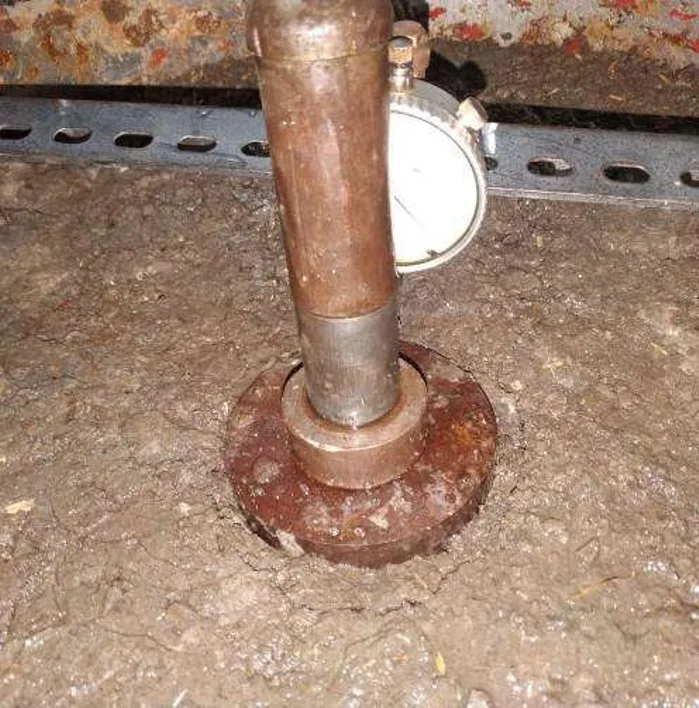
using a hammer’s proctor. Footing made from steel in the
thickness of 2 cm was placed on top of the soft clay soil
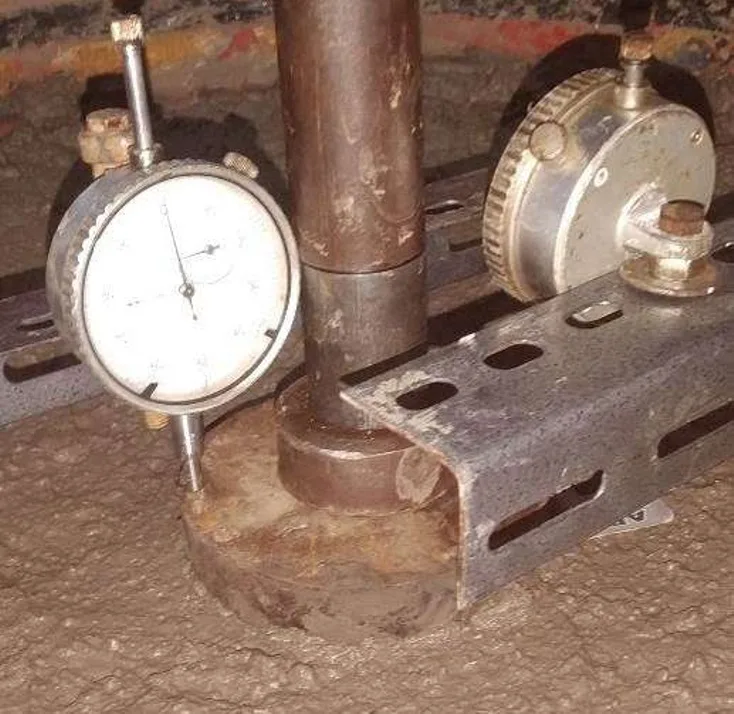
and tried to be in the middle of the drum. 1 dial was set
above the footing to determine the amount of vertical
settlement and 1 dial gauge above the ground to determine
the amount of waving that occurred. Tests were carried
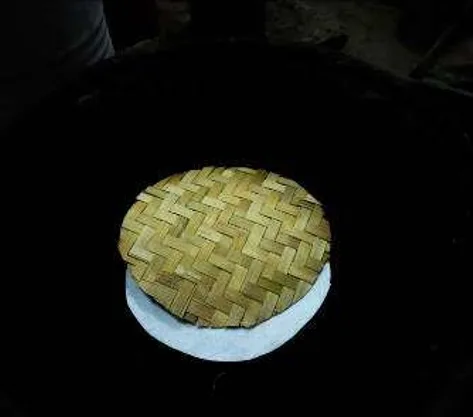
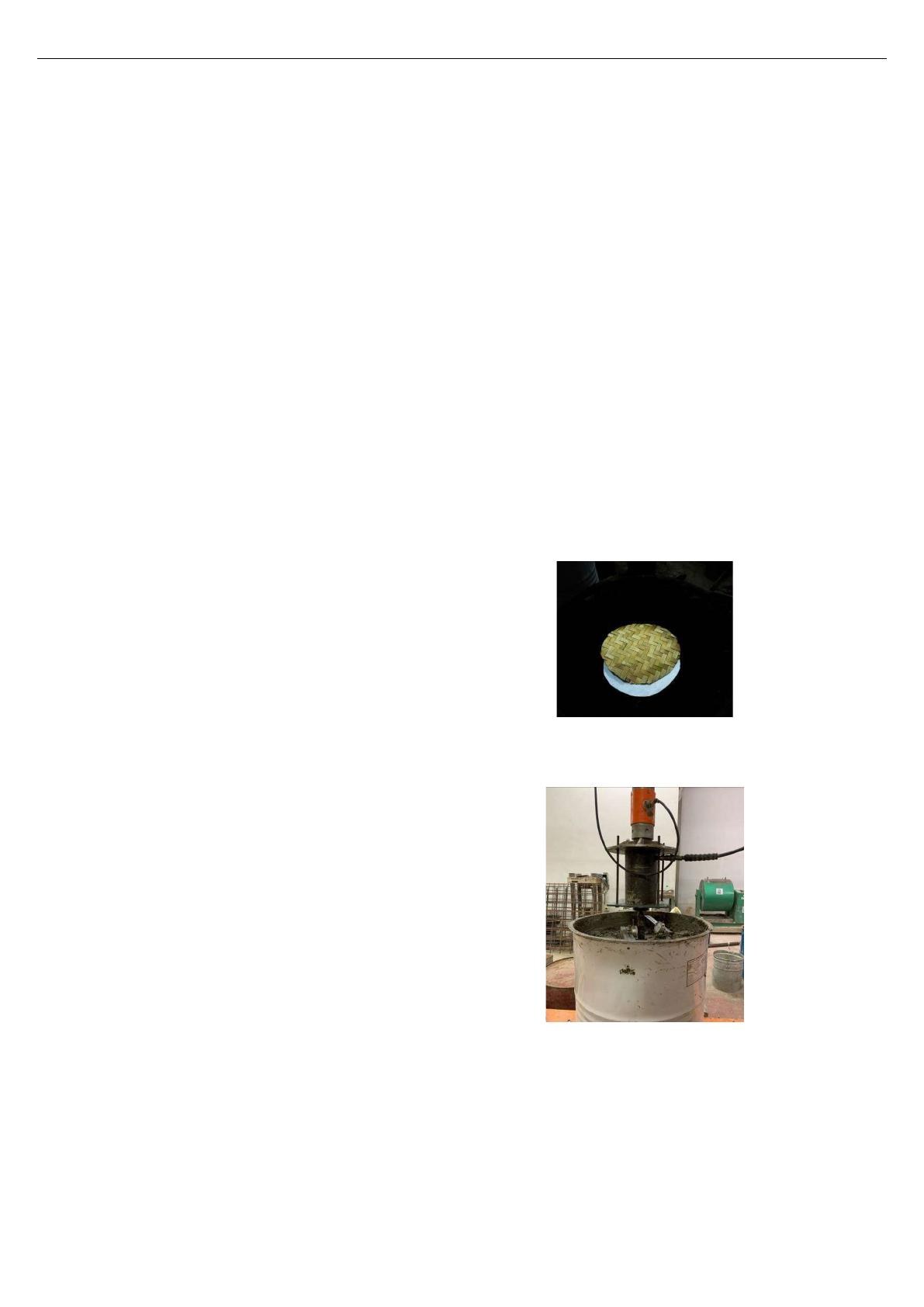
out both on soft clay soil media using geotextile
reinforcement and woven bamboo with predetermined
variations as shown in Fig. 1 and soft clay soil media
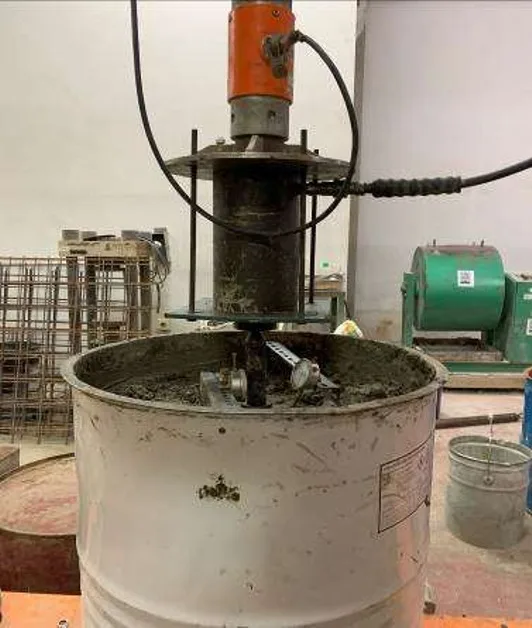
without reinforcement. Vertical loading tests were carried
out using a loading frame as shown in Fig. 2.
Observations are conducted on the load readings from the
strain meter display and 2 dial gauges then the results.
Based on the tests from several stages above, the results
of physical tests and loading tests are obtained and then
analyzed to make conclusions and suggestions on the
research that has been carried out.
Fig. 1. Geotextile and Woven Bamboo as Reinforcement on
Soft Clay Soil
Fig. 2. Testing design
3 Result and Discussion
3.1. Physical properties of soil
Testing the physical properties of clay soil consisted of
water content, specific gravity, Atterberg limits, grain size
Analysis, and soil classification. Water content testing is
conditioned until the soft clay soil water content reaches
the planned water content of 60.00%. The results of the
ICETIA 2023
, 1
2004
(2024)
E3S Web of Conferences
https://doi.org/10.1051/e3sconf/202451712004
517
2

soft clay soil physical properties test can be seen in Table
1.
Table 1. Physical Properties of Soft Clay Soil
Air Dry Moisture Content (%) 10.67
Moisture Content (%) 60.00
Specific Gravity 2.64
Liquid Limit (LL) (%) 65.39
Plastic Limit (PL) (%) 22.26
Plasticity Index (PI) (%) 43.12
Shrinkage Limit (SL) (%) 11.63
Passing No. 200 sieve (%) 65.00
AASHTO Classification A-7-5
USCS Classification CH
It can be seen in Table 1, that the value of air-dry water
content is 10.67% while for the conditioned design
moisture content of 60.00%, specific gravity is 2.64,
liquid limit is 65.39%, plastic limit is 22.26%, plasticity
index is 43.12%, shrinkage limit 11.63% and soil pass
sieve No. 200 of 65.00%. Meanwhile, according to the
AASHTO classification, it is included in group A-7-5, and
according to the USCS classification, it belongs to type
CH (non-organic clay with high plasticity).
3.2 General test result
This study aims to determine the value of settlement
(S) and maximum load (P) on footings placed on soft clay
media with geotextile reinforcement and woven bamboo.
The steel footing has a diameter (B) of 100 mm. The
variation of reinforcement width is adjusted to the theory
of pressure distribution 2 Vertical: 1 Horizontal and for
the variation of the depth of reinforcement in the soft clay
layer based on the parameters of the footing diameter ratio
(B) there are 0.5B (5 cm) with a reinforcement width of
15 cm, 1B (10 cm) with a reinforcement width of 20 cm,
1.5B (15 cm) with a reinforcement width of 25 cm, and
2B (20 cm) with a reinforcement width of 30 cm. The
research results are shown in Fig. 3 where the horizontal
axis shows the load value (kN), while the vertical axis
shows the settlement value (mm).
Fig. 3. Relationship between load and settlement
Based on Fig. 3, the addition of reinforcement with
geotextile and woven bamboo material can affect the
value of soil bearing capacity to withstand the maximum
load accompanied by an increase in the width dimension
of geotextile reinforcement and woven bamboo. This is
due to the reinforcement of geotextile and woven bamboo
so that the reinforcement can cut the spread of soil stress.
The larger the cross-sectional area of the reinforcement,
the more the stress in the soil will spread so that the stress
caused by the axial load becomes even, as a result, the
load that can be withstood is greater and the settlement
that occurs becomes small.
3.3 Maximum load increment
From the test results of soft clay soil improvement
using the addition of geotextile composite material and
woven bamboo with vertical loading, it can be seen that
the use of geotextile reinforcement and woven bamboo
will affect the value of the settlement and the maximum
load that can be held. Therefore, the improvement of soft
clay soil using the addition of geotextile composite
material and woven bamboo can increase the maximum
load to be greater. A comparison of the increase in the
maximum load of soft clay without reinforcement and
-15
-10
-5
0
0 5 10 15 20
Settlement ( mm )
Load ( kN)
Without Reinforcement 0,5B (15 cm) 1B (20 cm)
1,5B (25 cm) 2B (30 cm)
ICETIA 2023
, 1
2004
(2024)
E3S Web of Conferences
https://doi.org/10.1051/e3sconf/202451712004
517
3
/ 7
End of Document
221

FAQs

What is the primary method used to improve the bearing capacity of soft clay in this study?
The primary method used to improve the bearing capacity of soft clay in this study is the reinforcement with geotextile material and woven bamboo. The research explores the effectiveness of these materials in enhancing the soil's ability to withstand pressure and load from construction. The study shows that the use of these reinforcements significantly increases the maximum load the soil can bear compared to unreinforced soft clay.
What were the key findings regarding the maximum load capacity with reinforcement?
The study found that the maximum load capacity of soft clay reinforced with geotextile and woven bamboo increased significantly. For example, the maximum load without reinforcement was 0.70 kN, while with 0.5B reinforcement, it rose to 11.20 kN, reflecting a 1600% increase. Further variations in reinforcement width (1B, 1.5B, and 2B) showed even greater increases, with the maximum load reaching 17.89 kN for 2B reinforcement, demonstrating a 2555.7% increase.
How does the width of reinforcement affect the bearing capacity of soft clay?
The width of reinforcement has a direct impact on the bearing capacity of soft clay. The study indicates that as the width of the geotextile and woven bamboo reinforcement increases, the maximum load the soil can withstand also increases. This is due to the reinforcement's ability to distribute stress more evenly within the soil, thereby reducing settlement and enhancing load-bearing capabilities.
What physical properties of soft clay were tested in this research?
The research tested several physical properties of soft clay, including moisture content, specific gravity, Atterberg limits, grain size analysis, and soil classification. The air-dry moisture content was found to be 10.67%, with a planned moisture content of 60.00%. The specific gravity was measured at 2.64, and the Atterberg limits indicated a liquid limit of 65.39% and a plasticity index of 43.12%, classifying the soil as A-7-5 according to AASHTO.
What types of shear failure were observed in the study?
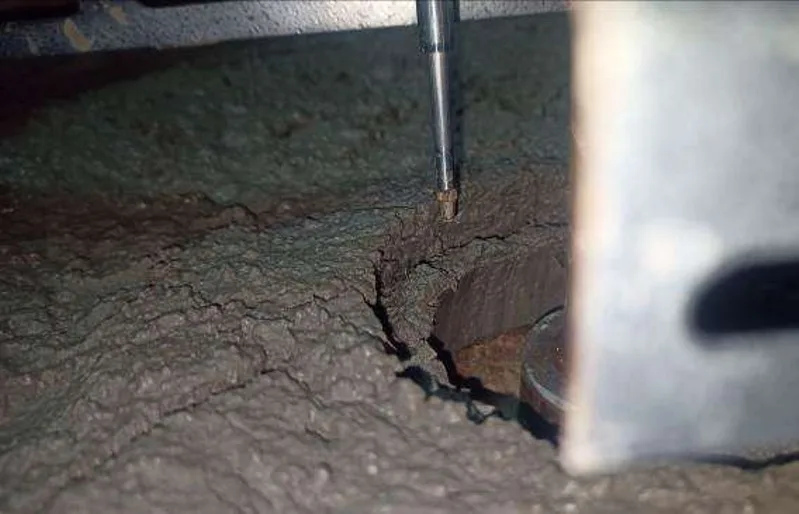
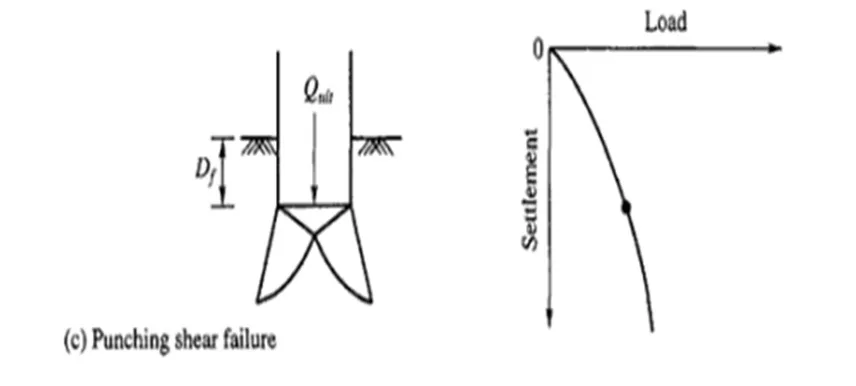
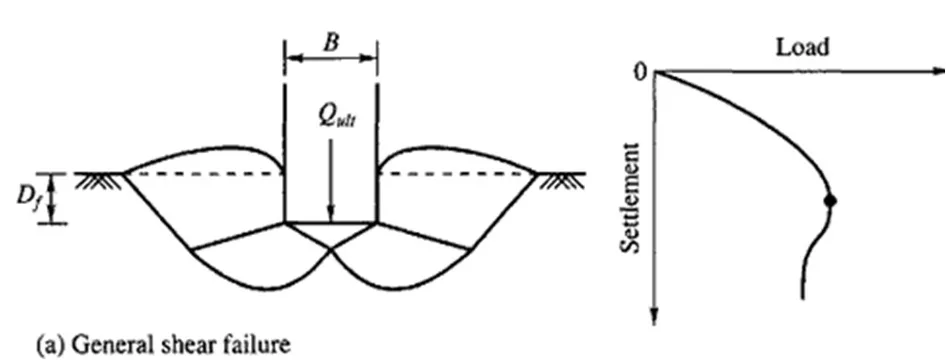
The study observed two types of shear failure in the tests conducted on soft clay: punching shear failure and general shear failure. Punching shear failure was noted in samples without reinforcement, characterized by the footing penetrating and pushing the soil sideways. In contrast, general shear failure occurred in reinforced samples, where the footing experienced overturning and the surrounding soil showed unevenness, indicating a sudden failure due to insufficient soil-bearing capacity.
What was the methodology used for testing the bearing capacity of the soil?
The methodology for testing the bearing capacity involved placing a steel footing on the soft clay and applying vertical loads using a loading frame. The tests were conducted with varying widths of reinforcement (0.5B, 1B, 1.5B, and 2B) to observe the effects on maximum load and settlement. Measurements were taken using dial gauges to assess vertical settlement and load readings, allowing for a comprehensive analysis of the soil's performance under different conditions.
What conclusions were drawn about the effectiveness of woven bamboo as a reinforcement material?
The conclusions drawn from the study indicate that woven bamboo is an effective reinforcement material for improving the bearing capacity of soft clay. The research demonstrated that the addition of woven bamboo, in conjunction with geotextile, significantly enhanced the soil's ability to withstand loads, resulting in a marked increase in maximum load capacity and reduced settlement. This suggests that woven bamboo can serve as a viable alternative to more expensive geosynthetic materials.