Kalimat by Sry Satriya Tjatur Wisnu Sasangka explores the intricacies of the Indonesian language, focusing on sentence structure and grammar. This work addresses the current challenges in the use of Bahasa Indonesia, highlighting the influence of foreign languages in public spaces. It serves as a resource for educators and students aiming to improve their understanding of Indonesian syntax and semantics. The text includes practical examples and explanations of grammatical functions, making it suitable for language learners and linguistics enthusiasts alike.

Key Points

  • Analyzes the structure and function of sentences in Bahasa Indonesia
  • Discusses the impact of foreign languages on Indonesian public usage
  • Includes practical examples illustrating grammatical rules
  • Serves as a resource for educators and students of Indonesian language
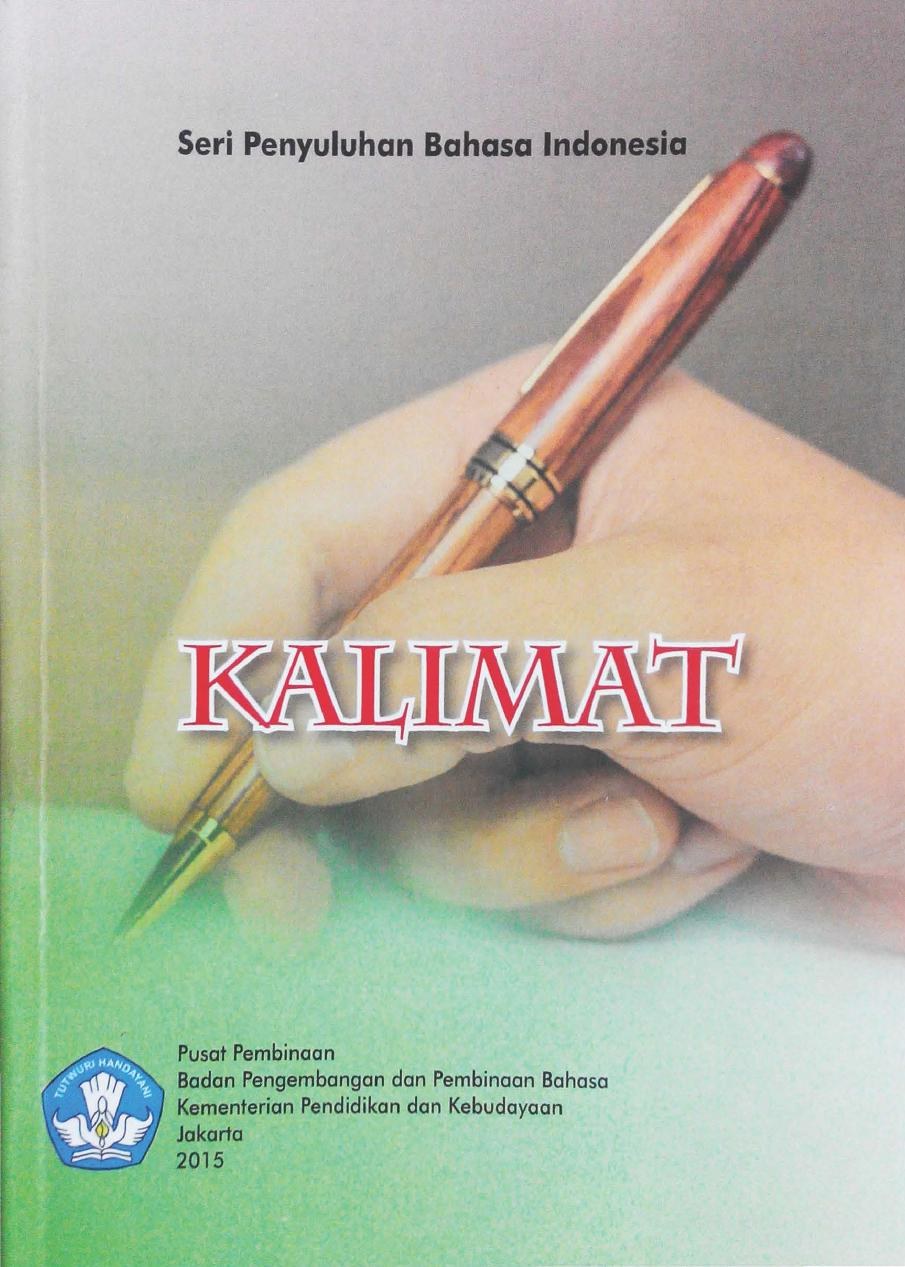
Star Dust
Author:Sry Satriya Tjatur Wisnu Sasangka
Edition:2014
92 pages
Language:Indonesian
Type:Textbook
Star Dust
Author:Sry Satriya Tjatur Wisnu Sasangka
Edition:2014
92 pages
Language:Indonesian
Type:Textbook
152
/ 92
Seri Penyuluhan Bahasa Indonesia
Pusat Pembinaan
Baden Pengembangan dan Pembinaan Bahasa
,
11'{\J
,.,..,,,,
Kementerian Pendidikan dan Kebudayaan
Jakarta
2015
Seri Penyuluhan Bahasa Indonesia
KALIMAT
Sry Satriya Tjatur Wisnu Sasangka
Pusat Pembinaan dan Pemasyarakatan
Badan Pengembangan dan Pembinaan Bahasa
Kementerian Pendidikan dan Kebudayaan
Jakarta
2014
KATA PENGANTAR
Penggunaan bahasa Indonesia saat ini dalam
kondisi yang memprihatinkan. Di satu sisi, kita
menyaksikan di ruang-ruang publik bahasa Indonesia
nyaris tergeser oleh bahasa asing. Ruang publik yang
seharusnya merupakan ruang yang menunjukkan
indentitas keindonesiaan melalui penggunaan bahasa
Indonesia ternyata sudah banyak disesaki oleh bahasa
asing. Berbagai papan nama, baik papan nama perkota-
an, restoran, pusat-pusat perbelanjaan, hotel, perumah-
an, periklanan, maupun kain rentang hamper sebagian
besar tertulis dalam bahasa asing.
Di sisi lain, mutu penggunaan bahasa Indonesia
dalam berbagai ranah, baik ranah kedinasan, pen-
didikan, jurnalistik, ekonomi, maupun perdagangan,
juga belum membanggakan. Di dalam berbagai ranah
tersebut, campur aduk penggunaan bahasa masih ter-
jadi. Berbagai kaidah yang telah berhasil dibakukan
dalam pengembangan bahasa juga belum sepenuhnya
diindahkan oleh para pengguna bahasa.
Sementar itu, para pejabat negara, para cendekia,
dan tokoh masyarakat, termasuk tokoh public, yang
seharusnya memberikan keteladanan dalam berbahasa
Indonesia ternyata juga belum dapat memenuhi harap-
an masyarakat. Penghargaan kebahasaan yang pernah
/ 92
End of Document
152

FAQs

What are the main components of a sentence according to the textbook?
The textbook outlines that the main components of a sentence include the subject, predicate, object, complement, and adverbial. Each component plays a critical role in forming a complete thought. The subject is the doer of the action, while the predicate describes the action. The object receives the action, and the complement provides additional information about the subject or object. Adverbials offer context such as time, place, or manner.
How does the textbook define a phrase?
A phrase is defined in the textbook as a group of words that functions as a single unit within a sentence. It consists of a head (the main word) and its modifiers. Phrases can be nominal, verbal, adjectival, or prepositional, depending on the head word's category. For example, a nominal phrase may consist of a noun and its modifiers, while a verbal phrase includes a verb and its complements.
What types of sentences are discussed in the textbook?
The textbook discusses several types of sentences, including simple, complex, compound, and compound-complex sentences. A simple sentence contains a single independent clause, while a complex sentence includes one independent clause and at least one dependent clause. Compound sentences consist of two or more independent clauses joined by a conjunction, and compound-complex sentences contain multiple independent clauses and at least one dependent clause.
What is the significance of effective sentences as per the document?
Effective sentences are crucial as they convey ideas clearly and concisely, ensuring that the intended message is understood by the reader. The textbook emphasizes that an effective sentence should be clear, precise, and devoid of ambiguity. It should also maintain proper structure and coherence, allowing for easy comprehension. The significance lies in their ability to enhance communication and facilitate understanding.
What are the characteristics of an effective sentence mentioned in the textbook?
The textbook outlines several characteristics of an effective sentence, including clarity, conciseness, and coherence. Clarity ensures that the meaning is easily understood, while conciseness eliminates unnecessary words that may confuse the reader. Coherence refers to the logical flow of ideas within the sentence. Additionally, effective sentences should avoid ambiguity, ensuring that the reader interprets the message as intended.
How does the textbook describe the relationship between clauses in complex sentences?
In complex sentences, the textbook describes the relationship between clauses as one where the subordinate clause depends on the main clause for its meaning. The main clause can stand alone, while the subordinate clause cannot. This relationship is marked by subordinating conjunctions, which connect the two clauses. The complexity arises from the need to understand how the subordinate clause adds information or context to the main clause.
What types of phrases are identified in the textbook?
The textbook identifies several types of phrases, including nominal, verbal, adjectival, and prepositional phrases. Nominal phrases function as subjects or objects in a sentence, verbal phrases consist of verbs and their complements, adjectival phrases modify nouns, and prepositional phrases provide additional details about time, place, or direction. Each type serves a distinct purpose in sentence structure.