Applied Mechanics
Self-Instructional Material
Rigid bodies are those bodies which do not deform under the action
of applied forces. The distance between any two points remains constant,
when body is subjected to external forces.
Under the action of loads or external forces the physical bodies
deform, although slightly. But in many situation this deformation is
negligibly small to affect the results. So, the assumption of a rigid body shall
mean that the body does not deform or the distances between any two points
of the body does not change under the action of applied forces. Applied
mechanics is the mechanics of rigid body.
1.5.1. Vector Quantity. A quantity which is completely specified by
magnitude and direction, is known as a vector quantity. Some examples of
vector quantities are: velocity, acceleration, force and momentum. A vector
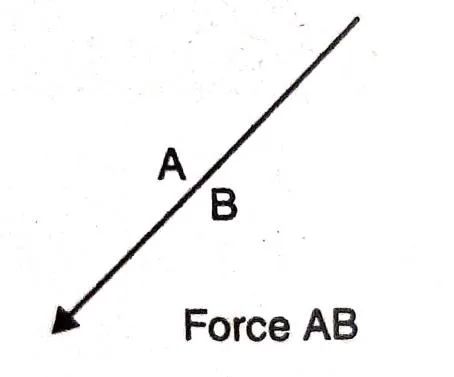
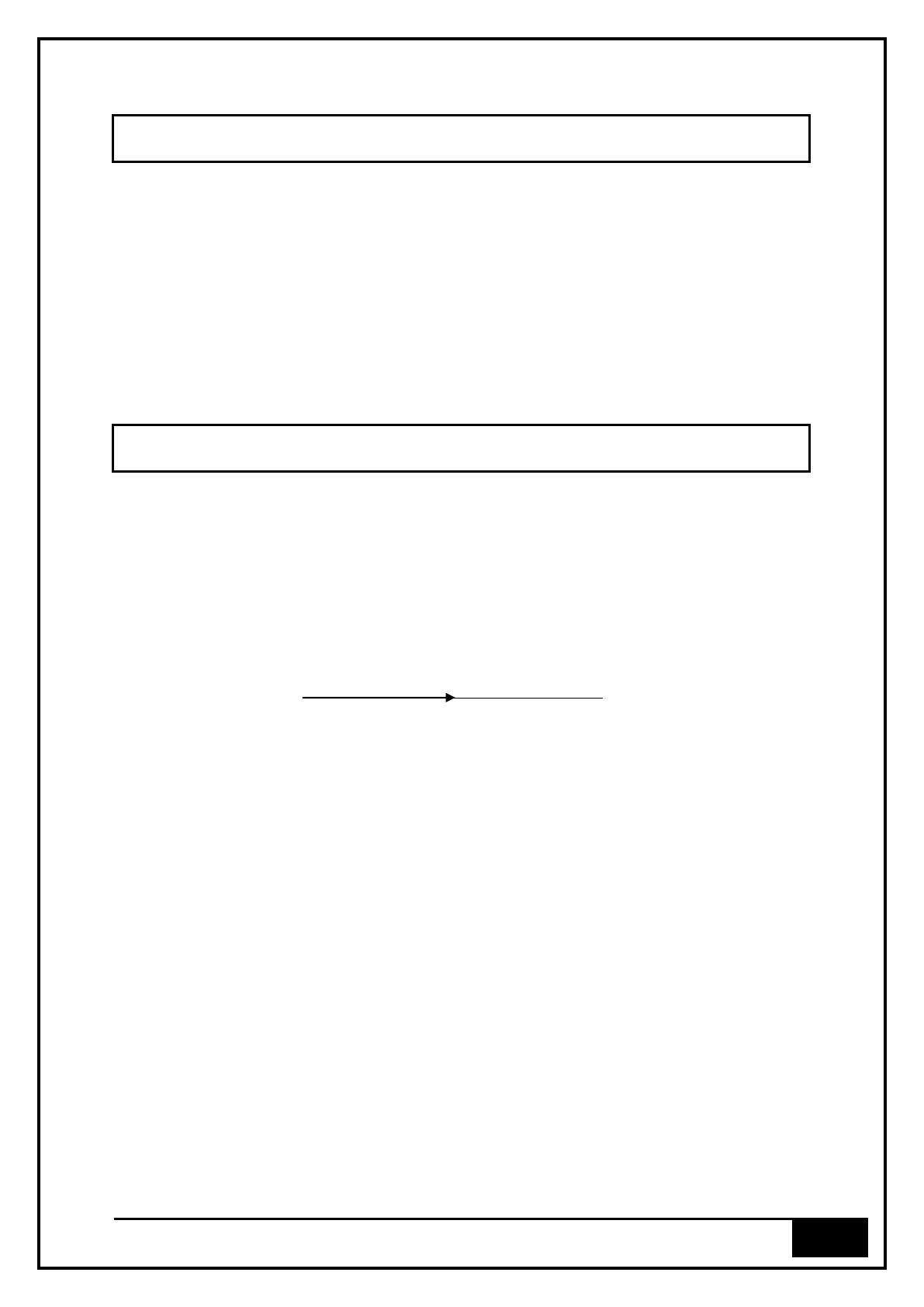
quantity is represented by means of a straight line with an arrow as shown
in Fig. 1.2. The length of the straight line (i.e., AB) represents the magnitude
and arrow represents the direction of the vector. The symbol
also
represents this vector, which means it is acting from A to B.
1.5.2. Scalar Quantity. A quantity, which is completely specified by
magnitude only, is known as a scalar quantity. Some examples of scalar
quantity are : mase,length, time and temperature.
1.5.3. A Particle. A particle is a body of infinitely small volume (or a
particle is a body of negligible dimensions) and the mass of the particle is
considered to be concentrated at a point. Hence a particle is assumed to a
point and the mass of the particle is concentrated at this point.
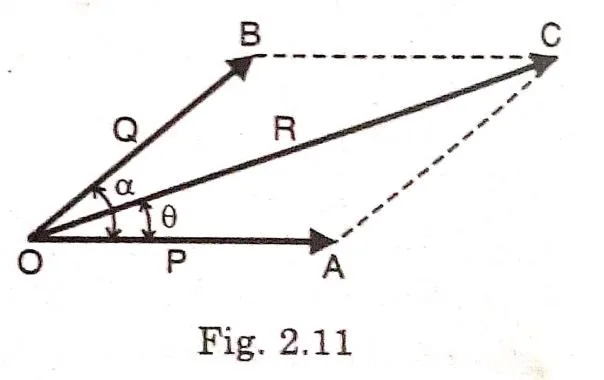
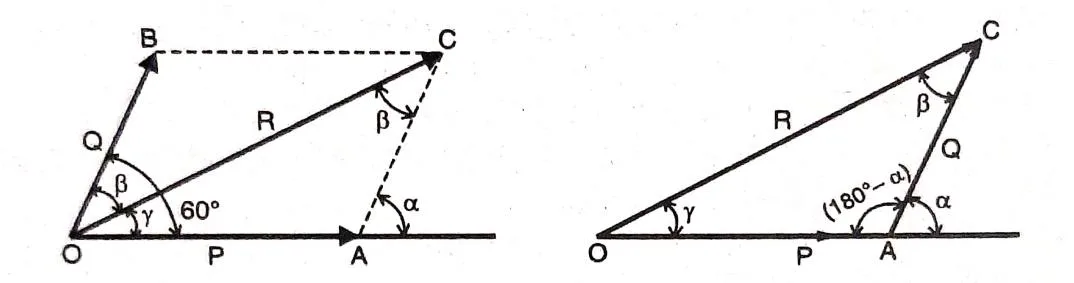
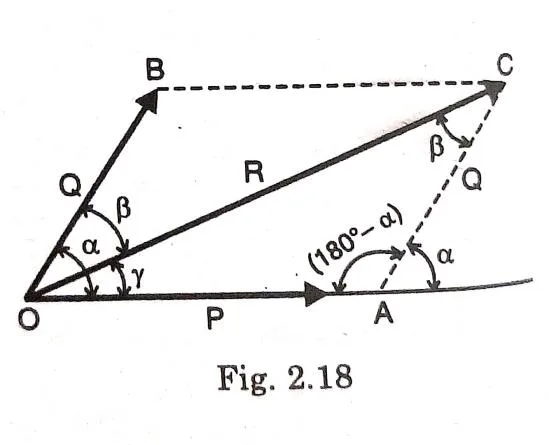
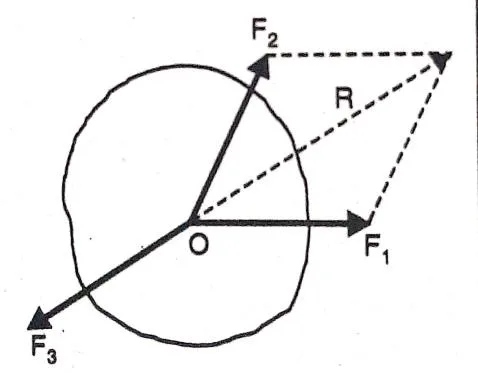
1.5.4. Law of Parallelogram of Forces. The law of parallelogram of
forces is used to determine the resultant* of two forces acting at a point in
a plane. It states, “If two forces, acting at a point be represented in
magnitude and direction by the two adjacent sides of a parallelogram, then
their resultant is represented in magnitude and direction by the diagonal of
the parallelogram passing through that point."
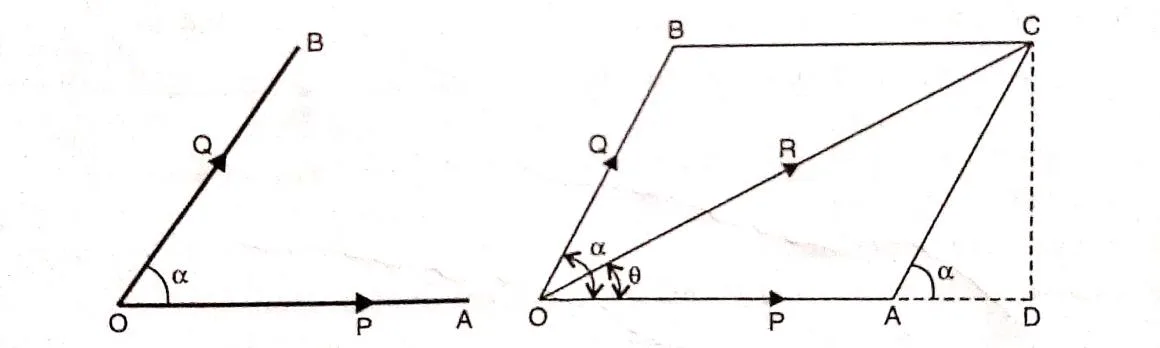
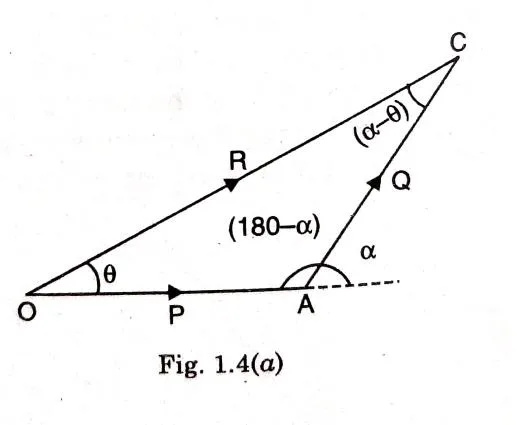
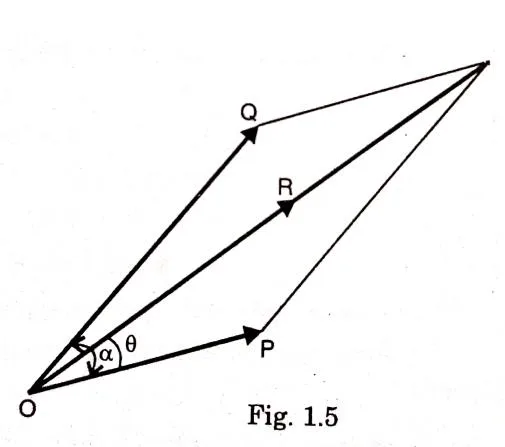
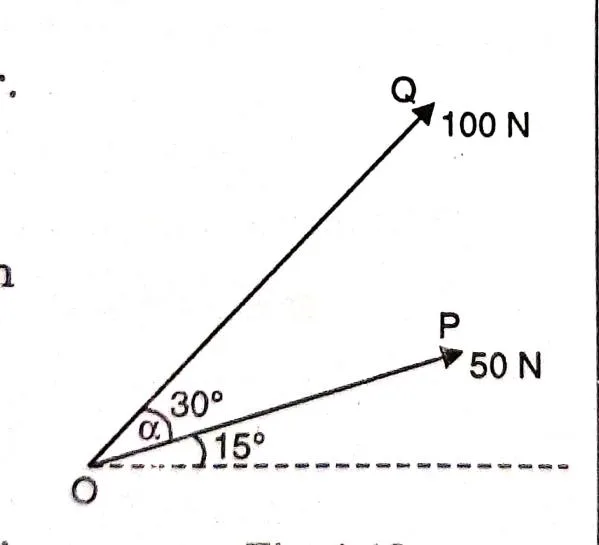
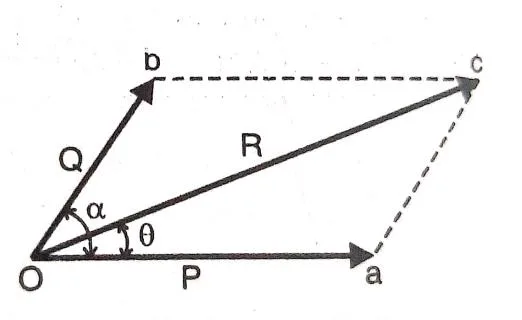
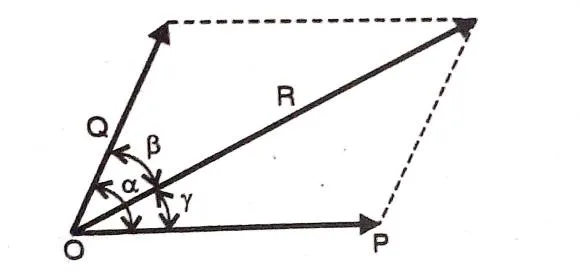
Let two forces P and Q act at a point O as shown in Fig. 1.3. The force
P is represented in magnitude and direction by OA whereas the force Q is
presented in magnitude and direction by OB. Let the angle between the two
forces be 'a'. The resultant of these two forces will be obtained in magnitude
1.4 CONCEPT OF RIGID BODY
1.5 DEFINITIONS OF TERMS USED IN MECHANICS