Thermodynamics Processes in PHY 103 explores the principles of thermodynamics, including heat transfer, energy flow, and the behavior of gases. This unit introduces key concepts such as open, closed, and isolated systems, as well as various thermodynamic processes like adiabatic, isochoric, isobaric, and isothermal processes. It is essential for students studying physics and engineering, providing foundational knowledge for understanding energy interactions in physical systems. The document includes definitions, properties, and equations of state relevant to thermodynamics.

Key Points

  • Explains the fundamental concepts of thermodynamics, including heat and energy transfer.
  • Describes various thermodynamic processes such as adiabatic and isothermal.
  • Categorizes thermodynamic systems into open, closed, and isolated types.
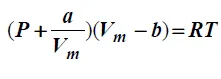
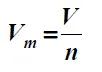
  • Includes equations of state for ideal and real gases, such as the Van der Waals equation.
ybishop2554
6 pages
Language:English
Type:Lecture Notes
ybishop2554
6 pages
Language:English
Type:Lecture Notes
240
/ 6
COURSE CODE: PHY 103
PART IV: THERMODYNAMICS PROCESSES
LECTURER-IN-CHARGE: MISS LOIS AYOMIDE
INTRODUCTION
Thermodynamics is a branch of physics that deals with heat and the flow of energy. The basic
idea is that objects are made up of atoms and molecules in ceaseless motion. The faster the
motion the hotter the object. However, thermodynamics deals only with the large-scale response
of a system, i.e. response that can be observed and measured, to heat flow. This unit examines
the basic concepts of thermodynamics to introduce the course.
DEFINITION OF THERMODYNAMICS
Thermodynamics is the study of the effects of work, heat, and energy on a system. It deals only
with the large-scale response of a system, which can be observed and measured in an experiment,
of heat and work. Small-scale gas interactions are described by the kinetic theory of gases.
The idea of a System and its Surrounding System is a restricted region of space or a finite
portion of matter one has chosen to study. Or the part of the universe, with well-defined
boundaries, one has chosen to study.
Surrounding is the rest of the universe outside the region of interest (i.e. the rest of space
outside the system).
The boundary or Wall is the surface that divides the system from the surroundings. This wall or
boundary may or may not allow interaction between the system and the surroundings.
THERMODYNAMIC PROPERTIES/COORDINATES
These are macroscopic properties used to describe or characterize a system. Because they are
macroscopic properties or coordinates, they can be observed and measured. Some examples are
Temperature (T), Pressure (P), Volume (V), density (r ), mass (m), specific heat capacity at
constant volume (CV ), specific heat capacity at constant pressure (CP ), thermal conductivity (
k), thermal diffusivity (a ), and chemical potential (m ).
Thermodynamic System
This is a system that could be described in terms of thermodynamic coordinates or properties.
Thermodynamic Systems can be categorized into the following depending on the type of
boundary:
Open System: This is a system whose boundary allows transfer of mass and energy into or out
of the system. In other words, the boundary allows exchange of mass and energy between the
system and the surrounding.
Closed System: This is a system that its boundary allows exchange of energy alone (inform of
heat) between the system and its surrounding (i.e. the boundary allows exchange of energy
alone). This type of boundary that allows exchange of heat is called diathermal boundary.
Isolated System: This is a system its boundary allows neither mass nor energy between it and
the surrounding. In other words, the boundary does not allow exchange of mass nor energy.

THERMODYNAMIC PROCESSES
A system undergoes a thermodynamic process when there is some sort of energetic change
within the system, generally associated with changes in pressure, volume, internal energy,
temperature, or any sort of heat transfer. There are several specific types of thermodynamic
processes that happen frequently enough (and in practical situations) that they are commonly
treated in the study of thermodynamics. Each has a unique trait that identifies it, and is useful in
analyzing the energy and work change related to the process.
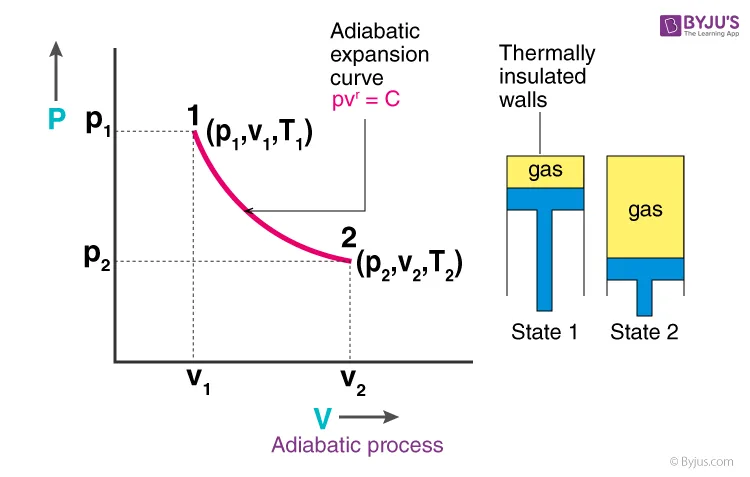
Adiabatic process: This is a thermodynamic process in which there is no heat transfer into or out
of the system. For this process, the change in the quantity of heat is zero (i.e. DQ = 0 during this
process)
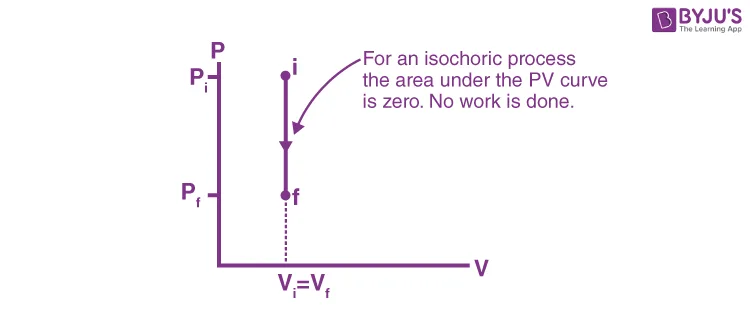
Isochoric process: This is a thermodynamic process that occurs at constant volume (i.e. DV = 0
during this process). This implies that during this process no work is done on or by the system.
/ 6
End of Document
240

FAQs

What is thermodynamics and its basic concepts?
Thermodynamics is a branch of physics that deals with heat and the flow of energy. It focuses on the large-scale response of a system to heat flow, examining how objects made up of atoms and molecules behave as their motion changes. The document introduces fundamental concepts, including the definitions of a system and its surroundings, as well as thermodynamic properties such as temperature, pressure, and volume.
What are the types of thermodynamic systems?
Thermodynamic systems can be categorized into three types based on their boundaries: open systems, closed systems, and isolated systems. An open system allows the transfer of both mass and energy, while a closed system permits only energy exchange. An isolated system, on the other hand, does not allow any mass or energy transfer with its surroundings.
What are the different thermodynamic processes?
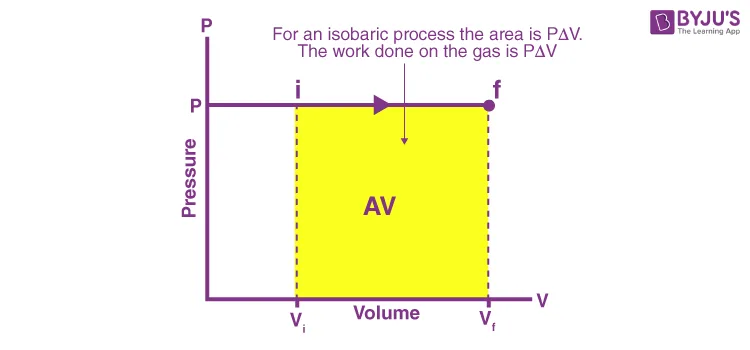
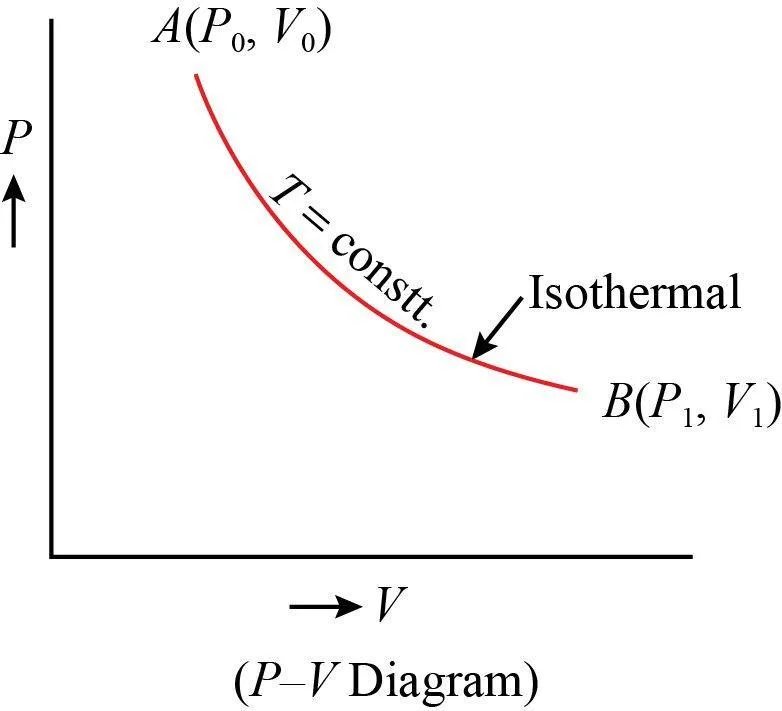
The document outlines several thermodynamic processes, including adiabatic, isochoric, isobaric, and isothermal processes. An adiabatic process involves no heat transfer, while an isochoric process occurs at constant volume, meaning no work is done. The isobaric process maintains constant pressure, and the isothermal process occurs at constant temperature. Additionally, it discusses cyclic, reversible, and irreversible processes, highlighting their unique characteristics.
What is the equation of state for an ideal gas?
The equation of state for an ideal gas is given by the formula PV = nRT, where P represents pressure, V is volume, R is the molar gas constant (8.314 JK-1mol-1), T is the temperature in Kelvin, and n is the number of moles of gas. This equation illustrates the relationship between these variables in ideal gas behavior.
What are extensive and intensive properties in thermodynamics?
Thermodynamic properties are categorized into extensive and intensive properties. Extensive properties depend on the mass of the system, such as volume and total energy, while intensive properties are independent of mass, including temperature and pressure. The document also explains specific and molar values of extensive properties, which are ratios of these properties to mass or number of moles, respectively.
What defines a reversible process in thermodynamics?
A reversible process is defined as one in which the direction can be reversed by an infinitesimal change in some properties of the system. This means that the system can return to its initial state without any net change in the surroundings, making it ideal for theoretical analysis in thermodynamics.
How does a quasi-static process differ from a non-quasi-static process?
A quasi-static process is carried out in such a way that the system remains nearly in equilibrium at every instant, causing only infinitesimal deviations from equilibrium. In contrast, a non-quasi-static process involves finite departures from equilibrium, resulting in more significant changes in the system's state.