The Plant Families Comparison Table provides an in-depth analysis of various plant families relevant to Grade 11 morphology studies. It includes detailed characteristics of families such as Fabaceae, Solanaceae, Liliaceae, and Brassicaceae. This resource is essential for students studying plant biology, offering clear comparisons of distribution, plant types, stem structures, leaf arrangements, and economic importance. Ideal for Grade 11 biology students preparing for exams or assignments.

Key Points

  • Compares major plant families including Fabaceae and Solanaceae.
  • Details characteristics like stem structure and leaf arrangements.
  • Highlights economic importance of each plant family.
  • Useful for Grade 11 morphology studies and exam preparation.
Dr.Dharshan Bose
4 pages
Language:English
Type:Notes
Dr.Dharshan Bose
4 pages
Language:English
Type:Notes
395
/ 4
sno
CHARACTER
FABACEAE
SOLANACEAE
LILIACEAE
BRASSICACEAE
1.
OLDNAME
This family was
earlier called
Papilionoideae, a
subfamily of
family
Leguminosae.
It is a large
family.
Commonly
called as the
‘potato family
Commonly called
the “Lily family”.
It is a
characteristic
representative of
monocotyledono
us plants
Cruciferae.
Commonly
called
Mustard or
cabbage family
2.
Distribution
It is distributed all
over the world.
It is widely
distributed in
tropics,
subtropics and
even
temperate
zones
It is distributed
world wide
It is distributed
world wide,
specially south
asia.
3.
Type of
plant
Trees, shrubs,
herbs; root with
root nodules
Plants mostly
herbs, shrubs
and rarely
small trees
Perennial herbs
with
underground
bulbs/corms/rhizo
mes.
Aerial/undergrou
nd,
herbaceous/woo
dy.
Annual,
biennial or
perennial
herbaceous
plants; shrubs.
4.
Stem
Erect / climber
Herbaceous
, rarely
woody.
Aerial; erect.
Cylindrical,
branched
or hollow,
hairy or
glabrous,
underground
stem
in potato
Soft and
herbaceous.
Manyundergroun
d
stem
modifications are
found.
Herbaceous,
green and small
5.
Leaf
Alternate,
pinnately
compound
Alternate,
simple, rarely
Mostly basal
alternate, linear,
exstipulate
Alternate
(rarely
opposite).
or simple; leaf
base, pulvinate;
stipulate
pinnately
compound,
exstipulate,
hairy
Pinnately
incised. No
stipules.
6.
Venation
Reticulate
Reticulate
Parallel
Reticulate
7.
Inflorescene
Racemose
Solitary,
axillary or
cymose
as in Solanum
Solitary/ cymose;
often
umbellate
clusters
Racemose
8.
Flower
Bisexual,
zygomorphic
Bisexual,
actinomorphic
Bisexual;
actinomorphic
Bisexual;
Actinomorphic
(Irregular also)
9.
Calyx
Sepals five,
gamosepalous;
Sepals five,
united,
persistent;
gamosepalous
Four (2+2), free
10.
Aestivation
of
calyx
Imbricate
aestivation
Valvate
aestivation
Valvate
aestivation
11.
Corolla
Petals five. Poly
petalous,
papilionaceous,
consisting of a
posterior standard,
two lateral wings,
two anterior ones
forming a keel
(enclosing
stamens and
pistil).
Petals five,
united.
Gamopetalous
Four petals,
free
12.
Aestivation
of corolla
Vexillary
aestivation
Valvate
aestivation
Valvate
aestivation
13.
Perianth
Tepal six (3+3),
often united into
tube
14.
Aestivation
of perianth
Valvate
aestivation
15.
Androecium
Ten, diadelphous,
Anther ,dithecous
Stamens
five,
epipetalous,
Anther
dithecous
Stamen six (3+3)
6 stamens; 2
short and four
long
(tetradynamous
condition).
16.
Gynoecium
Ovary superior.
Mono
carpellary,
unilocular
with many ovules.
Style single. Many
ovules in two
alternate rows
Placentation
Marginal
Bicarpellary,
syncarpous;
ovary
superior.
Bilocular.
Placenta
swollen with
many
ovules
.
Placentation
Axile
Tricarpellary,
syncarpous,
ovary
superior,
trilocular with
many
ovules;
axile placentation
Bicarpellary
, syncarpous;
Ovary superior;
parietal
placentation.
17.
Fruit
Legume
(Pod)
Berry or
capsule
Capsule, rarely
berry
Siliqua
18.
Seeds
One to many, non
-
endospermic
Many,
endosperm
ous
Endospermous
Many,
endospermous
19.
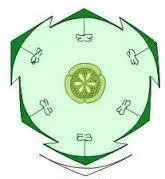
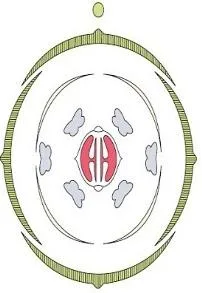
Floral
Formula
20.
Economic
Importance
1.Sources of
pulses
-
gram, arhar,
sem, moong,
soyabean
2. Edible oil
- soyabean,
groundnut
3. Dye
- Indigofera
4. Fibres
- sunhemp
5.Fodder
1.Source of
food
- Tomato,
brinjal, potato)
2. Spice
- chilli
3. Medicine
- Belladonna,
Ashwagandha
4. Fumigatory
- tobacco
5.
Ornamentals
- Petunia
1.Ornamentals
-Tulip, Gloriosa
2.Medicine
- Aloe
3. Vegetables
- Asparagus
4. Colchicines
- Colchicum
autumnale
1.Vegetables
-
cabbage,
cauliflower,
mustard, turnip,
raddish
2. Edible oil
- Mustard
3.Ornamental
plants
- Erisium
(Wall flower),
Iberisamara
(Candytuft)
/ 4
End of Document
395

FAQs

what is the plant families comparison table for grade 11 morphology

The Plant Families Comparison Table for Grade 11 Morphology provides a detailed overview of various plant families, highlighting their characteristics and differences.

  • Families Included: Fabaceae, Solanaceae, Liliaceae, Brassicaceae.
  • Key Features: Distribution, type of plant, stem structure, leaf arrangement, and floral characteristics.
  • Purpose: It serves as a study aid for students to understand plant morphology and taxonomy.

how to use the plant families comparison table for grade 11 morphology

You can effectively use the Plant Families Comparison Table for Grade 11 Morphology as a study resource to compare and contrast different plant families.

  • Study Tips:
  • Review the key characteristics of each family.
  • Make notes on the differences in stem structure and leaf types.
  • Use the table to prepare for exams by quizzing yourself on each family's features.

what are the key characteristics of fabaceae in the plant families comparison table for grade 11 morphology

The Fabaceae family, also known as the legume family, is characterized by specific features outlined in the Plant Families Comparison Table for Grade 11 Morphology.

  • Distribution: Found worldwide.
  • Type of Plant: Includes trees, shrubs, and herbs with root nodules.
  • Stem: Erect or climbing, can be herbaceous or woody.
  • Leaf: Alternate, pinnately compound.

what are the main features of solanaceae in the plant families comparison table for grade 11 morphology

The Solanaceae family, commonly referred to as the nightshade family, has distinct features as detailed in the Plant Families Comparison Table for Grade 11 Morphology.

  • Distribution: Widely distributed in tropical and temperate regions.
  • Type of Plant: Mostly herbs, shrubs, and occasionally small trees.
  • Stem: Aerial and erect.
  • Leaf: Alternate and simple, with a pulvinate base.

how does the plant families comparison table for grade 11 morphology help in exams

The Plant Families Comparison Table for Grade 11 Morphology is a valuable tool for exam preparation, helping students grasp essential concepts in plant taxonomy.

  • Comparison of Families: It allows students to easily compare different plant families.
  • Visual Aid: The table format provides a clear visual representation of key characteristics.
  • Focused Study: Students can focus on specific traits that are often tested in exams.

what is the significance of the brassicaceae family in the plant families comparison table for grade 11 morphology

The Brassicaceae family, also known as the mustard or cabbage family, holds significant importance in the Plant Families Comparison Table for Grade 11 Morphology.

  • Distribution: Found worldwide, especially in South Asia.
  • Type of Plant: Includes annual, biennial, or perennial herbaceous plants and shrubs.
  • Economic Importance: Source of vegetables like cabbage and mustard, as well as edible oils.