Explore various types of communication, including verbal, non-verbal, and graphic forms. This guide delves into interpersonal, intrapersonal, public, and mass communication, providing insights into effective information exchange. Understanding these communication forms is essential for enhancing interpersonal relationships and professional interactions. Ideal for students and professionals seeking to improve their communication skills.
Key Points
Covers verbal, non-verbal, and graphic communication types.
Explains interpersonal and intrapersonal communication dynamics.
Discusses public and mass communication strategies.
Highlights the importance of effective communication in personal and professional settings.
This link leads to an external site. We do not know or endorse its content, and are not responsible for its safety. Click the link to proceed only if you trust this site.
Training Organisation Guide for TVET Certificate V in Electronics and Telecommunication – April 2024Guide
PDFStudy Guide
Expressing Opinion: A Comprehensive Guide to CommunicationStudy Guide
PDFSyllabus
Information and Communication Technology (Core)Syllabus
PDFGuide
Effective Communication: Listening Skills and EmpathyGuide
PDFTextbook
Communication Skills Project: Importance and TechniquesTextbook
PDFAssignment
Communication Skills ProjectAssignment
PDFLecture Notes
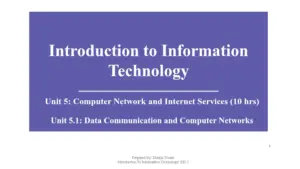
Data Communication and Computer Networks – Unit 5.1Lecture Notes
PDFNotes
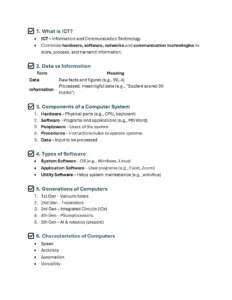
Information and Communication Technology (ICT) OverviewNotes
FAQs
What are the main types of communication described in the document?
The document outlines several types of communication, including interpersonal, intrapersonal, public, mass, and metacommunication. Interpersonal communication involves direct interaction between individuals, while intrapersonal communication refers to self-reflection and internal dialogue. Public communication aims to inform and persuade an audience about certain attitudes or beliefs. Mass communication is characterized by the dissemination of information through mass media, such as electronic and print formats. Lastly, metacommunication refers to the unintentional messages conveyed by a speaker's choice of words, which can communicate more than the literal meaning.
What are the key features of effective communication?
The document identifies several key features of effective communication, including it being a two-way process, promoting information sharing and understanding, and having a circular flow. Communication is also goal-oriented, continuous, and pervasive, meaning it occurs in various contexts and situations. These features highlight the importance of interaction and feedback in ensuring that messages are not only sent but also received and understood by the intended audience.
How does the document define non-verbal communication?
Non-verbal communication is defined in the document as a form of communication that does not rely on words or graphics. It is present in various forms of communication, including written, oral, and graphic. Non-verbal elements include body language, paralanguage, and even aspects of written communication such as format and handwriting style. This type of communication plays a crucial role in conveying emotions and intentions beyond the spoken or written words.
What is the significance of organizational communication?
Organizational communication is significant as it facilitates the flow of information within and outside an organization. It can be categorized into internal and external communication. Internal communication occurs between entities within the same organization, while external communication involves interactions with customers, suppliers, and other stakeholders. Effective organizational communication is essential for the smooth operation of a business and can impact decision-making and relationship building.
What does the document say about formal and informal communication?
The document distinguishes between formal and informal communication within a business context. Formal communication is planned and occurs in a structured manner, flowing in all directions and is essential for effective business operations. It can be both written and oral, with records often kept for reference. In contrast, informal communication, sometimes referred to as 'grapevine,' includes both business-related and personal information, is typically oral, and is not planned by the organization. Informal communication helps develop and maintain positive human relationships within the workplace.