3
Abstract
This term paper examines Tunnel Boring Machines (TBMs) in the context of urban metro
construction. TBMs are specialised mechanised systems for excavating circular tunnels deep
underground, offering an alternative to traditional drill-and-blast methods [1]. By maintaining
face pressure and installing segmented concrete lining as they advance, TBMs minimise surface
disturbance and enable rapid tunnelling beneath cities. Key features of TBMs (e.g., earth-
pressure balance (EPB) and slurry shields) are reviewed, along with their suitability for different
ground types [2][3]. We present in-depth case studies: the Melbourne Metro Tunnel (Australia),
San Francisco Central Subway (USA), Delhi Metro (India), and London’s Elizabeth Line (UK).
Each illustrates practical TBM usage, including machine specifications (diameter, length),
geology encountered, tunnelling methods, and innovations applied. Additionally, we analyse
challenges (e.g. mixed ground conditions, urban constraints) and solutions (custom cutterheads,
real-time monitoring). Sustainability aspects (spoil reuse, energy efficiency) and future trends
(automation, digital control) are also addressed. The paper strictly follows the provided term
paper format and incorporates figures, tables, and citations to support all statements.
Introduction
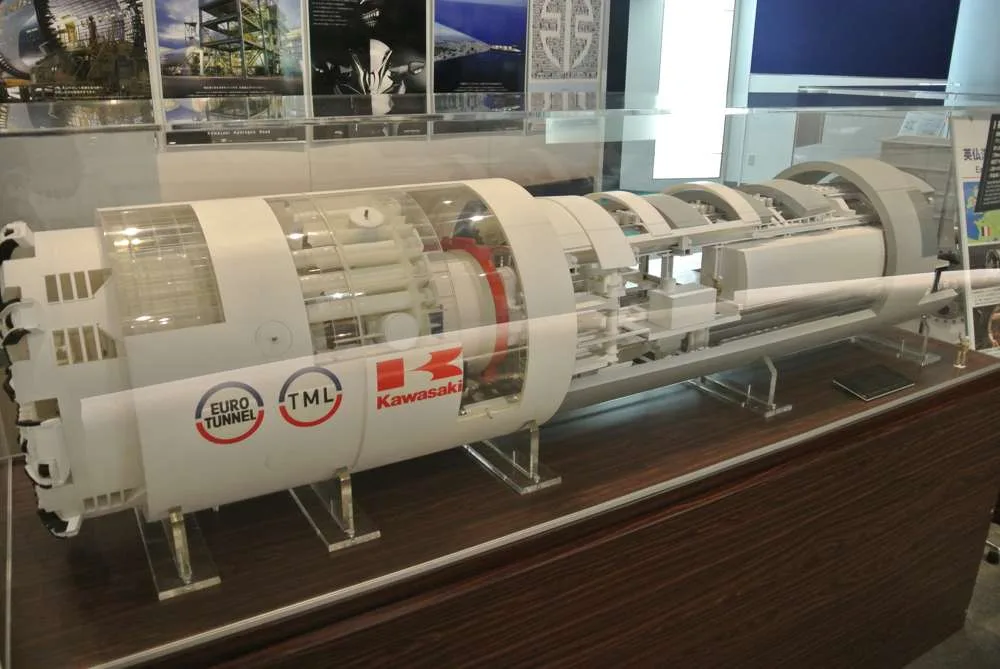
A Tunnel Boring Machine (TBM) is a highly specialized and sophisticated mechanical system
designed to excavate tunnels with a consistent circular cross-section through a wide range of
ground conditions. It represents one of the most advanced technologies in underground
construction, particularly for urban infrastructure projects such as metro rail systems, water
conveyance tunnels, and utility corridors. At its core, a TBM consists of a rotating cutterhead
mounted at the front of a cylindrical shield. This cutterhead is equipped with cutting tools such
as disc cutters, scrapers, or drag bits, selected based on the geological conditions—ranging from
soft soils to hard rock.
The excavation process begins as the cutterhead rotates and breaks the ground ahead of the
machine. Simultaneously, hydraulic jacks installed within the TBM thrust system push the
machine forward by reacting against pre-installed tunnel lining segments. These lining segments,
typically made of precast reinforced concrete, are assembled in a ring formation within the TBM
shield immediately after excavation. This process ensures continuous support to the surrounding
ground, minimising the risk of collapse and controlling surface settlement—an essential
requirement in densely populated urban environments.
The excavated material, commonly referred to as muck, is efficiently transported away from the
cutting face through integrated systems such as screw conveyors (in Earth Pressure Balance
TBMs) or slurry pipelines (in Slurry TBMs). The choice of TBM type—such as Earth Pressure
Balance (EPB) or Slurry Shield TBM—depends on the soil conditions and groundwater
presence. EPB machines are typically used in soft ground with low permeability, where the
excavated material itself is used to maintain pressure at the face. In contrast, slurry TBMs utilize
a pressurized fluid system to stabilize the tunnel face in water-bearing soils.
One of the key advantages of TBMs over conventional methods like drilling and blasting is their
ability to provide continuous, automated excavation with high precision. TBMs significantly
reduce ground vibration, noise, and surface disruption, making them ideal for tunnelling beneath