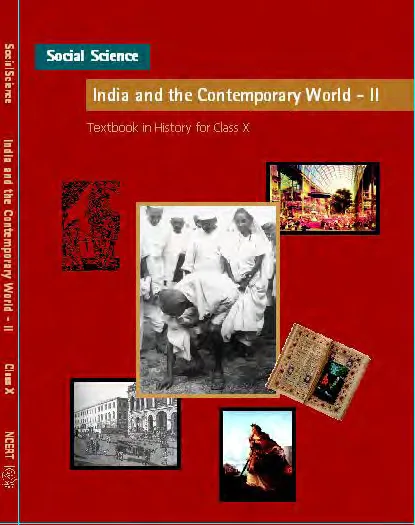
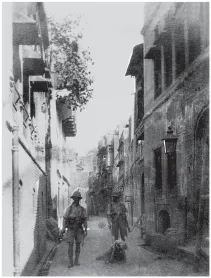
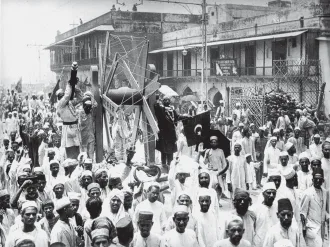
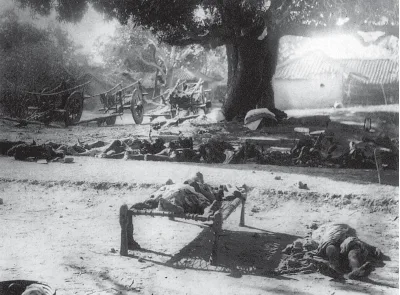
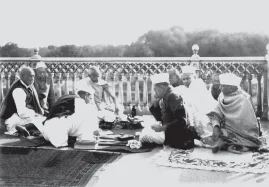
NCERT Class 10 History explores significant historical events and processes that shaped the modern world. Key topics include the rise of nationalism in Europe, the nationalist movement in Indo-China, and the impact of industrialization on societies. This textbook is designed for Class 10 students following the NCERT curriculum, providing a comprehensive overview of historical themes and concepts. It covers essential chapters such as the making of a global world and the role of print culture in shaping modern society. Ideal for students preparing for their board exams, this resource enhances understanding of historical contexts and encourages critical thinking.

Key Points

  • Covers key historical events like the rise of nationalism in Europe and India.
  • Explains the impact of industrialization on global economies and societies.
  • Includes discussions on print culture and its influence on modern history.
  • Designed for Class 10 students following the NCERT syllabus.
A Nak
196 pages
Language:English
Type:Textbook
A Nak
196 pages
Language:English
Type:Textbook
195
/ 196
Contents
xi
Section I: Events and Processes
I. The Rise of Nationalism in Europe 3
II. The Nationalist Movement in Indo-China 25
III. Nationalism in India 4
9
Section II: Livelihoods, Economies and Societies
IV. The Making of a Global World 77
V. The Age of Industrialisation 97
V
I. Work, Life and Leisure 117
Section III: Everyday Life, Culture and Politics
VII. Print Culture and the Modern World 141
VIII. Novels, Society and History 159
Foreword iii
Introduction ix
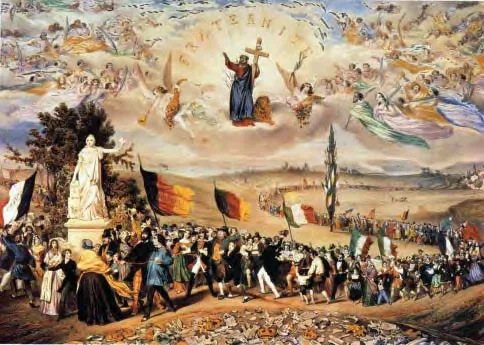
In 1848, Frédéric Sorrieu, a French artist, prepared a series of four
prints visualising his dream of a world made up of ‘democratic
and social Republics’, as he called them. The first print (Fig. 1) of the
series, shows the peoples of Europe and America – men and women
of all ages and social classes – marching in a long train, and offering
homage to the statue of Liberty as they pass by it. As you would
recall, artists of the time of the French Revolution personified Liberty
as a female figure – here you can recognise the torch of Enlightenment
she bears in one hand and the Charter of the Rights of Man in the
other. On the earth in the foreground of the image lie the shattered
remains of the symbols of absolutist institutions. In Sorrieu’s
utopian vision, the peoples of the world are grouped as distinct
nations, identified through their flags and national costume. Leading
the procession, way past the statue of Liberty, are the United States
and Switzerland, which by this time were already nation-states. France,
The Rise of Nationalism in Europe
Fig. 1 — The Dream of Worldwide Democratic and Social Republics – The Pact Between Nations, a print prepared by

Frédéric Sorrieu, 1848.
Chapter I
The Rise of Nationalism in Europe
New words
Absolutist – Literally, a government or
system of rule that has no restraints on
the power exercised. In history, the term
refers to a form of monarchical
government that was centralised,
militarised and repressive
Utopian – A vision of a society that is so
ideal that it is unlikely to actually exist
In what way do you think this print (Fig. 1)
depicts a utopian vision?
Activity
/ 196
End of Document
195

FAQs

what is NCERT Class 10 History about

NCERT Class 10 History is a textbook that covers significant historical events and themes relevant to Indian history and the world.

  • It includes chapters on the rise of nationalism in Europe, the nationalist movement in India, and the making of a global world.
  • The textbook emphasizes understanding historical processes and their impact on contemporary society.
  • Students learn about important figures, events, and the socio-economic factors that shaped history.

NCERT Class 10 History summary

The NCERT Class 10 History textbook provides a comprehensive overview of key historical events and movements.

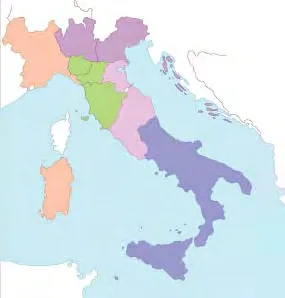
  • It covers topics such as the French Revolution, the unification of Italy and Germany, and the impact of colonialism.
  • Each chapter is designed to help students understand the causes and consequences of historical events.
  • The textbook also emphasizes critical thinking and analysis of historical sources.

NCERT Class 10 History syllabus

The NCERT Class 10 History syllabus includes a variety of topics spanning from the French Revolution to the nationalist movements in India.

  • Key chapters include:
  • The Rise of Nationalism in Europe
  • The Nationalist Movement in Indo-China
  • Nationalism in India
  • The Making of a Global World
  • The Age of Industrialisation

NCERT Class 10 History important chapters

Some important chapters in NCERT Class 10 History include:

  • The Rise of Nationalism in Europe
  • The Nationalist Movement in India
  • The Age of Industrialisation
  • Work, Life and Leisure
  • Print Culture and the Modern World

how to study NCERT Class 10 History effectively

To study NCERT Class 10 History effectively, follow these tips:

  • Read each chapter thoroughly and take notes on key points.
  • Use maps and timelines to visualize historical events.
  • Practice previous years' question papers for better preparation.
  • Discuss topics with peers to enhance understanding.
  • Make use of supplementary resources like videos and documentaries.

NCERT Class 10 History exam tips

Here are some exam tips for NCERT Class 10 History:

  • Understand the marking scheme and focus on high-weightage chapters.
  • Revise regularly and create a timeline of important events.
  • Practice writing answers within the time limit to improve speed.
  • Use bullet points for clarity in answers during the exam.
  • Stay updated on current affairs related to historical topics for better context.

NCERT Class 10 History key terms

Key terms in NCERT Class 10 History include:

  • Nationalism
  • Colonialism
  • Industrialisation
  • Revolution
  • Democracy

NCERT Class 10 History characters

Important characters in NCERT Class 10 History include:

  • Jawaharlal Nehru
  • Mahatma Gandhi
  • Subhas Chandra Bose
  • V.I. Lenin
  • Ernst Renan

what are the themes in NCERT Class 10 History

The themes in NCERT Class 10 History focus on:

  • The rise of nationalism and its impact on various countries.
  • The effects of colonialism and resistance movements.
  • The role of industrialisation in shaping modern societies.
  • The significance of print culture in spreading ideas.

NCERT Class 10 History important events

Important events covered in NCERT Class 10 History include:

  • The French Revolution (1789)
  • The unification of Italy (1861)
  • The unification of Germany (1871)
  • The Indian Independence Movement (1947)
  • The Industrial Revolution (18th-19th century)