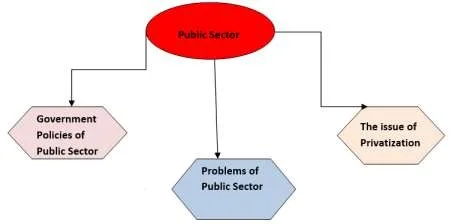
The Economic Environment in India – Unit 9: Public Sector explores the vital role of the public sector in shaping socio-economic policies and national development. It addresses government policies, challenges faced by public enterprises, and the implications of privatization. This unit is essential for students studying commerce and economics, providing insights into public sector management and its impact on society. Key topics include regulatory policies, problems of public sector enterprises, and the need for effective governance.

Key Points

  • Explains the significance of public sector policies in national development.
  • Discusses various government policies affecting public enterprises.
  • Analyzes challenges faced by public sector companies, including bureaucratic management.
  • Covers the implications of privatization on public sector efficiency.
Sariq khan
20 pages
Language:English
Type:Textbook
Sariq khan
20 pages
Language:English
Type:Textbook
Sariq khan
20 pages
Language:English
Type:Textbook
191

Economic Environment in India – Unit 9: Public Sector pdf

/ 20
DCM1206: Economic Environment in India Manipal University Jaipur (MUJ)
Unit 9 : Public Sector 1
BACHELOR OF COMMERCE
SEMESTER 2
DCM1206
ECONOMIC ENVIRONMENT IN INDIA
DCM1206: Economic Environment in India Manipal University Jaipur (MUJ)
Unit 9 : Public Sector 2
Unit 9
Public Sector
SL
No
Topic
Fig No / Table /
Graph
SAQ /
Activity
Page No
1
Introduction
-
-
3 - 4
1.1
Learning Objectives
-
-
2
Government Policies of Public Sector
-
1
5 - 7
3
Problems of Public Sector
-
2
8 - 10
4
The Issue of Privatisation
-
3
11 - 13
5
Concept Map
1
-
13
6
Summary
-
-
14 - 15
7
Glossary
-
-
15
8
Terminal Questions
-
-
16
9
Answers
-
-
16 - 19
10
Suggested Books and E-References
-
-
20
Table of Contents
DCM1206: Economic Environment in India Manipal University Jaipur (MUJ)
Unit 9 : Public Sector 3
The public sector plays a significant role in the socio-economic policies of the country by
building the required infrastructure, along with enabling the architecture national
development. Management of the public sector involves the managing of financial, financial,
productivity, and other forms of resources. Public sector management involves the process
of planning, formation, and execution of various projects, programmes, and policies for
delivering goods and services for the people in the country. The different governmental and
institutional arrangements are involved in the activities to meet the socio-economic needs
of the country and to fulfil the development plans of the nation. The public sectors are
involved in creating sound public policies and laws aimed at promoting harmony, stability,
and growth in the economy. The formation of public sector programs is involved with
balancing various solutions that address different aspects of problems. Every policy has
three main factors, such as problem definition, goals to be achieved, and the policy
instruments to address the problem and achieve the goals. The public sector policies are
concerned with the general welfare and development of the society that includes
programmes such as providing enforcement of law and order, provision of education &
employment opportunities, economic stabilisation, anti-pollution legislation, and more.
Public sector programs and policies respond to the needs of society and protect the people
through laws and regulations that protect the rights of the public. Public sector policies are
made and implemented to attain certain objectives of the government for the benefit of the
public that involves many participants in different roles. These policies spell out the
programmes of government with a purposive course of action taken to deal with a problem
or concern. The public sector is concerned with the general welfare and development of the
society that includes programmes such as providing enforcement of law and order, provision
of education and employment opportunities, economic stabilisation, anti-pollution
legislation, and more. The finances in the public sector come from taxes, grants, investments,
donations, and more. The public sector companies are state-owned, government-owned
companies, public-owned companies, government business organisations, public sector
undertakings, and more that undertake various activities on behalf of the government.

1. INTRODUCTION
/ 20
End of Document
191

FAQs

What is the role of the public sector in India's economy?
The public sector plays a significant role in the socio-economic policies of India by building essential infrastructure and enabling national development. It involves managing financial, productivity, and other resources to deliver goods and services to the public. Public sector management includes planning, execution of projects, and forming policies that address the socio-economic needs of the country.
What are the main problems faced by public sector enterprises?
Public enterprises encounter numerous challenges, including poor planning and management, political interference, and a lack of autonomy. Issues such as unplanned production, delayed decisions, and high overhead costs also contribute to inefficiencies. Furthermore, public sector companies often suffer from over-staffing, low motivation among employees, and dependence on government funding, which affects their overall performance.
What types of government policies are associated with the public sector?
Government policies for the public sector can be categorized into several types: regulatory policies, substantive policies, distributive policies, redistributive policies, capitalisation policies, and facilitating policies. Regulatory policies set boundaries for trade and safety, while substantive policies focus on general welfare and development. Distributive policies target specific segments of society, and redistributive policies aim to bring about social and economic changes.
How does privatisation impact public sector efficiency?
Privatisation is believed to enhance efficiency in public sector enterprises by eliminating wasteful spending and introducing objectivity in operations. The process includes disinvestment, where parts of public sector equity are sold, and transfer of ownership, converting public companies into private entities. This shift allows for better management, quicker decision-making, and improved responsiveness to market demands.
What are the learning objectives of Unit 9 on the public sector?
The learning objectives of Unit 9 include explaining government policies related to the public sector, discussing the problems faced by public enterprises, and describing issues surrounding privatisation. This unit aims to provide a comprehensive understanding of the public sector's role, challenges, and the implications of government policies and privatisation.
What are substantive policies in the context of the public sector?
Substantive policies are concerned with the general welfare and development of society. They encompass programs related to education, employment opportunities, economic stabilization, and law enforcement. These policies aim to address societal needs and ensure that the public sector effectively contributes to the overall development of the country.
What factors contribute to low productivity in public sector enterprises?
Low productivity in public sector enterprises can be attributed to several factors, including lack of planning, bureaucratic management, and outdated production methods. Employees often face low motivation due to job security and a lack of performance incentives. Additionally, inefficient resource management and dependence on government funding further exacerbate productivity issues.