The Crisis of Democratic Order explores the significant political events in India during the Emergency period from 1975 to 1977. It examines the imposition of Emergency, the political climate leading to it, and the aftermath, including the impact on civil liberties and party politics. Key figures like Indira Gandhi and Jayaprakash Narayan are discussed, along with the socio-economic conditions that contributed to widespread unrest. This document serves as a crucial resource for students and scholars of Indian politics, particularly those studying democratic processes and political history.

Key Points

  • Analyzes the political climate in India during the Emergency from 1975 to 1977.
  • Discusses the role of key figures like Indira Gandhi and Jayaprakash Narayan.
  • Examines the impact of Emergency on civil liberties and political dissent.
  • Explores the socio-economic factors leading to the imposition of Emergency.
Ayaati Jain
20 pages
Language:English
Type:Textbook
Ayaati Jain
20 pages
Language:English
Type:Textbook
383
/ 20
I ts chptr…
We have seen in the last chapter that the Congress recovered after
1971, but was not the same kind of party. The difference became
clear in a series of events between 1973 and 1975 that brought new
challenges to India’s democratic politics and the institutional balance
sought by the Constitution. These developments led to the imposition of
‘emergency’ in June 1975. Normally, we would associate ‘emergency’
with war and aggression or with natural disaster. But this ‘emergency’
was imposed because of the perceived threat of internal disturbance.
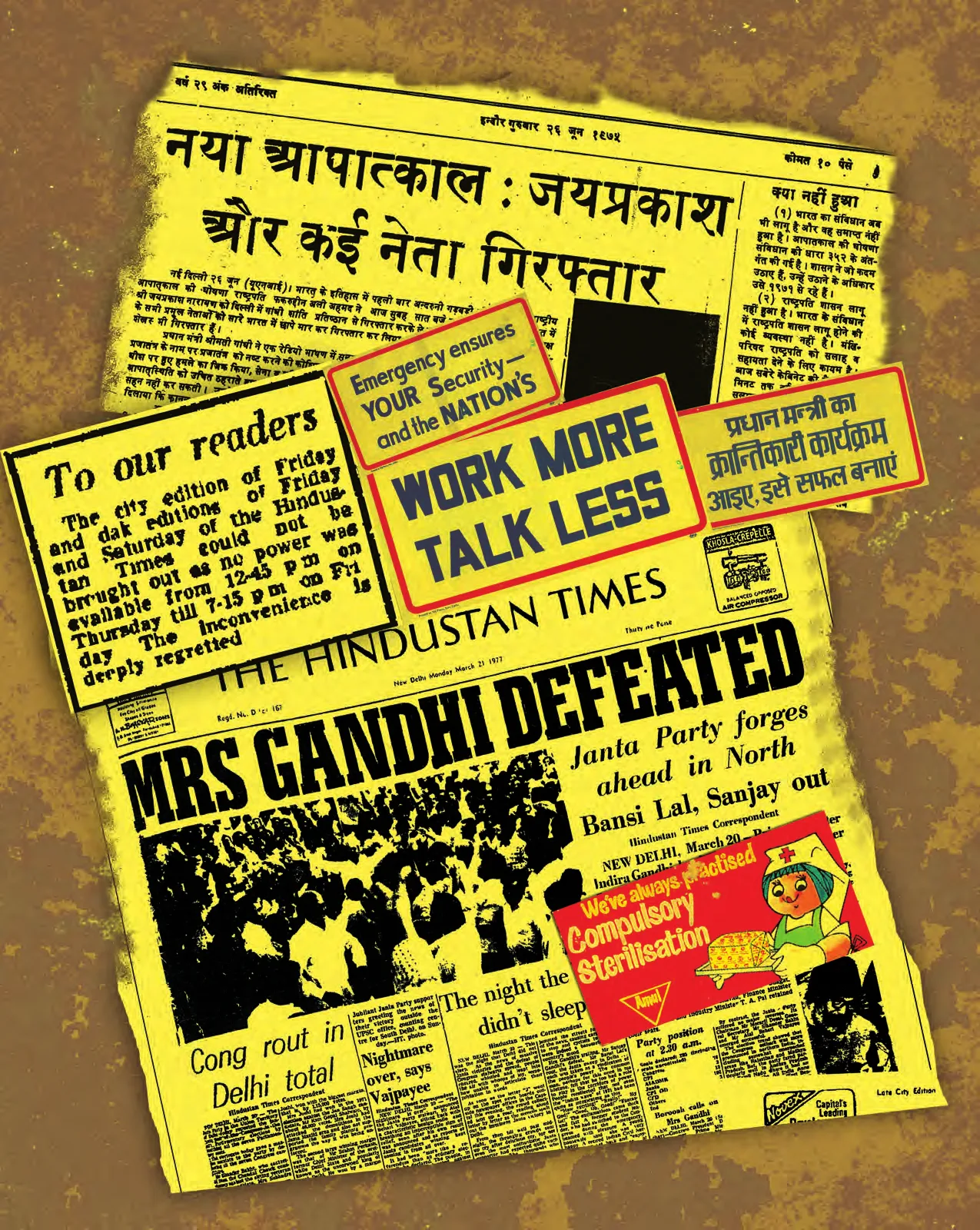
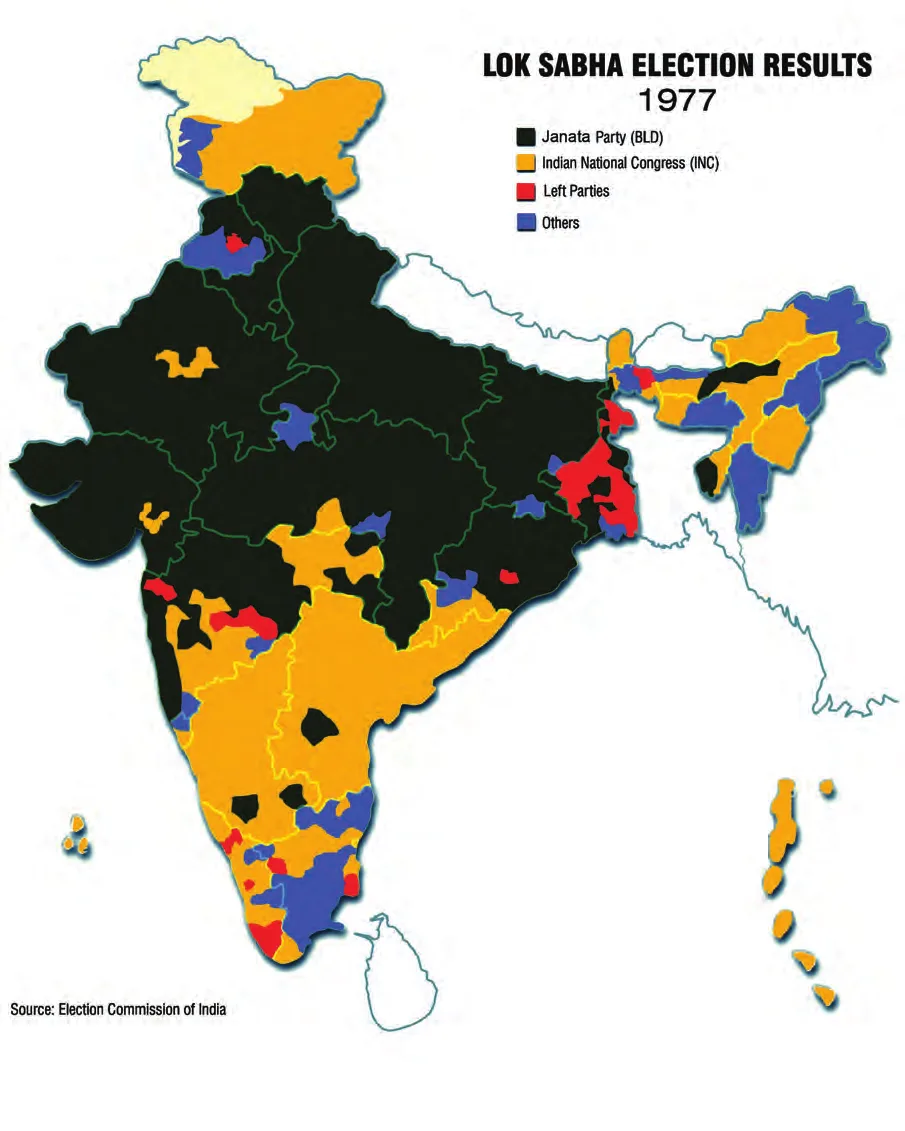
The Emergency ended as dramatically as it had begun, resulting in a
defeat of the Congress in the Lok Sabha elections of 1977.
In this chapter we focus on this crucial phase in the history of democracy
in India and ask some questions that have remained controversial after
all these years.
• WhywasEmergencyimposed?Wasitnecessary?
• WhatdidtheimpositionofEmergencymeaninpractice?
• WhatweretheconsequencesofEmergencyonpartypolitics?
• WhatarethelessonsofEmergencyforIndiandemocracy?
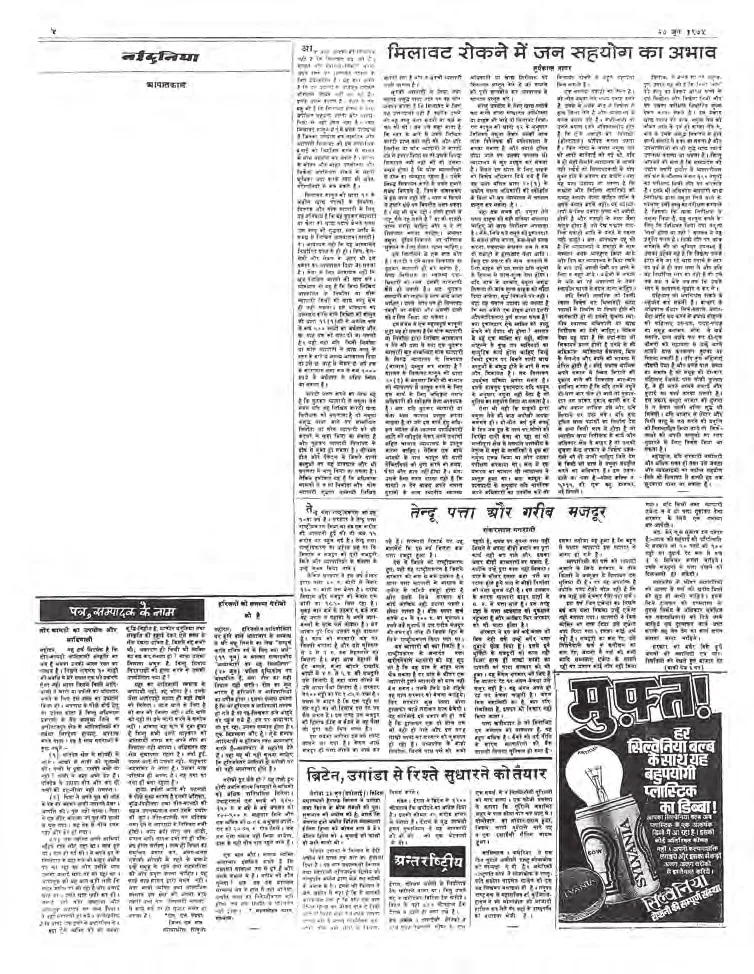
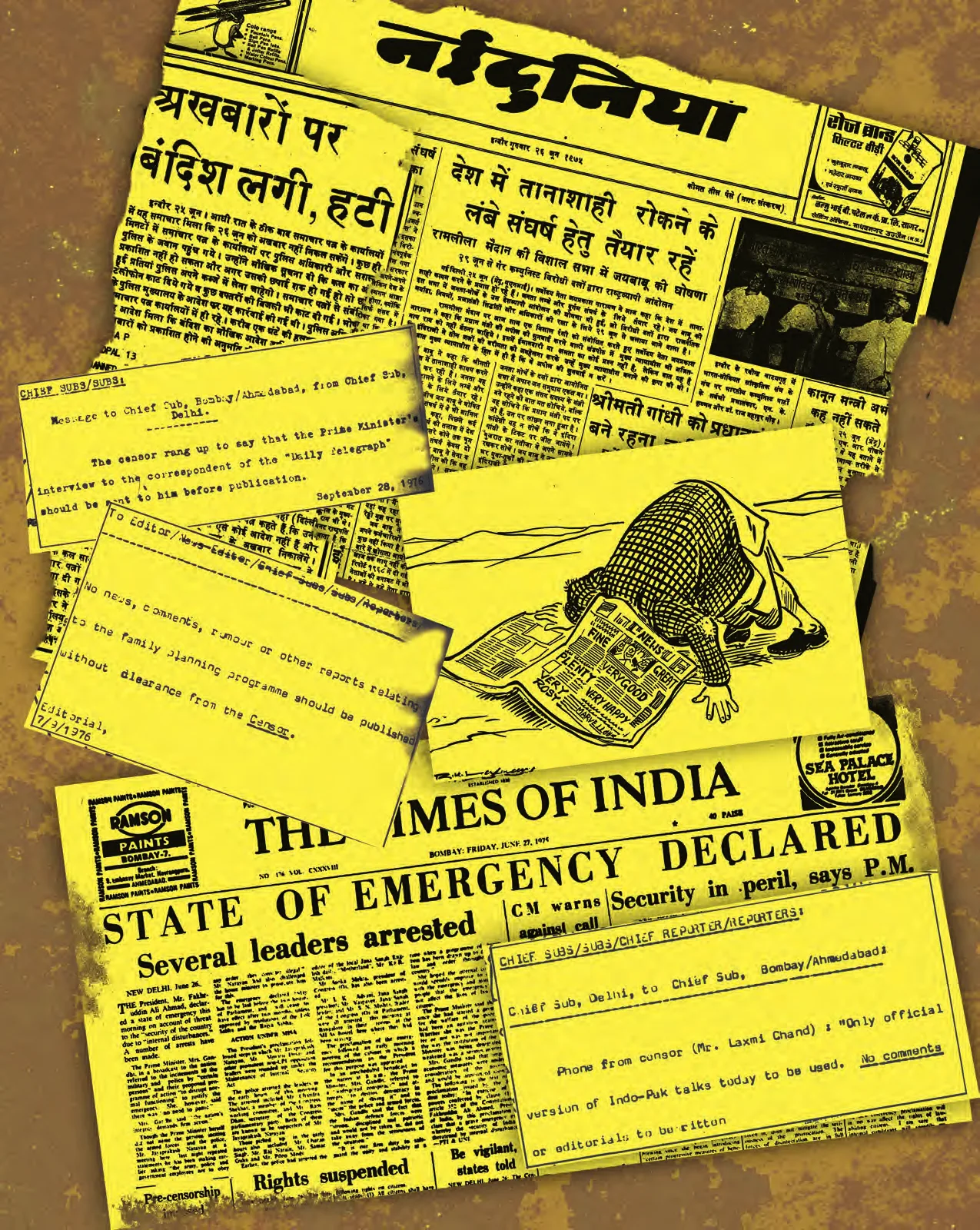
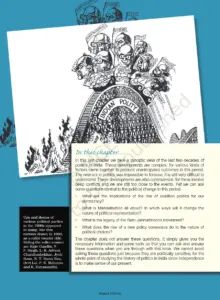
The editorial page of
‘Nai Dunia’ of 27 June
1975 was like any other
day, except that the
space for editorial was
left blank. The editorial
was “censored” using
emergency powers.
Many other newspapers
also carried such blank
spaces–sometimes
to protest against
emergency. Later, leaving
blank space was also
banned.
chap 6_PF.indd 92 8/5/2022 2:03:26 PM
Reprint 2025-26
Bacgrn t Emrgncy
We have already studied the changes that were taking place in Indian
politics since 1967. Indira Gandhi had emerged as a towering leader
with tremendous popularity. This was also the period when party
competition became bitter and polarised. This period also witnessed
tensions in the relationship between the government and the judiciary.
The Supreme Court found many initiatives of the government to be
violative of the Constitution. The Congress party took the position
that this stand of the Court was against principles of democracy
and parliamentary supremacy. The Congress also alleged that the
Court was a conservative institution and it was becoming an obstacle
in the way of implementing pro-poor welfare programmes. The
parties opposed to the Congress felt that politics was becoming too
personalised and that governmental authority was being converted
into personal authority. The split in the Congress had sharpened the
divisions between Indira Gandhi and her opponents.
Economic context
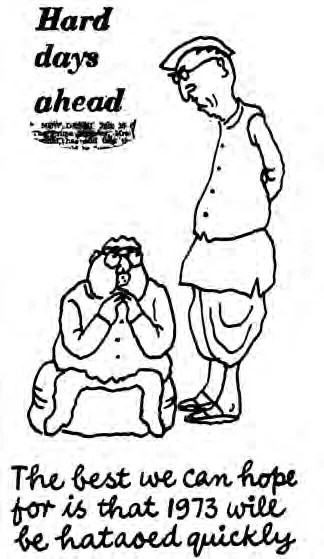
In the elections of 1971, Congress had given the slogan
of garibi hatao (remove poverty). However, the social and
economic condition in the country did not improve much
after 1971-72. The Bangladesh crisis had put a heavy strain
on India’s economy. About eight million people crossed
over the East Pakistan border into India. This was followed
by war with Pakistan. After the war the U.S government
stopped all aid to India. In the international market, oil
prices increased manifold during this period. This led to
an all-round increase in prices of commodities. Prices
increased by 23 per cent in 1973 and 30 per cent in 1974.
Such a high level of inflation caused much hardship to
the people.
Industrial growth was low and unemployment was
very high, particularly in the rural areas. In order to
reduce expenditure the government froze the salaries
of its employees. This caused further dissatisfaction
among government employees. Monsoons failed in 1972-
1973. This resulted in a sharp decline in agricultural
productivity. Food grain output declined by 8 per cent.
Credit: Abu
PM says
6
chapter
the crisis of
Democratic orDer
chap 6_PF.indd 93 8/5/2022 2:03:26 PM
Reprint 2025-26
94 Ps  Ini nc Indpndnc
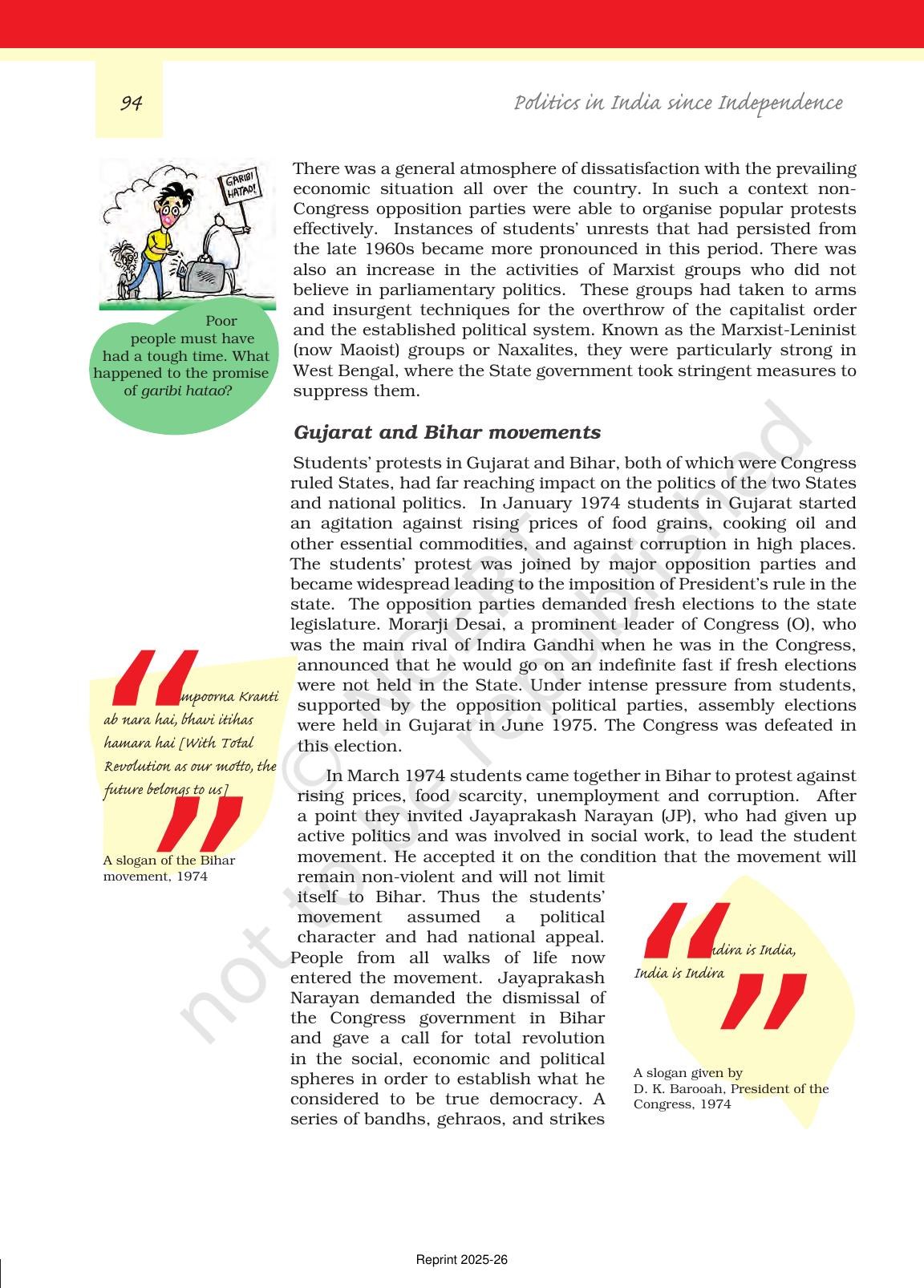
There was a general atmosphere of dissatisfaction with the prevailing
economic situation all over the country. In such a context non-
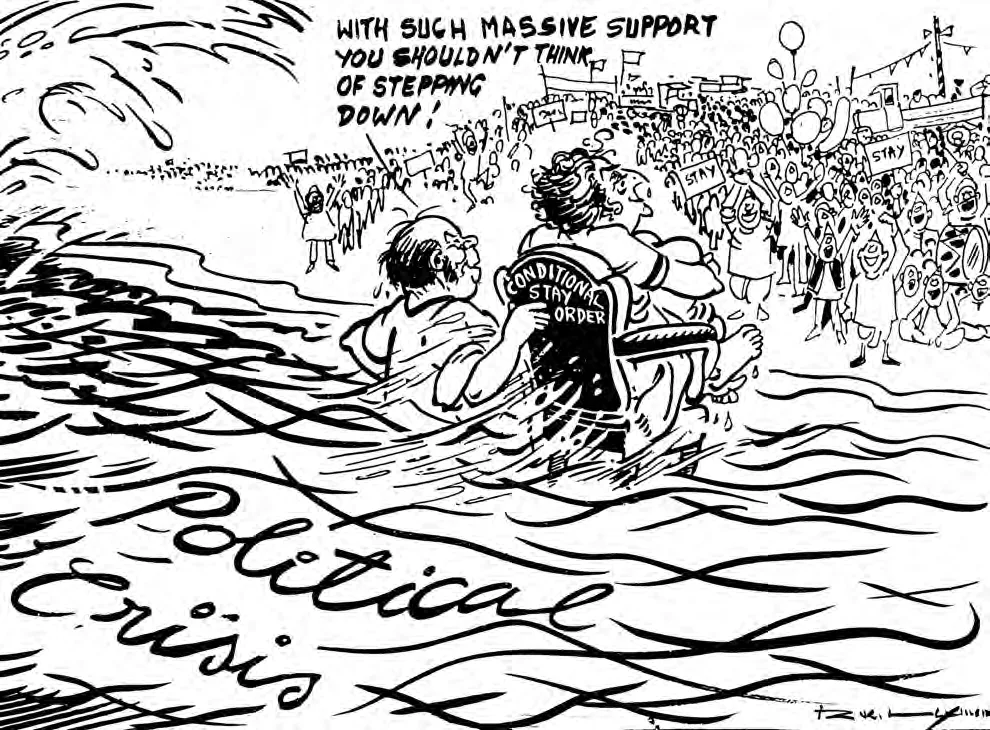
Congress opposition parties were able to organise popular protests
effectively. Instances of students’ unrests that had persisted from
the late 1960s became more pronounced in this period. There was
also an increase in the activities of Marxist groups who did not
believe in parliamentary politics. These groups had taken to arms
and insurgent techniques for the overthrow of the capitalist order
and the established political system. Known as the Marxist-Leninist
(now Maoist) groups or Naxalites, they were particularly strong in
West Bengal, where the State government took stringent measures to
suppress them.
Gujarat and Bihar movements
Students’ protests in Gujarat and Bihar, both of which were Congress
ruled States, had far reaching impact on the politics of the two States
and national politics. In January 1974 students in Gujarat started
an agitation against rising prices of food grains, cooking oil and
other essential commodities, and against corruption in high places.
The students’ protest was joined by major opposition parties and
became widespread leading to the imposition of President’s rule in the
state. The opposition parties demanded fresh elections to the state
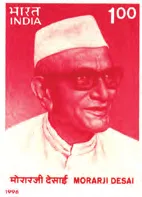
legislature. Morarji Desai, a prominent leader of Congress (O), who
was the main rival of Indira Gandhi when he was in the Congress,
announced that he would go on an indefinite fast if fresh elections
were not held in the State. Under intense pressure from students,
supported by the opposition political parties, assembly elections
were held in Gujarat in June 1975. The Congress was defeated in
this election.
In March 1974 students came together in Bihar to protest against
rising prices, food scarcity, unemployment and corruption. After
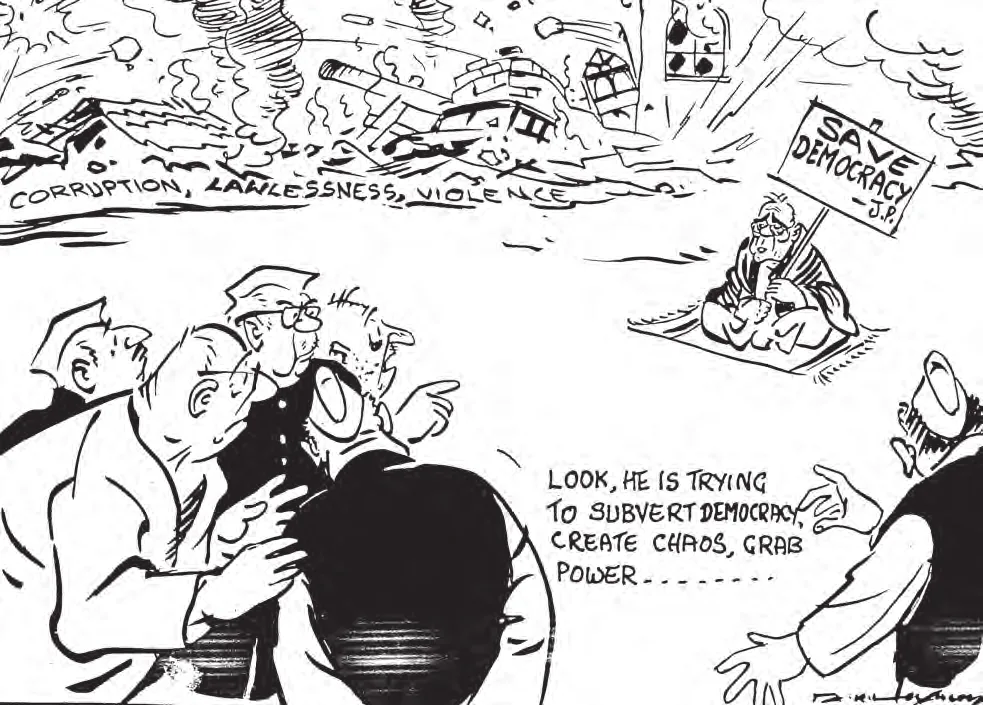
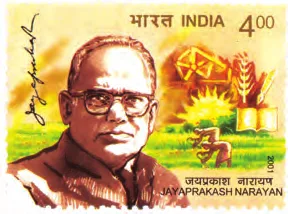
a point they invited Jayaprakash Narayan (JP), who had given up
active politics and was involved in social work, to lead the student
movement. He accepted it on the condition that the movement will
remain non-violent and will not limit
itself to Bihar. Thus the students’
movement assumed a political
character and had national appeal.
People from all walks of life now
entered the movement. Jayaprakash
Narayan demanded the dismissal of
the Congress government in Bihar
and gave a call for total revolution
in the social, economic and political
spheres in order to establish what he
considered to be true democracy. A
series of bandhs, gehraos, and strikes
Sprn Kr
b r h, hv hs
hmr h [Wt Tot
Rvi s r ott, t
r lngs t s]
A slogan of the Bihar
movement, 1974
Inr s Ini,
Ini s Inr
A slogan given by
D. K. Barooah, President of the
Congress, 1974
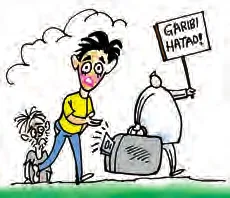
Poor
people must have
had a tough time. What
happened to the promise
of garibi hatao?
chap 6_PF.indd 94 8/5/2022 2:03:26 PM

Reprint 2025-26
/ 20
End of Document
383

FAQs

What were the main reasons for the imposition of Emergency in India in 1975?
The Emergency was imposed on June 25, 1975, due to perceived internal disturbances and political unrest. Key factors included the deteriorating economic conditions, high inflation rates, and widespread dissatisfaction among the populace. Additionally, the political tensions between the government and the judiciary, particularly following the Allahabad High Court's decision declaring Indira Gandhi's election invalid, escalated the crisis. These elements created a context where the government felt compelled to take drastic measures to maintain order.
How did the Emergency affect civil liberties in India?
During the Emergency, the government suspended many Fundamental Rights, including the right to move the courts for restoring these rights. Press censorship was implemented, requiring newspapers to obtain prior approval for publication, leading to significant restrictions on freedom of expression. Preventive detention laws were extensively used, allowing the government to arrest individuals without formal charges, which further curtailed civil liberties. This period saw a significant shift in the relationship between the state and individual rights, raising concerns about the erosion of democratic norms.
What impact did the Emergency have on party politics in India?
The Emergency significantly altered the landscape of party politics in India. The Congress party, under Indira Gandhi, faced severe backlash for its authoritarian measures, leading to a loss of public trust. In the 1977 Lok Sabha elections, the opposition, united under the Janata Party, capitalized on the anti-Emergency sentiment, resulting in a historic defeat for the Congress. This election was viewed as a referendum on the Emergency, highlighting the electorate's demand for democratic governance and accountability.
What were the consequences of the Emergency on the judiciary in India?
The Emergency led to a strained relationship between the judiciary and the executive. The Supreme Court upheld the government's actions during this period, including the suspension of habeas corpus petitions, which allowed for arbitrary detentions. This culminated in the controversial Supreme Court ruling in April 1976, which stated that the government could take away citizens' rights to life and liberty during an Emergency. Such decisions raised critical questions about the independence of the judiciary and its role in protecting civil liberties.
How did the political climate change after the Emergency ended?
After the Emergency ended in 1977, the political climate in India shifted dramatically. The Janata Party emerged as a significant force, uniting various opposition factions against the Congress. The 1977 elections were marked by a clear rejection of the Congress party, which lost its majority for the first time since Independence. This period also saw the rise of regional parties and a greater emphasis on issues related to caste and social justice, reshaping the political landscape in subsequent years.
What were the key events leading up to the declaration of Emergency?
Key events leading to the Emergency included widespread protests, such as the Gujarat and Bihar movements, which highlighted public discontent with rising prices and government corruption. The political unrest escalated with the Railway Strike of 1974 and the growing influence of opposition leaders like Jayaprakash Narayan. Additionally, the Allahabad High Court's ruling against Indira Gandhi's election intensified the crisis, prompting the government to declare a state of Emergency to quell dissent and maintain control.
What lessons can be drawn from the Emergency for Indian democracy?
The Emergency period highlighted both the vulnerabilities and strengths of Indian democracy. It demonstrated that while democratic processes can be suspended, the resilience of civil society and political opposition can lead to a restoration of democratic norms. The experience underscored the importance of safeguarding civil liberties and the need for clear constitutional provisions regarding the declaration of Emergency. Furthermore, it emphasized the necessity for political parties to remain accountable to the electorate to avoid punitive backlash in future elections.