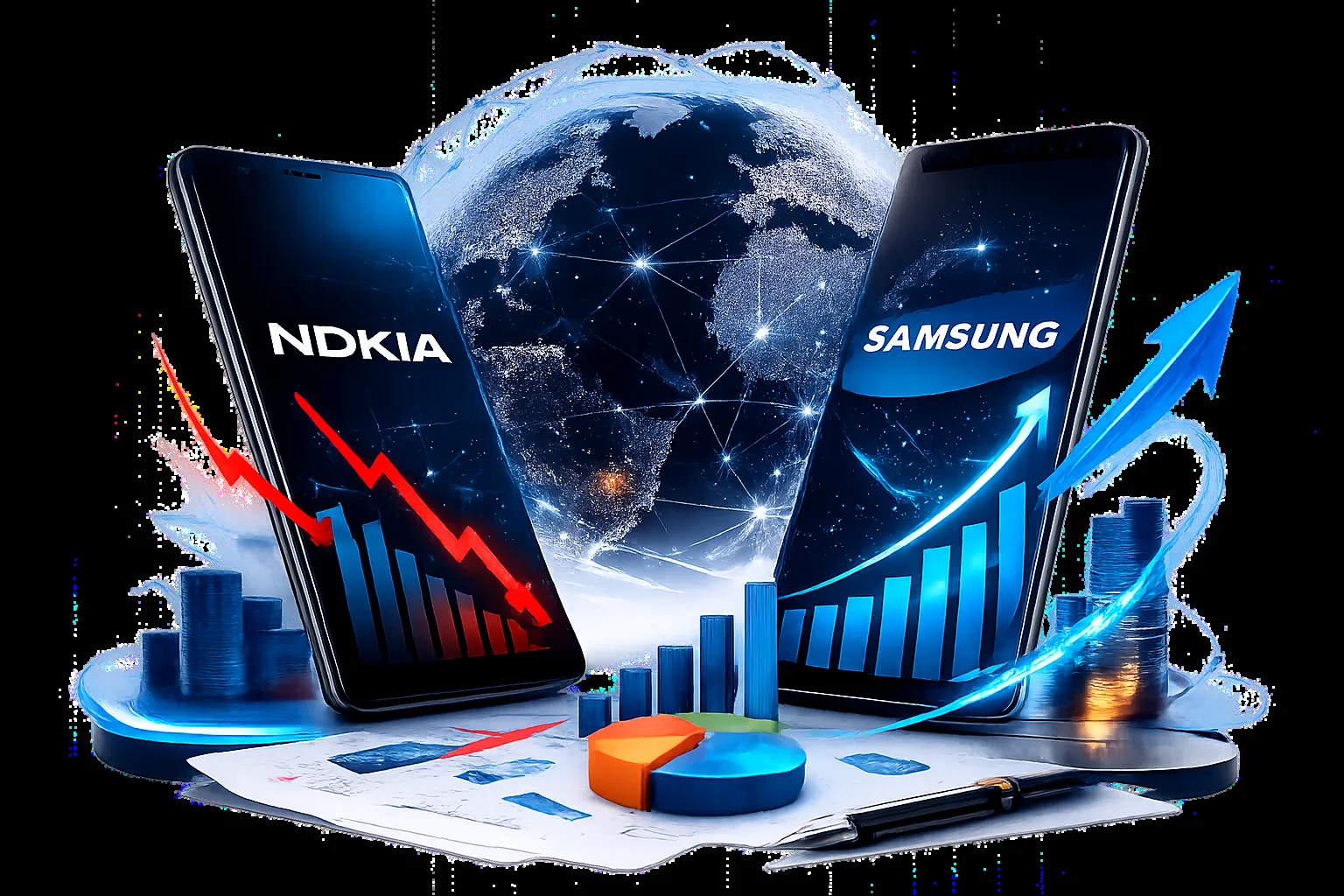
This research project focuses on the study of corporate and financial performance within the
smartphone industry, with a comparative analysis of two globally recognized companies:
Nokia and Samsung Electronics. These companies represent contrasting business trajectories
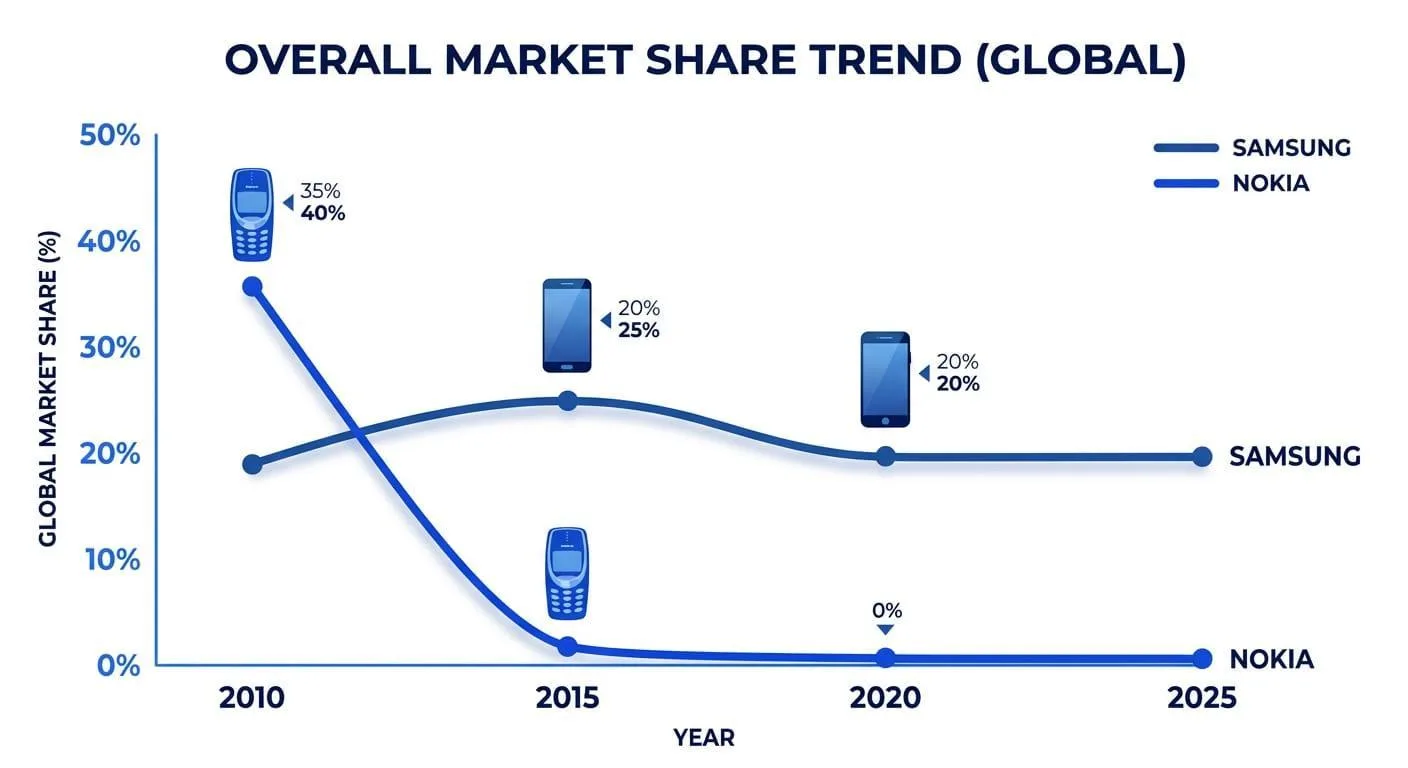
within the industry. Nokia was once the world’s leading mobile phone manufacturer, dominating
the global market during the early 2000s. However, the company experienced a significant
decline in its smartphone business due to delayed technological adaptation and strategic
misalignment with emerging operating systems and software ecosystems.
On the other hand, Samsung Electronics has emerged as one of the most successful technology
companies in the world. Through continuous innovation, aggressive marketing strategies, and
diversification across multiple electronics segments, Samsung has maintained a strong global
presence and consistently ranked among the top smartphone manufacturers. Understanding the
rise and decline of companies in the technology industry provides valuable insights into
corporate strategy, financial management, and competitive dynamics. Businesses operate in
environments characterized by rapid technological change, evolving consumer preferences, and
intense global competition. Companies that fail to adapt quickly to these changes often face
declining revenues, shrinking market share, and eventually corporate or financial failure.
Corporate failure refers to the inability of a company to sustain its operations and maintain its
competitive position in the market. Financial failure, on the other hand, occurs when a company
faces severe financial distress, including declining profitability, increasing debts, liquidity
problems, or inability to generate sufficient revenue to cover operational costs. In many cases,
corporate failure and financial failure are interconnected, as poor strategic decisions often lead to
financial instability.
The comparison between Nokia and Samsung provides a valuable case study to understand how
different strategic approaches and financial management practices can influence long-term
business outcomes. While Nokia struggled to transition effectively from feature phones to
smartphones, Samsung capitalized on emerging opportunities by adopting the Android operating
system, investing heavily in research and development, and expanding its global distribution
network.