3
1. Hair plays a significant role in personal appearance, self-esteem, and social confidence.
Therefore, effective management of hair loss disorders has become an important area of
dermatological and pharmaceutical research.
2. Androgenetic alopecia (AGA), commonly known as pattern hair loss, affects a substantial
proportion of the global population and is characterized by progressive reduction in hair
follicle size and shortened hair growth cycles.
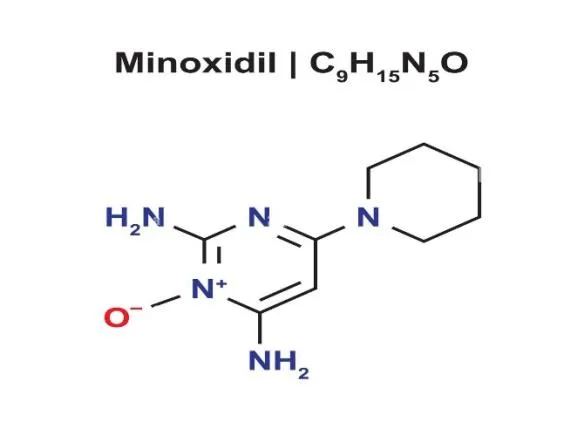
3. Minoxidil is one of the few FDA-approved drugs for the treatment of androgenetic
alopecia. It promotes hair growth by prolonging the anagen (growth) phase, increasing
blood supply to hair follicles, and stimulating follicular activity.
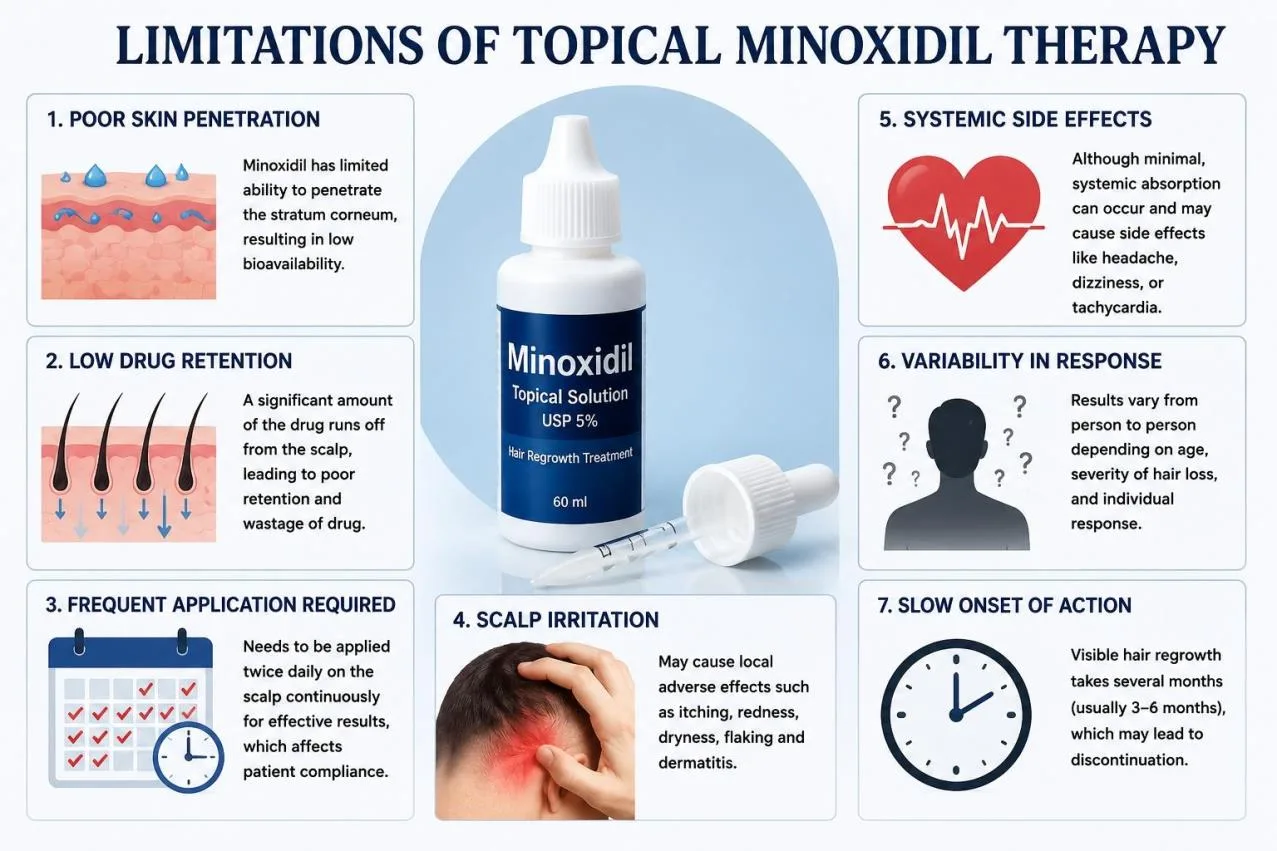
4. Despite its proven efficacy, conventional topical minoxidil formulations exhibit limited
therapeutic outcomes due to poor skin permeability, inadequate follicular targeting, rapid
drug loss from the scalp surface, and patient non-compliance resulting from frequent
application requirements.
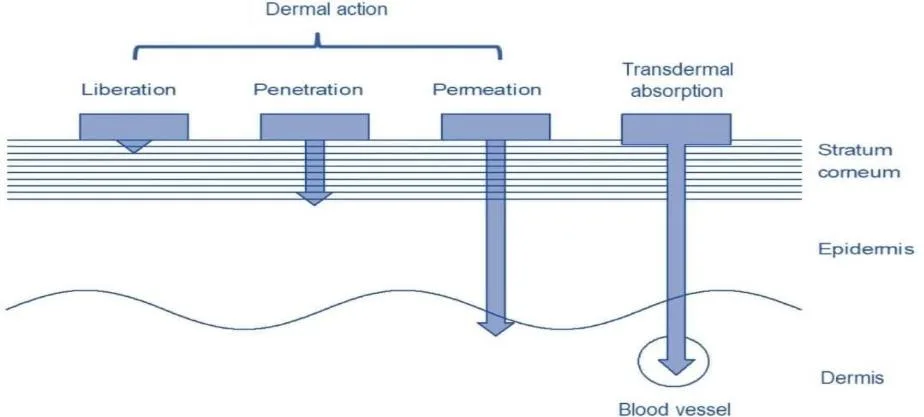
5. The outermost layer of the skin, the stratum corneum, acts as a major barrier to drug
penetration, significantly reducing the amount of minoxidil reaching the deeper follicular
structures where its therapeutic action is required.
6. Recent advances in transdermal drug delivery systems have introduced microneedle
technology as a promising strategy to overcome the limitations associated with traditional
topical formulations.
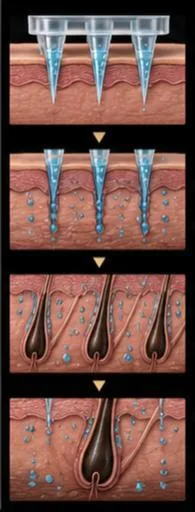
7. Microneedles are microscopic projections capable of creating temporary microchannels in
the skin without causing significant pain, bleeding, or tissue damage, thereby enhancing
drug permeation across the skin barrier.
8. Microneedle-assisted delivery enables direct access to hair follicles and surrounding tissues,
resulting in increased local drug concentration and improved therapeutic efficacy.
9. Controlled drug delivery systems integrated with microneedles can provide sustained
release of minoxidil over an extended period, reducing dosing frequency and improving
patient adherence to treatment.
10. Enhanced follicular targeting achieved through microneedle-assisted delivery may reduce
systemic drug exposure and minimize adverse effects such as scalp irritation, itching,
dryness, and unwanted hair growth in non-target areas.
11. The combination of microneedle technology with controlled-release formulations represents
an innovative approach that can significantly improve the bioavailability and retention of
minoxidil within the scalp.
12. This approach has the potential to increase treatment effectiveness while improving patient
comfort, making it a promising alternative to conventional topical therapies.
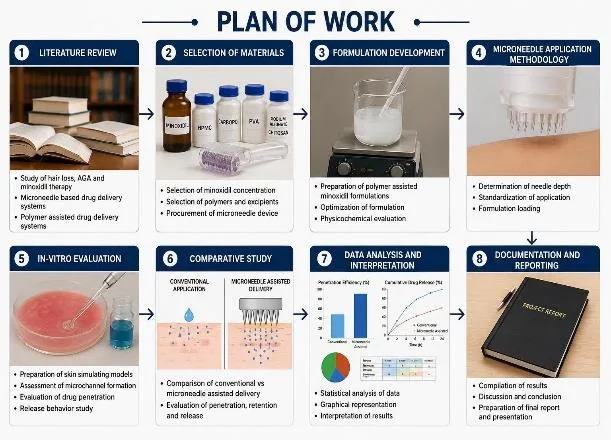
13. The present project focuses on the design and evaluation of a microneedle-assisted
controlled delivery system for minoxidil with the aim of enhancing hair follicle penetration,
achieving sustained drug release, and improving overall therapeutic outcomes in
androgenetic alopecia management.
14. The successful development of such a system may contribute to the advancement of
targeted transdermal therapies and provide a more efficient treatment option for individuals
suffering from hair loss disorders.