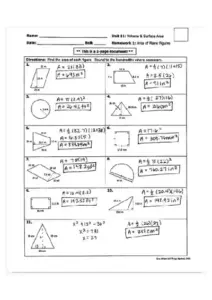
Composite figures are shapes made up of two or more simple geometric figures. This resource focuses on calculating the perimeter and area of various composite shapes, ideal for students studying geometry. It includes practice problems, diagrams, and answers for self-assessment. Designed for middle school and high school students, this material is essential for mastering measurement concepts. Topics covered include finding areas of shaded regions and understanding composite figure properties.

Key Points

  • Explains the concept of composite figures and how to calculate their area and perimeter.
  • Includes practice problems with detailed answers for self-assessment.
  • Covers shaded and non-shaded areas in composite shapes.
  • Ideal for students in middle and high school geometry courses.
newtopiccyclegrowin
3 pages
Language:English
Type:Worksheet
newtopiccyclegrowin
3 pages
Language:English
Type:Worksheet
62
/ 3
9 Academic Math Date:
Day 2: Perimeter & Area of Composite Figures Unit 7: Measurement
3cm
7cm
13cm
6cm
6m
8m
What is a composite figure?
Find the area and perimeter of the following figures:
1.
2.
Find the area of the shaded region in the diagram below:
3.
16 m
9 Academic Math Date:
Day 2: Perimeter & Area of Composite Figures Unit 7: Measurement
Practice: Composite Area and Perimeter
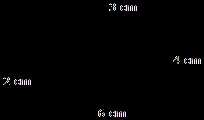
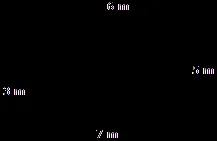
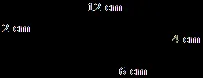
Find the perimeter AND area of the following composite shapes:
a.
c.
e.
ANSWERS: a. P=20, A=18, b. P=24, A=33, c. P=32, A=36, d. P=52, A=72, e. P=32, A=23, f. P=48, A=76
9 Academic Math Date:
Day 2: Perimeter & Area of Composite Figures Unit 7: Measurement
Practise: Composite Area and Perimeter
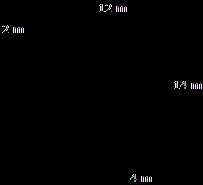
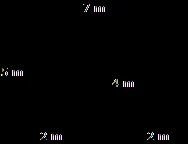
Find the area of the shaded region in each diagram below:
1.
2.
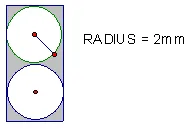
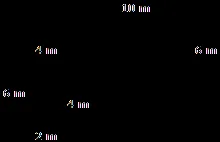
3. Find the area of the non-shaded region and the
area of the shaded region, if the radius of one
circle is 5mm.
4. Find the area of the shaded region:
ANSWERS: 1) 10.81cm
2
, 2) 21.86m
2
, 3) nonshaded=471mm
2
, shaded=129mm
2
, 4) 51cm
2
8.5
6m
9.5cm
9cm
3.5 cm
1.2 cm
2.4 m
3.4 m
7.3 m
2.6 m
4.6 m
1.2 m
/ 3
End of Document
62

FAQs

What is a composite figure in geometry?
A composite figure is a shape that is made up of two or more simple geometric figures. These simple figures can include rectangles, triangles, circles, and other polygons. Understanding composite figures is essential for calculating their area and perimeter, as it often requires breaking them down into their individual components.
How do you find the area of a shaded region in a composite figure?
To find the area of a shaded region in a composite figure, you first need to calculate the area of the entire figure and then subtract the area of the non-shaded parts. The document provides specific examples and calculations to illustrate this process, emphasizing the importance of identifying all relevant dimensions and shapes involved.
What formulas are used to calculate the perimeter and area of composite shapes?
The perimeter of a composite shape is found by adding the lengths of all its outer sides. For the area, you can use individual area formulas for each simple shape that makes up the composite figure and then sum these areas. The document includes practice problems that demonstrate these calculations, ensuring a clear understanding of the methods involved.
What are the answers to the practice problems for composite area and perimeter?
The document provides specific answers to practice problems related to the perimeter and area of composite shapes. For example, the perimeter and area for shape 'a' are P=20 and A=18, while for shape 'b', P=24 and A=33. These answers serve as a reference for students to check their work against the calculations they perform.
How do you find the area of a non-shaded region in a composite figure?
To find the area of a non-shaded region in a composite figure, you need to calculate the area of the entire figure and then subtract the area of the shaded region. The document provides a specific example where the radius of a circle is given, allowing for the calculation of both shaded and non-shaded areas effectively.
What is the significance of practicing with composite figures in geometry?
Practicing with composite figures is significant because it enhances problem-solving skills and helps students understand how to apply geometric concepts in real-world scenarios. The document emphasizes the importance of mastering these skills through various practice problems, which can lead to a deeper comprehension of measurement and spatial reasoning.
How do you calculate the area of a circle within a composite figure?
To calculate the area of a circle within a composite figure, you can use the formula A=πr², where 'r' is the radius of the circle. The document mentions a specific example where the radius is 5 mm, allowing for the calculation of the circle's area, which is crucial when determining the total area of the composite shape.