Units and Measurements DPP 04 focuses on fundamental physical quantities and their applications in physics. It includes multiple-choice questions that cover topics such as velocity, pressure, and energy dimensions. This material is ideal for students preparing for competitive exams like NEET, providing essential practice for mastering units and measurements concepts. The document serves as a valuable resource for physics students seeking to enhance their understanding and problem-solving skills in this critical area.

Key Points

  • Covers fundamental physical quantities relevant to physics exams.
  • Includes multiple-choice questions on velocity, pressure, and energy.
  • Ideal for NEET exam preparation with practice problems.
  • Focuses on the dimensions and units of measurement in physics.
Wish
3 pages
Language:English
Type:Study Guide
Wish
3 pages
Language:English
Type:Study Guide
51
/ 3
NEET
Yakeen NEET 2.0 (2026)
Q1 Which of following is a fundamental physical
quantity?
(A
) Angle (B) Charge
(
C) Temperature (D) Force
Q2 Which one of the following physical quantities is
not a fundamental quantity?
(A
) Luminous intensity
(B) Thermodynamic temperature
(
C) Electric current
(D
) Work
Q3 Which of the following group of physical quantity
can be considered as a group of fundamental
physical quantity?
(A
) Mass, Momentum, Velocity
(B) Displacement, Time, Velocity
(
C) Force, Mass, Acceleration
(D
) Time, Force, Velocity
Q4 Which of the following sets cannot enter into the
list of fundamental quantities in any system of
units ?
(A
) length, mass and velocity
(B) length, time and velocity
(
C) mass, time and velocity
(D
) length, time and mass
Q5 Velocity is a derived physical quantity which
depends on _____ fundamental quantities.
(A
) Zero (B) 1
(
C) 2 (D) 4
Q6
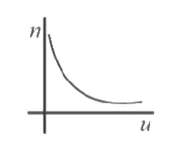
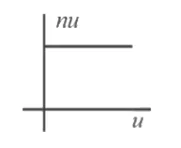
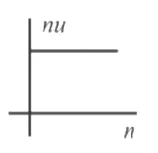
Which of the following graph is correct:
magnitude of measurement & unit of
measurement.
(A)
(B)
(C)
(D) All of these
Q7 The unit of potential energy is
(A)
(B)
(C)
(D)
Q8 The dimensions of pressure are
(A)
(B)
(C)
| |
Physics By Manish Raj Sir
Units and Measurements
DPP: 1
n
=
u
=
g
(
cm/
)
sec
2
g
(cm/sec
)
2
g
(
/sec
)
cm
2
g
( cm/sec)
[ ]
MLT
−2
[
M
]
L
2
T
2
[
M
]
L
−1
T
−2
Android App iOS App PW Website
NEET
(D)
Q9 Which one has the dimensions different from the
remaining three ?
(A)Power (B)Work
(C)Torque (D)Energy
Q10 The dimensions of power are
(A)
(B)
(C)
(D)
Q11 Dimensional formula of velocity of sound is
(A)
(B)
(C)
(D)
Q12 Dimensional formula for torque is
(A) (B)
(C) (D)
Q13 The dimensional formula of focal length is
(A)
(B)
(C)
(D)
Q14 The dimensional formula for impulse is: (Impulse
= mass × change in velocity)
(A)
(B)
(C)
(D)
  |  |
[
ML
]
T
2
M
1
L
2
T
3
M
2
L
1
T
2
M
1
L
2
T
1
M
1
L
1
T
2
L
M
0
T
2
L
T
0
L
M
0
T
1
M
0
L
1
T
1
M
L
2
T
2
M
L
1
T
2
M
L
2
T
3
ML
T
2
[ ]
M
0
L
1
T
0
[
ML
]
T
2
[
M
]
L
1
T
2
[
M
]
L
2
T
2
[ ]
MLT
1
[ ]
ML
2
T
1
[ ]
ML
2
T
2
[ ]
ML
0
T
1
Android App iOS App PW Website
NEET
AnswerKey
Q1 (C)
Q2 (D)
Q3 (D)
Q4 (B)
Q5 (C)
Q6 (D)
Q7 (B)
Q8 (C)
Q9 (A)
Q10 (A)
Q11 (C)
Q12 (A)
Q13 (A)
Q14 (A)
| |Android App iOS App PW Website
/ 3
End of Document
51

FAQs

what is Units and Measurements DPP 04 - Lecture 01 about

Units and Measurements DPP 04 - Lecture 01 focuses on the fundamental and derived quantities in physics, emphasizing their significance in scientific calculations.

  • It covers fundamental physical quantities such as mass, length, and time.
  • The document explains derived quantities like velocity, force, and energy.
  • It includes dimensional analysis and conversion between different units.

what are the key concepts in Units and Measurements DPP 04 - Lecture 01

Units and Measurements DPP 04 - Lecture 01 highlights several key concepts essential for understanding physics.

  • Fundamental Quantities: These include mass, length, and time.
  • Derived Quantities: Examples include velocity, acceleration, and force.
  • Dimensional Analysis: This technique helps in checking the consistency of equations.
  • Units of Measurement: The document discusses SI units and their importance in scientific communication.

how to perform dimensional analysis in Units and Measurements DPP 04 - Lecture 01

Dimensional analysis in Units and Measurements DPP 04 - Lecture 01 is a systematic approach to verify the correctness of equations.

  • Identify the physical quantities involved.
  • Express each quantity in terms of its fundamental dimensions.
  • Check if both sides of the equation have the same dimensions.
  • This method is crucial for deriving relationships between different physical quantities.

what are derived quantities in Units and Measurements DPP 04 - Lecture 01

Derived quantities in Units and Measurements DPP 04 - Lecture 01 are those that are calculated from fundamental quantities.

  • Velocity: Defined as displacement per unit time.
  • Force: Calculated as mass times acceleration.
  • Energy: The work done is expressed as force times distance.
  • Understanding these derived quantities is essential for solving complex physics problems.

what is the importance of units in Units and Measurements DPP 04 - Lecture 01

The importance of units in Units and Measurements DPP 04 - Lecture 01 cannot be overstated, as they provide a standard for measurement.

  • Units ensure clarity and consistency in scientific communication.
  • They allow for accurate calculations and comparisons.
  • Understanding units helps in converting measurements from one system to another, such as from imperial to metric.

how to convert units in Units and Measurements DPP 04 - Lecture 01

Converting units in Units and Measurements DPP 04 - Lecture 01 involves a systematic approach to ensure accuracy.

  • Identify the original unit and the desired unit.
  • Use conversion factors to translate between units.
  • Multiply the quantity by the conversion factor to obtain the result in the new unit.
  • This process is essential for solving problems in physics where different units are used.