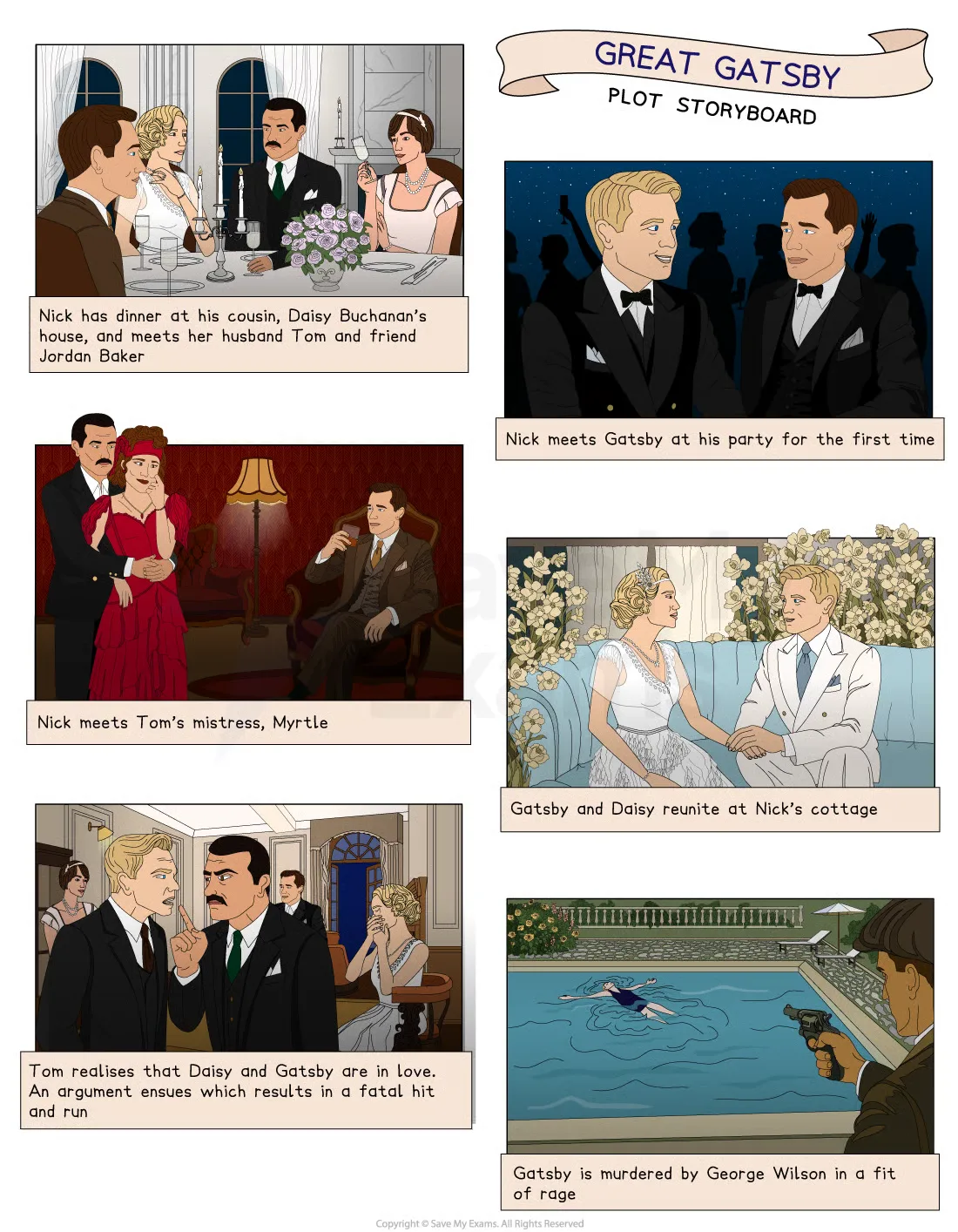
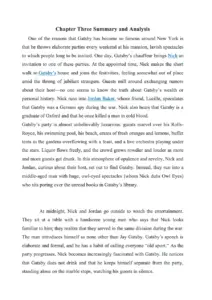
The Great Gatsby by F. Scott Fitzgerald explores themes of the American Dream, wealth, and class through the lives of its characters. Set in the 1920s, the novel follows Jay Gatsby's unrelenting pursuit of his lost love, Daisy Buchanan, against a backdrop of moral decay and social stratification. This revision guide provides detailed notes for OCR A Level English Literature students, covering key themes, character analyses, and plot summaries. Ideal for those preparing for exams, it offers insights into Fitzgerald's critique of American society and the illusions of wealth. The notes encompass important chapters and key quotations to aid understanding and analysis.
Key Points
Analyzes the themes of the American Dream and moral decay in The Great Gatsby
Explores character motivations and relationships, especially between Gatsby and Daisy
Covers key quotations and their significance in understanding the text
Provides chapter summaries and thematic breakdowns for OCR A Level English Literature
This link leads to an external site. We do not know or endorse its content, and are not responsible for its safety. Click the link to proceed only if you trust this site.
Corporate Analysis and Valuation Unit 2 Study NotesStudy Guide
FAQs
What is the main theme of The Great Gatsby?
The Great Gatsby explores the theme of the American Dream, illustrating how it has become corrupted. The novel critiques the idea that hard work leads to success, showing instead that the pursuit of wealth often results in disillusionment and moral decay. Characters like Jay Gatsby embody the relentless pursuit of this dream, yet their efforts lead to tragic consequences, highlighting the emptiness behind the facade of wealth and social status.
Who narrates The Great Gatsby and what is his background?
The Great Gatsby is narrated by Nick Carraway, a recent Yale graduate who moves to New York to work in finance. He comes from the Midwest and serves as a lens through which the events of the story unfold. Nick becomes entangled in the lives of his wealthy neighbors, particularly Jay Gatsby, and provides insight into the complexities of wealth and social class during the 1920s.
How does Jay Gatsby's character represent the American Dream?
Jay Gatsby represents the American Dream through his relentless pursuit of wealth and success, driven by his desire to win back his first love, Daisy Buchanan. Despite his extravagant lifestyle and lavish parties, Gatsby's life is marked by loneliness and disillusionment. His belief that wealth can recreate the past ultimately leads to his downfall, illustrating the tragic consequences of chasing an unattainable ideal.
What role does Daisy Buchanan play in Gatsby's life?
Daisy Buchanan is central to Jay Gatsby's motivations and desires. She is Gatsby's first love, and he believes that winning her back will fulfill his dreams of happiness and success. However, Daisy is married to Tom Buchanan, which complicates Gatsby's pursuit. Throughout the novel, Daisy's choices reflect her entrapment in a life of wealth and status, ultimately leading to Gatsby's tragic end.
What is the significance of the green light in The Great Gatsby?
The green light at the end of Daisy's dock symbolizes Gatsby's hopes and dreams for the future, particularly his desire to rekindle his romance with Daisy. It represents the elusive nature of the American Dream and the idea that happiness is always just out of reach. As Gatsby stretches out his arms toward the light, it becomes clear that his pursuit is fraught with unattainable aspirations, underscoring the novel's themes of longing and disillusionment.
How does the Valley of Ashes symbolize social class in the novel?
The Valley of Ashes serves as a stark contrast to the opulence of East and West Egg, symbolizing the moral and social decay resulting from the uninhibited pursuit of wealth. It represents the plight of the working class and the consequences of economic inequality. Characters like George and Myrtle Wilson, who live in this desolate area, highlight the struggles faced by those who are marginalized in the quest for the American Dream.