Ionic and Covalent Bonding Naming and Formula Guide
Ionic and covalent bonding naming and formula guide provides comprehensive coverage of chemical bonding concepts essential for chemistry students. This resource explains the principles of naming ionic and covalent compounds, including the use of prefixes and polyatomic ions. It includes practice problems and detailed examples to help students master the material. Ideal for high school chemistry courses, this guide supports learners preparing for exams and enhancing their understanding of chemical formulas and nomenclature.
Key Points
Explains naming conventions for ionic and covalent compounds.
Includes practice problems for mastering chemical formulas.
Covers the use of prefixes in naming covalent compounds.
Details the role of polyatomic ions in chemical nomenclature.
This link leads to an external site. We do not know or endorse its content, and are not responsible for its safety. Click the link to proceed only if you trust this site.
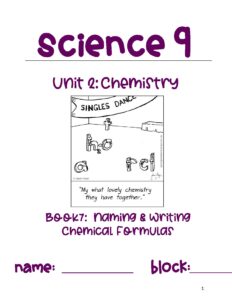
Science 9 Unit 2 Chemistry Naming Chemical Formulas
PDF
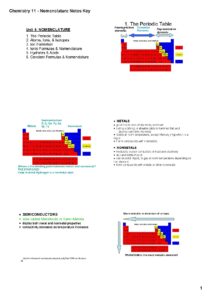
Chemistry 11 Nomenclature Notes for Ionic and Covalent Compounds
PDF
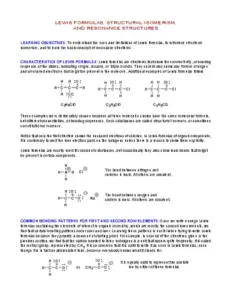
Lewis Formulas and Resonance Structures Study Guide PDF
PDFGuide
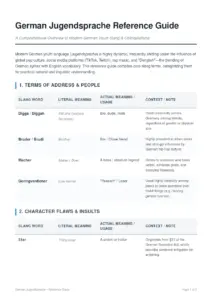
German Jugendsprache Reference GuideGuide
PDFStudy Guide
Python Learning Roadmap: A Comprehensive Guide to Mastering PythonStudy Guide
PDFAnswer Key
Grade 12 Physical Sciences Paper 2 Marking GuidelinesAnswer Key
PDFSyllabus
2026-2027 Course Description GuideSyllabus
PDFGuide
Disney Gift Card eGift Instructions and Redemption GuideGuide
PDFForm
Formulario de Entrenamiento para Fitness y EjercicioForm
PDFGuide
Training Organisation Guide for TVET Certificate V in Electronics and Telecommunication – April 2024Guide
PDFGuide
Études en France: Guide pour les Étudiants InternationauxGuide
PDFGuide
PCOD PCOS Guide: Managing Symptoms and Lifestyle ChangesGuide
FAQs
What are the rules for naming ionic compounds?
Ionic compounds are named by identifying the cation and anion. The cation retains its name, while the anion's name is modified to end in 'ide' if it is a single element. For polyatomic ions, the name remains unchanged. For example, NaCl is named sodium chloride, while Ca(NO3)2 is called calcium nitrate.
How do you name covalent compounds?
Covalent compounds are named using prefixes to indicate the number of atoms present. For instance, CO2 is named carbon dioxide, reflecting the presence of two oxygen atoms. The prefix 'mono-' is often omitted for the first element if there is only one atom. Therefore, N2O is named dinitrogen monoxide.
What is the significance of polyatomic ions in chemical formulas?
Polyatomic ions are groups of atoms that carry a charge and are treated as single entities in chemical formulas. They play a crucial role in ionic compounds, where they can combine with cations to form stable compounds. For example, ammonium sulfate consists of the ammonium ion (NH4+) and sulfate ion (SO4^2-), demonstrating how polyatomic ions contribute to the overall charge balance.
What are some common prefixes used in naming covalent compounds?
Common prefixes include mono- (1), di- (2), tri- (3), tetra- (4), penta- (5), hexa- (6), hepta- (7), octa- (8), nona- (9), and deca- (10). These prefixes help indicate the number of atoms of each element in a compound. For instance, in sulfur hexafluoride (SF6), 'hexa-' indicates that there are six fluorine atoms.
How can students practice naming and writing chemical formulas?
Students can practice by working through exercises that require them to name compounds based on their chemical formulas and vice versa. The guide includes numerous practice problems that reinforce the concepts of ionic and covalent bonding, helping students gain confidence in their skills. Additionally, reviewing examples of both types of compounds can aid in understanding the naming conventions.