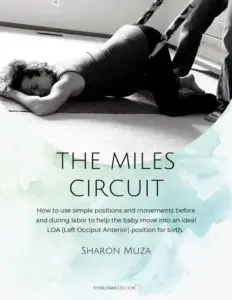
The Miles Circuit by Sharon Muza offers a comprehensive guide for expectant parents and birth professionals on using specific positions and movements to encourage optimal fetal positioning during labor. This method focuses on achieving the Left Occiput Anterior (LOA) position, which is often ideal for a smoother birth experience. The guide outlines practical techniques that can be employed both before and during labor, making it a valuable resource for those preparing for childbirth. With a focus on natural methods of induction, this circuit can help alleviate back labor and promote progress in stalled labor. Ideal for doulas, childbirth educators, and parents seeking to enhance their birthing experience.
Key Points
Explains the Miles Circuit for optimal fetal positioning during labor.
Details specific positions like Open Knee Chest and Lateral Recumbent.
Provides techniques to alleviate back labor and promote labor progression.
Includes guidance for both pre-labor and active labor scenarios.
This link leads to an external site. We do not know or endorse its content, and are not responsible for its safety. Click the link to proceed only if you trust this site.
The Miles Circuit is designed to help rotate a baby into the optimal Left Occiput Anterior (LOA) position for birth. It utilizes specific positions and movements that can be performed during labor to encourage the baby to shift into a more favorable alignment. This method is particularly useful when labor is not progressing or when back labor is experienced. By employing these techniques, expectant parents can enhance their chances of a smoother delivery.
What positions are included in the Miles Circuit?
The Miles Circuit includes three main positions: Open Knee Chest, Lateral Recumbent, and Get Up and Active. The Open Knee Chest position allows the baby to have more room to rotate, while the Lateral Recumbent position helps in relaxing the laboring person and promoting fetal movement. The Get Up and Active section encourages upright movements like lunging and stair walking, which can further assist in the baby's descent and positioning.
When should the Miles Circuit be used during labor?
The Miles Circuit is recommended during labor when there are signs of stalled progress, such as contractions that are not becoming longer, stronger, or closer together. It is also beneficial if the laboring person is experiencing back labor or if the baby's position is not LOA, determined through examination or ultrasound. Using the circuit can provide a gentle nudge to help the baby move into a more favorable position.
How long does the Miles Circuit take to complete?
The entire Miles Circuit is designed to take approximately 90 minutes from start to finish. Each position within the circuit is intended to be held for a set duration, allowing the laboring person to relax and focus on their breathing. If contractions are present, the circuit can be performed continuously through them, making it a flexible option for those in labor.
What are the benefits of using the Miles Circuit?
The Miles Circuit offers several benefits, including promoting optimal fetal positioning and potentially reducing the duration of labor. It provides a natural method of induction that can help initiate labor when needed. Additionally, the positions can alleviate discomfort associated with back labor and help facilitate a smoother birthing process. This approach empowers expectant parents by giving them tools to actively participate in their labor experience.