NOTES-BATTLE OF CONFEDERATES
READ TEXTBOOK THOROUGHLY ALONG WITH NOTES
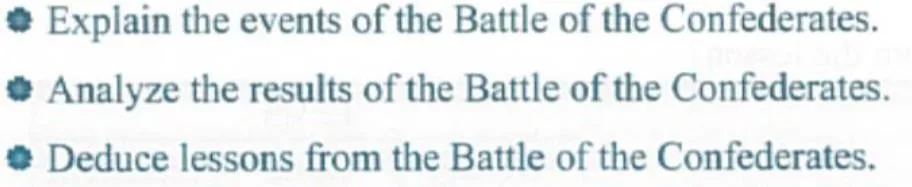
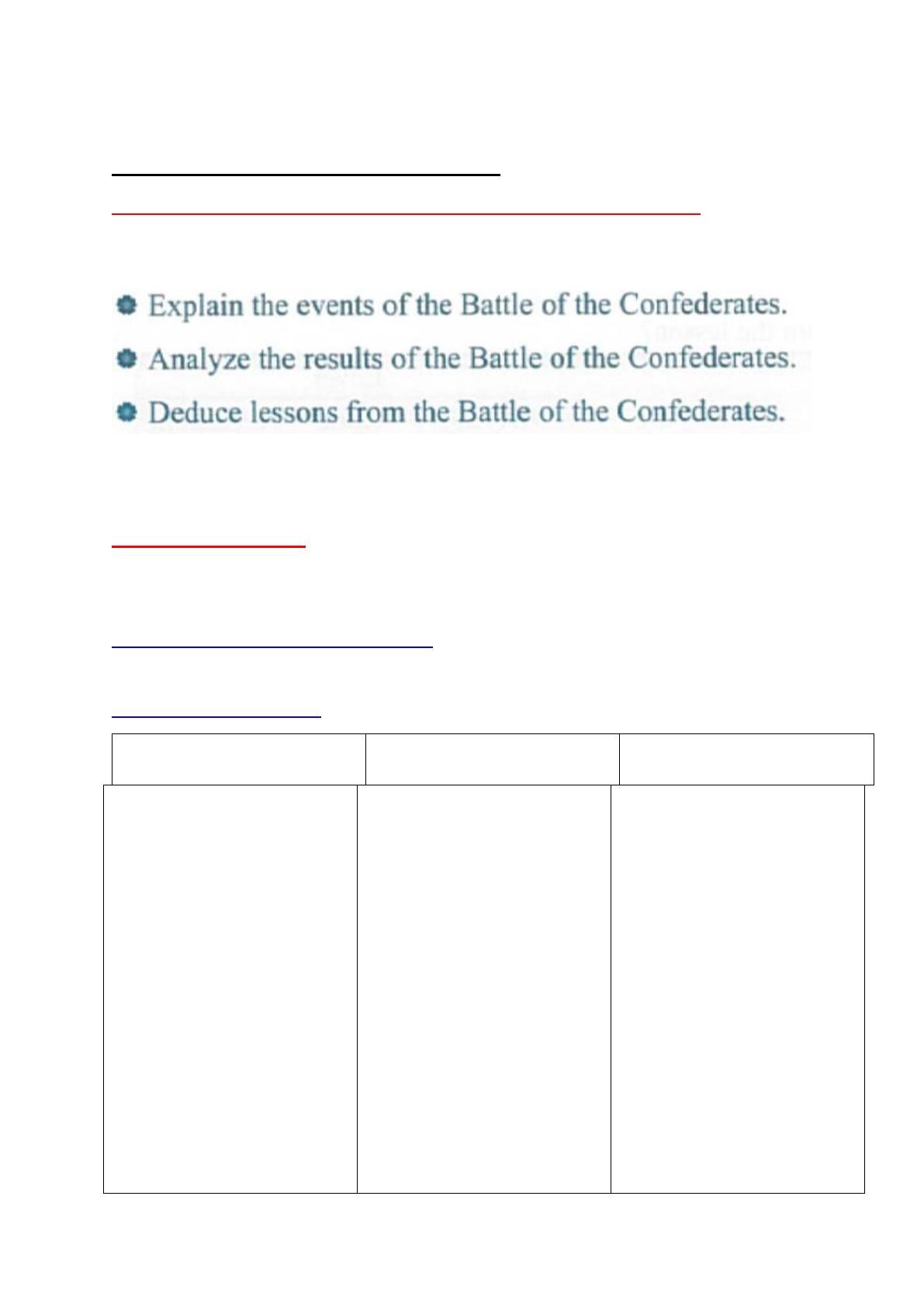
LEARNING OBJECTIVES
VIDEO ANALYSIS:
WATCH THE VIDEO THOROUGHLY TO UNDERSTAND THE
LESSON WELL.
BATTLE OF CONFEDERATE LESSON VIDEO.mp4
KEY HIGHLIGHTS FROM VIDEO
Digging of trench
PART-1
Battle attack
PART-2
Khandaq victory
PART-3
• Strategic
Defense: The trench
was a clever strategy to
protect Medina,
demonstrating the
importance of planning
in facing challenges.
• Unity Against
Adversity: The
collaboration among
tribes highlights the
necessity of unity in
overcoming threats,
even when facing
overwhelming odds.
• Innovation in
Warfare: The trench
strategy demonstrated
the importance of
innovation in
overcoming larger
forces, highlighting the
significance of tactical
thinking in challenging
situations.
• Psychological
Impact: The surprise
factor played a crucial
role in the battle,
showing how
psychological warfare
• - Strategic Thinking:
The Prophet’s ability to
plan and negotiate
highlights the
importance of strategy
in leadership and
conflict resolution.
• Unity and Faith:
The reliance on faith
over material resources
emphasizes the
strength found in unity
and belief in a higher
power.

• Faith Amidst
Hardship: The
Muslims’ endurance
during food shortages
underscores the
strength of faith,
reminding us that
reliance on Allah can
lead to miraculous
outcomes.
• Miracles of
Provision: The
miraculous events, like
the endless feast,
showcase how divine
support can manifest in
dire situations,
reinforcing belief and
hope.
• Fear and Faith: The
contrast between the
fearful and the faithful
illustrates how one’s
belief can shape their
response to crisis,
emphasizing the role of
strong faith.
• Protection of
Families: The Prophet’s
decision to secure
women and children
reflects wisdom in
leadership and the
importance of
safeguarding loved
ones during conflict.
• Historical
Legacy: The story
serves as a reminder of
the resilience and
determination of early
Muslims, inspiring
can affect enemy
morale and strategies.
• Unity and Bravery:
The bravery of
individuals like Ali
(peace be upon him)
illustrated the power of
unity and courage in
difficult times,
inspiring the Muslim
community.
• Betrayal and Trust:
The betrayal by the
Banu Qurayza tribe
emphasized the
fragility of alliances
and the need for trust in
community
relationships during
conflicts.
• Faith as a Strength:
Prophet Muhammad’s
reliance on Allah
during moments of
stress demonstrated
faith as a source of
strength and guidance
in adversity.
• Family and
Community Protection:
The emphasis on
safeguarding families
highlighted the
importance of
community support
during crises, as well as
the value placed on
women and children’s
safety.
• Endurance in
Trials: The extended
nature of the battle
• Persuasion and
Diplomacy: Nuam’s
secret conversion and
subsequent actions
showcase how
diplomacy can alter the
course of events.
• The Power of
Prayer: The Prophet’s
supplication to Allah
demonstrates the
significance of faith and
prayer in times of
adversity.
• Resilience in
Adversity: The Muslim
community’s
perseverance through
difficult conditions
illustrates the
importance of resilience
during challenges.
• Understanding
Enemy Dynamics: The
breakdown of alliances
among the enemy tribes
shows how mistrust can
lead to their downfall.
• Legacy of Strength:
The outcome of the
battle reinforced
Muslim identity and
power, shaping future
interactions in Arabia.

future generations to
uphold their faith and
community spirit.
served as a testament to
the endurance and
patience required in
facing prolonged
hardships, reinforcing
the idea that
perseverance is key to
overcoming challenges.
Battle of the Confederates: Key Events and Lessons
1. Why is the Battle Called the Battle of Confederates?
• The battle is known as the "Battle of the Confederates" due to the alliance
of multiple groups who joined forces against the Muslims in Madinah. In
Arabic, it's called Ahzaab, which is the plural of Hizb, meaning "group."
2. Reasons Behind the Battle of Ahzaab
• Quraish's Revenge: The Quraish of Makkah wanted to avenge their losses
from the two previous battles against the Muslims and aimed to eliminate
the Muslim community once and for all.
• Banu Nadir's Retaliation: The Jewish tribe of Banu Nadir sought revenge
after being expelled from Madinah due to breaking their agreement with
the Prophet Muhammad (peace be upon him).
• Hostility from Other Tribes: Various Arab tribes opposed Islam and joined
the confederation to remove the Muslims from Madinah.
3. Timeline of the Battle
• When It Happened: The battle took place in the fifth year of the Hijrah
(the Muslim calendar's start, marking the Prophet's migration from
Makkah to Madinah) during the month of Shawwal.
4. Strategy and Planning is key to success
• The Prophet Muhammad (peace be upon him) practiced consultation,
involving his companions in critical decisions. Following Salman Al-Farsi's
suggestion, the Muslims dug a defensive trench on Madinah’s northern
side, the only unprotected side. The trench served as a barrier, preventing
the enemy from easily entering the city.
5. Alternate Names for the Battle
• This battle is also known as Ghazwat Al-Ahzab (Battle of the
Confederates), Battle of the Trench, and Ghazwat Khandaq.
6. Events During the Battle
• Unexpected Trench Defense: Upon reaching Madinah, the Confederate
forces were surprised by the trench, an unfamiliar military tactic in
Arabia. This disrupted their plans for a swift victory.
• Attempts to Cross: The Confederates attempted multiple times to cross
the trench, but the Muslims successfully defended it. Skirmishes
continued as both sides exchanged arrows.
• The Cold Wind: In a miraculous intervention, Allah sent a fierce, cold
wind that disrupted the Confederate forces, overturning their tents,
Figures