The National Circular Economy Strategy (NCES) outlines a framework for transitioning to a resource-efficient circular economy in Germany. It emphasizes the importance of reducing, reusing, and recycling materials to minimize waste and promote sustainability. This strategy includes background information, draft structures, and text aimed at guiding implementation across various sectors. It is particularly relevant for policymakers, environmental advocates, and businesses looking to align with EU regulations and enhance resource efficiency. The document serves as a comprehensive guide for stakeholders involved in the circular economy transformation.

Key Points

  • Outlines the framework for Germany's National Circular Economy Strategy
  • Emphasizes reducing, reusing, and recycling materials for sustainability
  • Includes draft structures and text for guiding implementation
  • Relevant for policymakers and businesses aligning with EU regulations
Rishika Salvadi
Author:Federal Ministry for the Environment, Nature Conservation, Nuclear Safety and Consumer Protection
Edition:December 2024
152 pages
Language:German
Type:Report
Rishika Salvadi
Author:Federal Ministry for the Environment, Nature Conservation, Nuclear Safety and Consumer Protection
Edition:December 2024
152 pages
Language:German
Type:Report
419
/ 152
Reduce, reuse, recycle
PRODUCT DESIGN
P
r
o
d
u
c
t
i
o
n
T
r
a
d
e
C
o
n
s
u
m
p
t
i
o
n
s
e
c
o
n
d
a
r
y
r
a
w
m
a
t
e
r
i
a
l
s
p
r
i
m
a
r
y
r
a
w
m
a
t
e
r
i
a
l
s
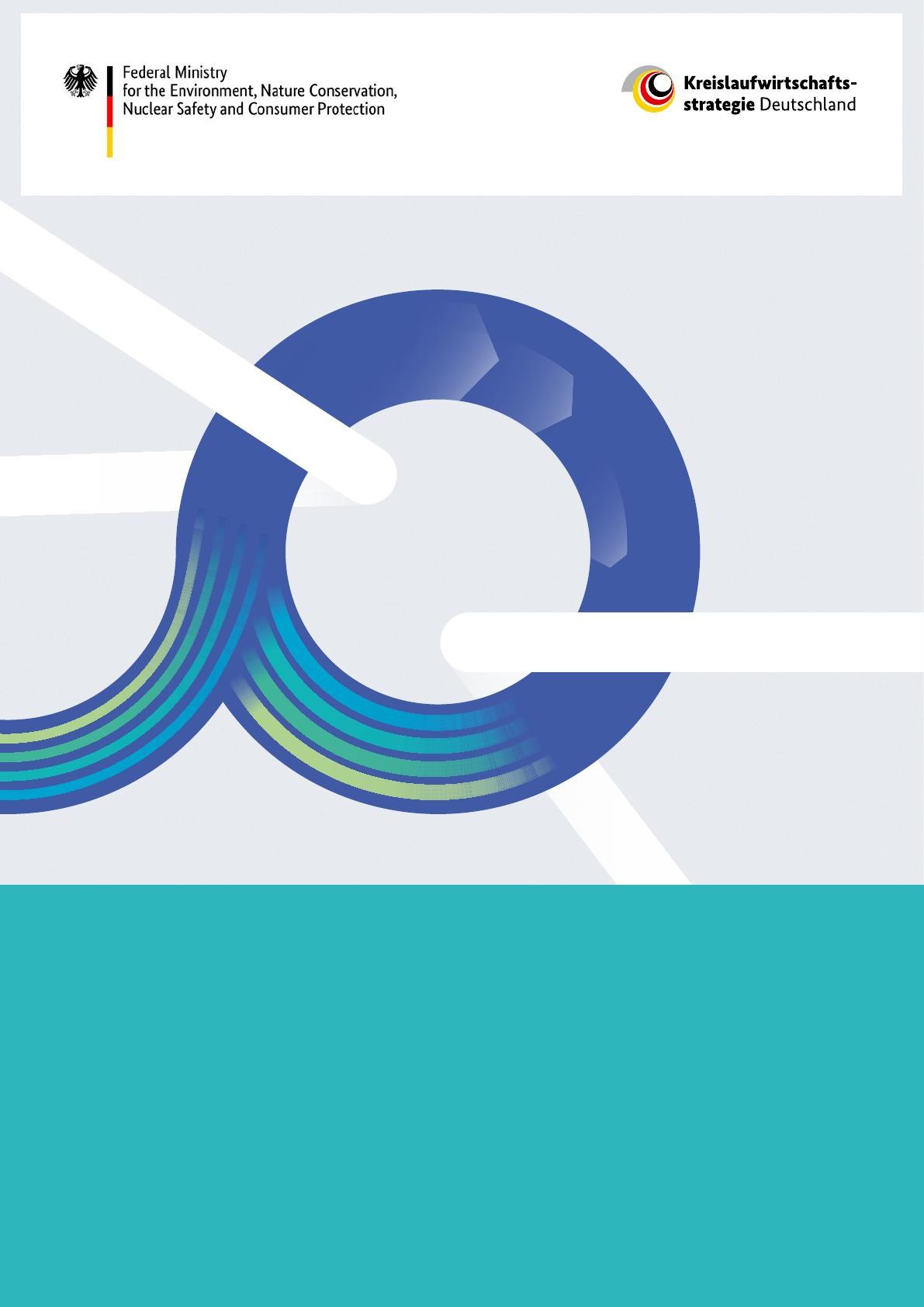
The National Circular
Economy Strategy
Background information on the National Circular Economy
The National Circular Economy Strategy
Draft structure and text
The National Circular Economy Strategy (NCES)
The National Circular Economy Strategy
Background information on the National Circular Economy
The National Circular Economy Strategy
Draft structure and text
The National Circular Economy Strategy (NCES)
/ 152
End of Document
419

FAQs

What is the vision for a circular economy in Germany by 2045?
The vision for a circular economy in Germany by 2045 emphasizes that circularity will shape economic thinking and action. It aims for a system where companies design circular, durable, and easily repairable products, ensuring that raw materials are returned to tailored cycles at the end of a product's life. The goal is to minimize waste and reliance on fossil raw materials while maximizing resource efficiency and sustainability.
What are the three overarching goals of the National Circular Economy Strategy?
The National Circular Economy Strategy outlines three overarching goals: 1) Close material cycles by doubling the use of secondary raw materials by 2030. 2) Increase raw material sovereignty and security of supply, aiming for the EU to meet specific demands for strategic raw materials. 3) Prevent waste by reducing per capita municipal waste by 10% by 2030 and 20% by 2045 compared to 2020 levels.
How does the NCES aim to contribute to climate action?
The NCES aims to contribute to climate action by establishing the circular economy as a central pillar of climate change mitigation. It recognizes that the circular economy can significantly reduce greenhouse gas emissions, particularly in the industrial sector, which is responsible for a large portion of emissions. By promoting recycling and resource efficiency, the strategy seeks to lower the demand for primary raw materials and enhance the resilience of supply chains.
What are the R-strategies mentioned in the NCES?
The R-strategies in the NCES refer to a ten-step hierarchy that ranks circular economy strategies based on their potential to increase circularity. The strategies include refuse, rethink, reduce, reuse, repair, refurbish, remanufacture, repurpose, recycle, and recover. These strategies emphasize prevention and the importance of designing products for longevity and recyclability, thereby promoting sustainable consumption patterns.
What role does digitalization play in the National Circular Economy Strategy?
Digitalization is identified as a key enabler for the circular economy in the NCES. It facilitates transparency in material flows and resource consumption, allowing for better tracking and optimization of these flows. Digital technologies support new circular business models, such as product-as-a-service solutions, and enhance the efficiency of recycling processes. The strategy emphasizes the need for digital product passports to provide essential information throughout a product's life cycle.
What measures are proposed to improve recycling rates for electrical and electronic equipment?
To improve recycling rates for electrical and electronic equipment, the NCES proposes several measures, including the revision of the Electrical and Electronic Equipment Act (ElektroG) to enhance collection rates and recovery of resource-relevant metals. Additionally, there is a focus on establishing a quality seal for refurbished equipment to boost consumer confidence and increase the market for second-hand devices. The strategy also emphasizes the need for better enforcement of existing regulations to prevent illegal exports of waste.