Mit Human Impact Management Erfolgreich Restrukturieren
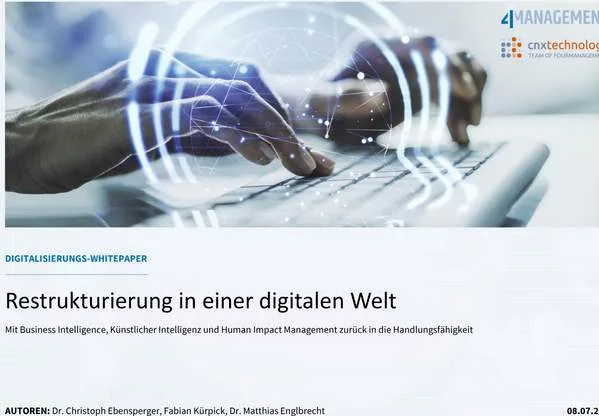
Human Impact Management focuses on successfully restructuring organizations by bridging the gap between potential and implementation. This approach emphasizes the importance of human factors in the success of AI initiatives, highlighting the need for clear leadership and a shared vision. It also stresses the significance of early stakeholder engagement and open communication to build trust and reduce uncertainty. By making disruptive technologies tangible through practical workshops, organizations can foster understanding and alleviate fears associated with AI.
Key Points
Explains the role of Human Impact Management in organizational restructuring.
Highlights the importance of clear leadership and a shared vision for success.
Emphasizes early stakeholder engagement and open communication in AI initiatives.
Describes practical workshops to make disruptive technologies more accessible.
This link leads to an external site. We do not know or endorse its content, and are not responsible for its safety. Click the link to proceed only if you trust this site.
The Hidden Costs of Chemistry Workflows ReportWhitepaper
PDFWhitepaper
Artificial Intelligence and the Future of HealthcareWhitepaper
PDFWhitepaper
ScholarFinder: AI Matching Engine and Essay RaterWhitepaper
PDFWhitepaper
KI Agenten im Mittelstand: Digitale Kollegen die wirklich entlastenWhitepaper
PDF
Strategic Management Past Papers
PDF
Principles Of Management Past Papers
PDF
Technology Vs Human Creativity Presentation.Pptx 20260615 181732 0000
PDF
Universal Human Values Questions
PDFArticle
Understanding Body Image Issues and Their ImpactArticle
PDFForm
BCA Management Fee Receipt – MES College of Arts, Commerce & ScienceForm
PDFStudy Guide
Pembahasan TKD Sosial Humaniora 2018Study Guide
PDFNotes
Pharmacotherapeutics Management of Urinary Tract Infection GuidelinesNotes
FAQs
What is Human Impact Management in the context of restructuring?
Human Impact Management connects technology with the human interface, emphasizing that the success of AI initiatives relies not just on technology but significantly on human factors. It creates a bridge between potential and implementation, ensuring that the human aspect is prioritized during restructuring processes.
What are the key recommendations for successful digital transformation?
The document outlines four main recommendations for successful digital transformation. Firstly, it emphasizes the importance of clear leadership and a realistic, inspiring vision that leaders should actively embody. Secondly, it stresses the need for early and open communication with relevant stakeholders to build trust and clarify expectations. Thirdly, it advocates for practical, experience-based learning formats over traditional training, especially for disruptive technologies like AI. Lastly, it highlights the importance of psychological safety to address emotional concerns surrounding AI.
How should leaders approach the development of a vision for transformation?
Leaders are encouraged to develop a realistic and inspiring vision that they actively demonstrate. This vision should provide clear orientation for the entire organization, linking Human Impact Management with traditional transformation support. By embodying this vision, leaders can foster a culture of trust and motivation among their teams, facilitating smoother transitions during restructuring.
Why is stakeholder engagement crucial in AI initiatives?
Engaging relevant stakeholders early and addressing them on equal footing is particularly vital in AI initiatives due to the heightened emotional concerns associated with these technologies. Open communication helps to build trust, clarify expectations, and reduce uncertainties, which is essential for the successful implementation of AI projects.
What role does psychological safety play in AI adoption?
Psychological safety is crucial for fostering acceptance and successful implementation of AI technologies. The document notes that societal perceptions of AI are often emotionally charged and not based on facts. Creating a protected environment with open communication can help alleviate these emotional barriers, making it easier for individuals to engage with and accept AI solutions.
How can organizations make disruptive technologies more accessible?
Organizations are advised to use experiential and practical formats, such as AI impulse workshops, rather than traditional training methods to make disruptive technologies like AI more accessible. This approach ensures that the benefits of these technologies are tangible and comprehensible, thereby reducing apprehensions and fostering a better understanding among employees.