Middle Colonies relations with Native Americans highlight the interactions between colonists and tribes like the Iroquois. William Penn's 1681 letter emphasizes the importance of friendship and coexistence. The document discusses trade agreements that benefited both parties, allowing colonists to exchange goods like crops and lumber for furs and pelts. This peaceful relationship contrasts with the more hostile interactions seen in the southern colonies. The content is valuable for understanding colonial history and Native American relations.

Key Points

  • Explores William Penn's efforts to establish friendly relations with Native Americans in 1681.
  • Details the trade agreements between Middle Colonies and tribes like the Iroquois.
  • Contrasts peaceful interactions in the Middle Colonies with hostility in southern colonies.
  • Highlights the mutual benefits of trade, including crops, lumber, and furs.
newtopiccyclegrowin
1 page
Language:English
Type:Article
newtopiccyclegrowin
1 page
Language:English
Type:Article
357
/ 1
Native American Relations
The colonists of the Middle Colonies continue to benefit from interaction
with surrounding Native American tribes. In 1681, William Penn wrote a
letter to the Iroquois tribe in an attempt to establish a friendly relationship.
In his letter, he stated “I desire to enjoy it with your love and consent, that
we may always live together as neighbours and friends, else what would
the great God say to us, who hath made us not to devour and destroy one
another, but live soberly and kindly together in the world...” People might be
hesitant to travel to the middle colonies because of this close relationship
with the Native Americans. They believe it is not wise to interact with such
primitive people. In the southern colonies, where the colonists do not make
an effort to keep peace with the Native Americans, the colonists believe
that Native Americans were too dangerous to socialize with. However, the
colonists have easily been able to establish a peaceful relationship with the
Iroquois tribe. Trading posts have been established Philadelphia and New York where the colonists and Native
Americans trade goods with one another. These trading posts allow the colonists to trade crops, weapons, and
lumber in exchange for the Native Americans’ furs and pelts. This system benefits both parties, as the Native
Americans are able to acquire the colonists’ technology, and the colonists are able to gain wealth by trading the
Native Americans' goods with the Europeans.
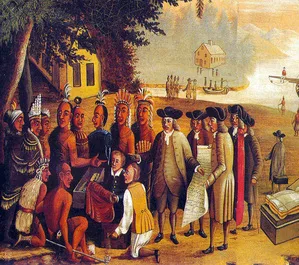
The colonists offering goods to the Native
Americans
THE MIDDLE COLONIES
HOME GEOGRAPHY DAILY LIFE RELIGION ECONOMY NATIVE AMERICAN RELATIONS
BIBLIOGRAPHY
6/8/26, 12:27 AM
Native American Relations - The Middle Colonies
https://middlecolonies-julia.weebly.com/native-american-relations.html
1/1
/ 1
End of Document
357

FAQs

What was William Penn's approach to Native American relations?
William Penn sought to establish a friendly relationship with the Iroquois tribe in 1681. In his letter, he expressed a desire to live together as neighbors and friends, emphasizing the importance of kindness and sober living among all people. He believed that the great God intended for people to coexist peacefully rather than to devour and destroy one another.
How did the Middle Colonies benefit from trading with Native Americans?
The Middle Colonies established trading posts in Philadelphia and New York, facilitating trade between colonists and Native Americans. This exchange allowed colonists to trade crops, weapons, and lumber for furs and pelts from Native Americans. The relationship was mutually beneficial, as Native Americans gained access to European technology, while colonists profited from the trade of Native American goods.
What were the differing views of Native Americans in the Middle and Southern Colonies?
In the Middle Colonies, colonists generally viewed Native Americans as partners for trade and established peaceful relationships, particularly with the Iroquois tribe. Conversely, in the Southern Colonies, colonists perceived Native Americans as dangerous and chose not to socialize with them, leading to a more hostile view. This contrast highlights the varying approaches to Native American relations across the colonies.
What goods were exchanged between colonists and Native Americans?
The trading system between colonists and Native Americans involved the exchange of various goods. Colonists traded crops, weapons, and lumber, while Native Americans provided furs and pelts in return. This trade not only enriched the colonists but also allowed Native Americans to acquire useful European technology.
Why might some people hesitate to travel to the Middle Colonies?
Some individuals might hesitate to travel to the Middle Colonies due to their close relationships with Native Americans, whom they perceive as primitive. This perception can create a sense of caution or fear regarding interaction with Native tribes. In contrast, the Southern Colonies' more hostile stance towards Native Americans might lead to a belief that socializing with them is too dangerous.