Linked lists are a fundamental data structure in computer science, essential for understanding dynamic memory allocation and data manipulation. This document covers various linked list operations, including insertion, deletion, and traversal techniques, as well as advanced topics like cycle detection and reversing linked lists. It serves as a comprehensive guide for computer science students and professionals looking to enhance their programming skills. Key concepts include linear search algorithms, K-reverse operations, and the differences between singly and doubly linked lists. Ideal for those preparing for coding interviews or studying data structures in depth.

Key Points

  • Explains linked list structure and node implementation techniques
  • Covers insertion, deletion, and traversal methods for linked lists
  • Includes algorithms for cycle detection using Floyd’s method
  • Discusses reversing linked lists using iterative and recursive approaches
  • Details K-reverse operations for linked lists and their applications
Manvi Jain
8 pages
Language:English
Type:Study Guide
Manvi Jain
8 pages
Language:English
Type:Study Guide
62
/ 8
Linked List [IMP]
Note: These questions could be easily done using Arrays/ Vectors, However in the
interview, you’ll have to do it using Linked List only.
Node structure
Each node contains the link to the next node and some data variables.
Implementation
1. Make a node named head. This will act as the start of the linked list.
To insert at the end of the Linked List, iterate to the last node. In the below code
temp is the last node. So temp -> next = new node(val).
Printing a LinkedList
We pass the head of the node, and then keep on iterating till we do not reach the
end of the node.
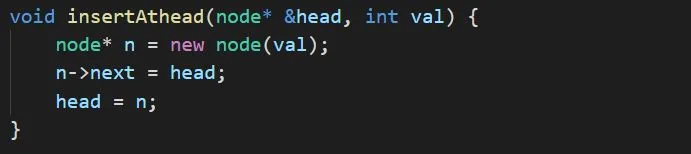
Inserting at the head
The next of the new node should be the old linked list (head). So the head will
now point to the new node because it now becomes the new head.
Try yourself:
Do a Linear Search in the Linked List.
Code for Linear Search:
/ 8
End of Document
62

FAQs

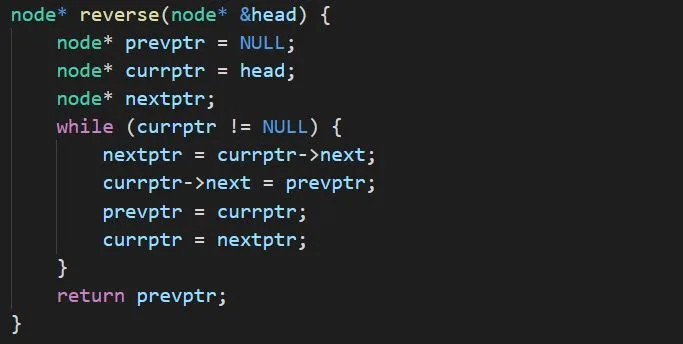
What are the key methods for reversing a linked list?
There are two primary methods for reversing a linked list: iterative and recursive. The iterative method involves using three pointers: previous, current, and next. By connecting the current node's next to the previous node and moving forward, the list can be reversed. The recursive method involves calling the function recursively to reverse the remaining list, ensuring that the head becomes the last node in the reversed list, with its next set to NULL.
How can you detect a cycle in a linked list?
Cycle detection in a linked list can be accomplished using Floyd’s cycle detection method, also known as the hare and tortoise method. This technique involves using two pointers: a slow pointer that moves one step at a time and a fast pointer that moves two steps at a time. If there is a cycle, the fast pointer will eventually meet the slow pointer. The time complexity for this method is O(n), making it efficient for cycle detection.
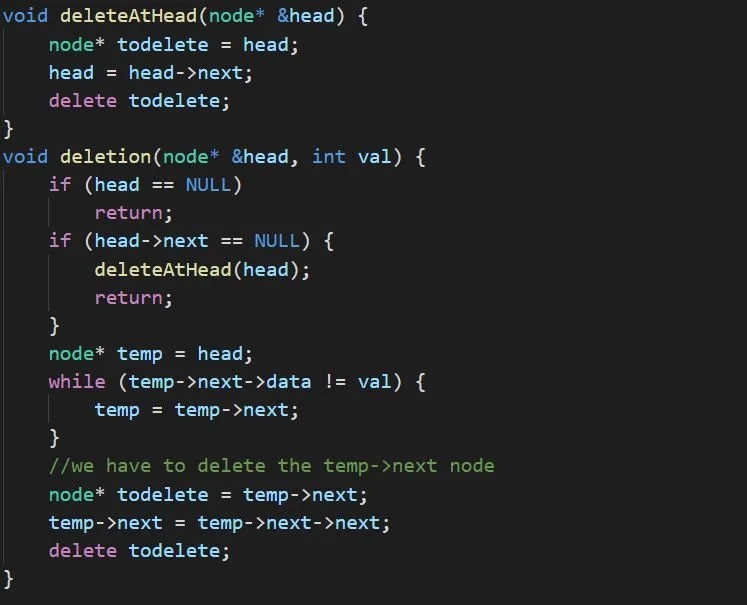
What is the process for deleting a node in a linked list?
To delete a node in a linked list, there are two main scenarios. If the node to be deleted is the head, the head pointer is simply incremented to the next node. If the node is not the head, the list is traversed to find the node preceding the one to be deleted. Once located, the next pointer of the preceding node is updated to bypass the node to be deleted, effectively removing it from the list.
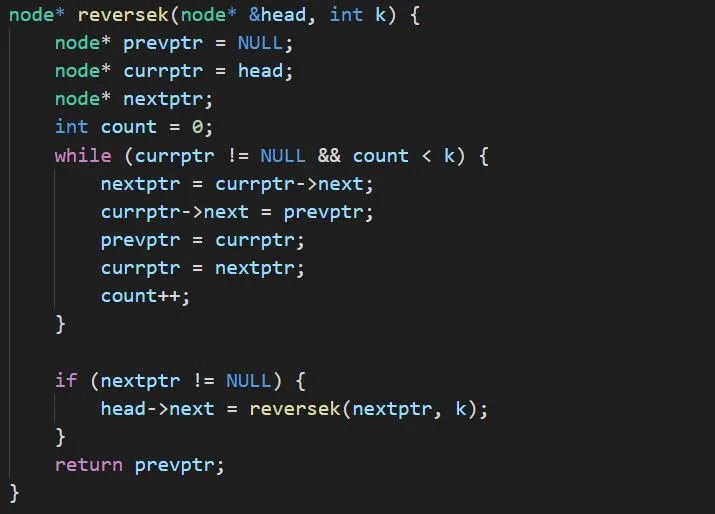
What is the K reverse technique in linked lists?
The K reverse technique involves reversing the nodes of a linked list in groups of K. If the size of the linked list is less than K, the list is returned as is. If it is greater than K, the first K nodes are reversed, and the function recurses for the remaining list. This method allows for efficient manipulation of linked lists while maintaining the order of nodes that are left unprocessed.
How do you insert a node at the head of a linked list?
To insert a node at the head of a linked list, a new node is created and its next pointer is set to the current head. The head pointer is then updated to point to this new node, making it the new head of the list. This operation effectively adds the new node to the front of the linked list.
What is the structure of a doubly linked list?
In a doubly linked list, each node contains links to both the next and the previous nodes, allowing for bidirectional traversal. This structure enhances the flexibility of linked list operations, enabling easier insertions and deletions from both ends of the list. The implementation of a doubly linked list requires careful management of these pointers to ensure integrity.
What are some additional important questions related to linked lists?
Some additional important questions related to linked lists include how to find the middle of the linked list, delete a node, check if the linked list is a palindrome, swap nodes in pairs, and merge two sorted linked lists. These topics cover various operations and algorithms that are fundamental to understanding and manipulating linked lists effectively.