Econ Study Flashcards for Perfect Competition and Monopoly
Econ Study Flashcards provide key concepts in economics, focusing on market structures such as perfect competition, monopoly, and monopolistic competition. These flashcards cover essential characteristics, efficiency metrics, and long-run adjustments for each market type. Ideal for students preparing for economics exams, the content includes definitions, examples, and regulatory frameworks. Key topics include pricing strategies, sources of monopoly power, and the implications of oligopoly behavior. This resource is designed to enhance understanding of economic principles and improve exam performance.
Key Points
Explains characteristics of perfect competition, including many buyers and sellers and identical products.
Covers sources of monopoly power, such as legal protections and natural monopolies.
Details the inefficiencies associated with monopolies, including deadweight loss and allocative inefficiency.
Discusses the strategic behavior of firms in oligopoly markets, highlighting interdependence and potential collusion.
This link leads to an external site. We do not know or endorse its content, and are not responsible for its safety. Click the link to proceed only if you trust this site.
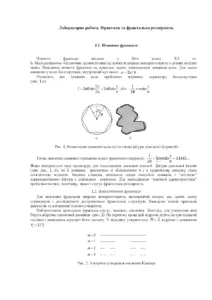
Fractals and Fractal Dimension: An In-Depth StudyLab Report
PDFStudy Guide
Conditional Sentences: Understanding First, Second, and Third TypesStudy Guide
PDFSyllabus
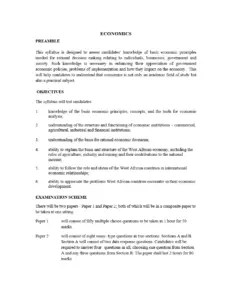
Economics Syllabus for West African CountriesSyllabus
PDFStudy Guide
Class XII Physics Study Material 2024-25 Bengaluru RegionStudy Guide
PDFOther
Comprehensive Study Guide for AP Biology – Unit 7Other
PDFStudy Guide
CAFC Accounts Study Master PlanStudy Guide
PDFStudy Guide
Physics Notes – Comprehensive Study GuideStudy Guide
PDFTextbook
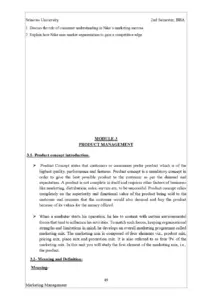
Marketing Management Study Material 2025 – AuthorTextbook
PDFTextbook
Marketing Management Study Material 2025Textbook
PDFLecture Notes
Second Order Differential Equations with Constant CoefficientsLecture Notes
FAQs
What are the main characteristics of perfect competition?
Perfect competition is defined by many buyers and sellers in the market, all offering identical products. Firms in this market structure are price takers, meaning they cannot influence the market price. There is also easy entry and exit for firms, ensuring that profits are driven to normal levels in the long run. Additionally, perfect information is available to all participants, allowing for informed decision-making.
How does a monopoly differ from perfect competition?
A monopoly is characterized by a single seller in the market, offering a unique product with no close substitutes. Unlike firms in perfect competition, a monopolist is a price maker, able to set prices above marginal cost. This market structure often leads to inefficiencies, such as deadweight loss, as the monopolist restricts output to maximize profits. Barriers to entry in monopolistic markets are typically high, preventing new competitors from entering.
What is monopolistic competition and how does it function?
Monopolistic competition features many firms that sell differentiated products, allowing for some degree of price-making ability. This market structure includes characteristics such as free entry and exit, which leads to normal profits in the long run. Firms compete on factors beyond price, such as product quality and branding. Examples include clothing brands and restaurants, where each firm seeks to attract customers through unique offerings.
What are the implications of oligopoly behavior in markets?
Oligopoly markets consist of a few large firms whose decisions are interdependent, meaning the actions of one firm can significantly impact others. This can lead to price rigidity, where prices remain stable despite changes in demand. Firms may engage in collusion to maximize joint profits, but this behavior is often regulated by antitrust laws. Models like the kinked demand curve and game theory are used to analyze strategic interactions among oligopolistic firms.
What are the efficiency implications of monopolies?
Monopolies are often not allocatively efficient, as they set prices above marginal costs, leading to a deadweight loss in the market. This inefficiency results from the monopolist's ability to restrict output to maximize profits, which contrasts with perfect competition where price equals marginal cost. Additionally, monopolies may not achieve productive efficiency, as they do not produce at the minimum average total cost. Regulatory measures, such as antitrust laws, are sometimes implemented to mitigate these inefficiencies.