

Access an extensive, community-driven archive of Linguistics PDFs, syntax worksheets, phonetic charts, and language analysis guides curated to maximize your academic grades and research projects. This dedicated resource library tracks the scientific study of language structure, meaning, and development across global communities. Whether you are diagramming a complex sentence matrix, analyzing phonetic transcripts, or preparing for an upcoming university linguistics exam, these files give you instant, downloadable clarity.
Linguistics is the scientific study of human language and its structure. Unlike traditional grammar instruction, which focuses on prescriptive rules of how people should speak, linguistics is descriptive—analyzing how people actually produce, perceive, and organize language naturally. The discipline spans a wide array of subfields, examining everything from the physical acoustics of speech sounds to the psychological processes behind language acquisition and social variations across dialects. Studying linguistics builds advanced analytical reasoning, structural decoding skills, and cognitive frameworks essential for fields like artificial intelligence, natural language processing (NLP), data analysis, speech therapy, and international education.
Our collaborative document network hosts student-shared reading notes, structural templates, and exam reviews meticulously categorized across the core subfields of linguistic science:
Acoustic & Articulatory Phonetics: Download comprehensive study sheets tracking how the human vocal tract produces speech sounds. Access diagrams detailing place and manner of articulation, along with complete International Phonetic Alphabet (IPA) transcription cheat sheets.
Phonological Rules: Review lecture sheets analyzing underlying sound systems and mental representations within specific languages, covering concepts like allophones, phonemic patterns, and syllable structures.
Morphological Patterns: Access structural notes focused on word formation. Master the mechanics of free and bound morphemes, compounding, derivation, and inflection across different global language families.
Syntax Tree Formatting: Download step-by-step worksheets and structural templates for building X-bar theory syntax trees, clause dependencies, and phrase structural rules to simplify your formal grammar homework.
Formal Semantics: Study peer-shared dossiers on how meaning is constructed through literal linguistic expressions, focusing on truth-conditional logic, thematic roles, and lexical relations.
Pragmatic Contexts: Download analysis sheets investigating how context influences meaning in real-world conversations, covering speech acts, implicatures, and conversational maxims.
Social Language Variations: Explore cultural reading guides mapping how geographic location, socioeconomic status, ethnicity, and gender create diverse dialects and sociolects.
Cognitive Language Processing: Access study bundles summarizing the psychological mechanics of child language acquisition, bilingualism, and neurological language processing in the brain (including Broca’s and Wernicke’s areas).
| Subfield | Core Analytical Focus | Primary Document Formats | Best Applied To |
| Phonetics | Speech production, vocal anatomy, acoustic waveforms | IPA charts, transcription guides, PDF | Auditory tracking, accent analysis, speech therapy |
| Syntax | Sentence structures, phrase hierarchies, word order | Structural syntax trees, matrices, DOCX | Computational parsing, structural grammar exams |
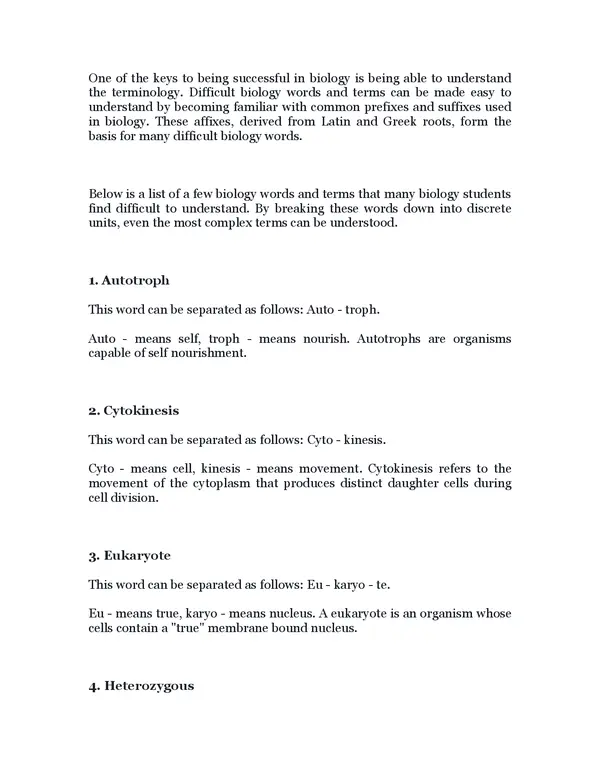
| Morphology | Word structures, root variations, prefix/suffix tracking | Parsing worksheets, morpheme lists, PDF | Vocabulary etymology, computational linguistics |
| Pragmatics | Contextual meaning, speaker intent, conversational rules | Dialogue breakdowns, analysis prompts | Communication studies, conversational logic |
Prescriptive linguistics enforces strict, artificial rules dictating how a language ought to be used (e.g., “never end a sentence with a preposition”). Descriptive linguistics—which forms the foundation of modern linguistic science—merely observes, records, and analyzes the natural structures and patterns of language as it is actually used by native speakers, treating all dialects and vernaculars as systematic, rule-governed systems.
An X-bar syntax tree requires breaking a sentence down into hierarchically nested phrases (such as Noun Phrases, Verb Phrases, and Prepositional Phrases). Every phrase consists of a Head (the core word), a Complement (which completes the meaning), and a Specifier. Our database contains clear, step-by-step syntax parsing worksheets that illustrate exactly how to branch specifiers, adjuncts, and heads under timed exam conditions.
A morpheme is the smallest meaningful unit of a language that cannot be broken down further. A free morpheme can stand alone as an independent word (e.g., “cat” or “walk”). A bound morpheme cannot stand alone and must be attached to a root word to convey meaning, such as prefixes (“un-“) or inflectional plural/tense suffixes (“-s”, “-ed”).
Yes. As language science merges heavily with software development, our global community regularly uploads introductory guides covering natural language processing (NLP), regular expressions (Regex) for text mining, and tokenization logic. You can easily find these interdisciplinary materials by browsing our advanced linguistics folders or utilizing the localized site search.
Every syntax tree template, phonetic chart, and sociolinguistic research paper across our Linguistics index is maintained by a global network of students and language scientists who believe in open, decentralized study tools. To see how these structural mechanics connect with broader literary fields or regional historical tracking, return to our primary Chesser Resources Browse Directory.
Ready to download premium syntax tree worksheets or phonological lecture bundles? Leverage our community distribution engine: head to your user dashboard to upload 5 of your own lecture summaries, syntax charts, or dialect essays, and instantly secure unrestricted access to the high-yield PDFs you need to maximize your grades today.