Never Again Rwanda focuses on genocide prevention, peace building, and youth empowerment in Rwanda. The organization educates young people about the Rwandan Genocide, fostering social cohesion and promoting human rights. Through community initiatives and advocacy, it aims to heal divisions and encourage unity among diverse ethnic groups. The action plan includes programs for improving sanitation, environmental sustainability, and raising awareness about social issues. This resource is essential for understanding Rwanda’s journey towards reconciliation and the role of youth in shaping a peaceful future.

Key Points

  • Focuses on genocide prevention and education about the Rwandan Genocide.
  • Promotes youth empowerment through leadership training and community engagement.
  • Advocates for human rights and justice for genocide survivors.
  • Facilitates community dialogues to heal ethnic divisions and foster unity.
  • Implements action plans for environmental sustainability and social awareness.
Devy dacker nickson
9 pages
Language:English
Type:Report
Devy dacker nickson
9 pages
Language:English
Type:Report
73
/ 9
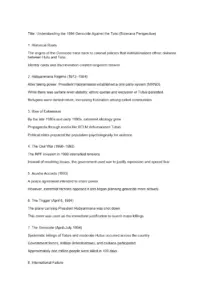
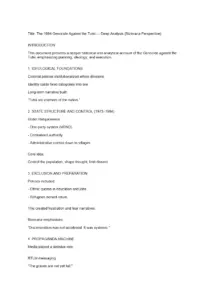
Never Again Rwanda (NAR) is a non-governmental organization (NGO) that was founded in
2002 in Rwanda. It aims to promote peace building, human rights, and the prevention of
genocide by empowering youth, fostering social cohesion, and providing education about the
Rwandan Genocide of 1994. The organization's mission is grounded in the belief that by
educating and involving the younger generation, the cycle of violence and hatred that led to the
genocide can be prevented in the future.
History of Never Again Rwanda (NAR)
1.Foundation (2002): Never Again Rwanda was established by a group of young
Rwandans who were deeply impacted by the aftermath of the 1994 genocide, where an
estimated 800,000 people, primarily Tutsi, were killed by the Hutu-dominated
government forces and their supporters. The founders of NAR sought to create an
organization that would address the root causes of the genocide and work to prevent
future violence. Their goal was to foster a culture of peace and reconciliation through
education, advocacy, and community-based initiatives.
2.Youth Empowerment and Education: One of the organization's main focuses has been
youth empowerment. Through programs such as "Never Again Rwanda Youth," the
NGO works to engage young people in discussions about the importance of unity,
tolerance, and human rights. They provide platforms for youth to actively participate in
Rwanda's reconstruction and to develop leadership skills that will enable them to be
advocates for peace.
3.Promoting National Unity and Reconciliation: Rwanda's national healing process after
the genocide has been a long and complex journey. NAR has contributed to this process
by promoting national unity and reconciliation. The organization has facilitated
dialogues, workshops, and initiatives designed to bring together people from different
ethnic backgrounds to overcome divisions that have lingered since the genocide.
4.Advocacy and Policy Influence: In addition to grassroots work, Never Again Rwanda
has been involved in policy advocacy, pushing for legislative and institutional changes
that support human rights, peace building, and the prevention of violence. They have
partnered with government institutions, international organizations, and other NGOs to
create policies that promote peace, justice, and reconciliation at national and international
levels.
5.International Reach and Recognition: Over the years, Never Again Rwanda has
garnered recognition for its efforts both within Rwanda and internationally. Its work in
youth empowerment, genocide education, and peace building has been praised, and it has
participated in global discussions on how to prevent genocide and mass atrocities. The
organization’s impact has extended to other regions affected by similar issues of conflict,
making it a voice for peace building in the Great Lakes Region of Africa and beyond.
Focus on Genocide Prevention: One of the key tenets of NAR's work is the belief that the best
way to prevent genocide and mass atrocities is through education. By teaching the younger
generations about the horrors of the Rwandan Genocide and the importance of unity, NAR hopes
to break the cycle of hatred and intolerance that fueled the violence in the past. The organization
also highlights the importance of international cooperation in genocide prevention.

ACTION PLAN OF NAR URUMURI
The mission of Never Again Rwanda (NAR) is centered around preventing the recurrence of
genocide and promoting sustainable peace through education, youth empowerment, human rights
advocacy, and the strengthening of national unity and reconciliation. The organization operates
on the belief that understanding the past, particularly the traumatic history of the 1994 Rwandan
Genocide, and fostering inclusive dialogue can help prevent future violence and the conditions
that lead to conflict.
Here is a detailed breakdown of the core aspects of NAR's mission:
1. Genocide Prevention and Education
Raising Awareness: One of the primary goals of NAR is to educate both Rwandans and
the international community about the genocide that took place in 1994. Through various
educational initiatives and awareness campaigns, NAR seeks to ensure that future
generations understand the dangers of ethnic divisions, hate speech, and political
manipulation that can lead to mass atrocities.
Genocide Education for Youth: NAR places a strong emphasis on educating young
people about the genocide. By engaging youth in dialogue about the history of Rwanda,
the importance of tolerance, and the lessons learned, the organization aims to instill a
sense of responsibility to prevent such a tragedy from ever happening again. This
includes school-based programs, youth-led initiatives, and collaborations with other
organizations to integrate genocide studies into curricula.
2. Promoting National Unity and Reconciliation
Healing Divisions: NAR works to bridge the divides between ethnic groups that were
exacerbated by the genocide. The organization advocates for a Rwanda where individuals
are not defined by their ethnicity but as citizens of a unified nation. It facilitates inter-
ethnic dialogue, community discussions, and activities that foster understanding and
reconciliation among Rwandans who may have been affected by the genocide.
Reconciliation Processes: The organization's efforts are aligned with Rwanda’s broader
reconciliation agenda. Through restorative justice initiatives, local dialogues, and
supporting initiatives like the Gacaca courts (traditional community justice processes),
NAR promotes healing among survivors, perpetrators, and the broader society.
3. Youth Empowerment and Leadership
Building Leadership Skills: NAR is dedicated to empowering youth by providing them
with leadership training and civic education. Through workshops, seminars, and
programs, NAR helps youth understand their role in society and equips them with the
skills to become agents of change who can positively impact their communities.
Youth Participation in Peace building: The organization ensures that young people
have a platform to participate in discussions about peace, social justice, and the
development of Rwanda. NAR’s mission emphasizes that youth are not just passive
recipients of information but active participants in shaping the future of the country.
Promoting Responsible Citizenship: NAR seeks to encourage youth to take ownership
of their roles as responsible citizens. This includes promoting values such as
accountability, human dignity, respect for diversity, and social cohesion.
4. Advocacy for Human Rights and Justice
Advocating for Human Rights: NAR is a vocal advocate for human rights, ensuring that
the voices of marginalized groups are heard and their rights protected. The organization
works on issues such as freedom of expression, access to justice, and the protection of
vulnerable populations in Rwanda.
Justice for Victims of Genocide: The organization pushes for justice for survivors of the
genocide and works to ensure that the legal system provides accountability for past
atrocities. NAR advocates for ongoing efforts to pursue justice and ensure that the lessons
learned from Rwanda’s history guide future policy and justice practices.
5. Promoting Social Cohesion and National Development
Fostering Unity through Shared National Values: NAR encourages Rwandans to
embrace shared values of unity, equality, and solidarity. The organization’s programs aim
to strengthen the social fabric of the nation by promoting inclusive development and
combating any forces that seek to divide the country along ethnic, political, or economic
lines.
Community-based Projects: NAR facilitates community development projects that
promote social cohesion, cooperation, and mutual support. These projects often focus on
empowering individuals and communities to come together and work on rebuilding their
lives and local infrastructures in the wake of the genocide.
6. International Advocacy for Peace and Justice
Global Advocacy for Genocide Prevention: Beyond Rwanda, NAR’s mission extends
to the international stage. The organization seeks to raise global awareness about the
importance of genocide prevention and the need for sustained international cooperation in
the fight against mass atrocities. NAR advocates for stronger mechanisms for preventing
genocide, both at the United Nations level and in other international fora.
Global Partnerships for Peace building: NAR collaborates with other NGOs,
international bodies, and governments to strengthen the international community's
capacity to prevent genocide and mass violence. The organization emphasizes the
importance of learning from Rwanda’s experience in order to foster peace and
reconciliation in other parts of the world that are facing similar challenges.
7. Strengthening Institutions for Sustainable Peace
Institutional Capacity Building: NAR works to strengthen local and national
institutions that contribute to peace and security in Rwanda. This includes supporting the
rule of law, empowering local authorities to manage conflict and promote peaceful
/ 9
End of Document
73

FAQs

what is Never Again Rwanda about

Never Again Rwanda is a non-governmental organization focused on genocide prevention and youth empowerment.

Founded in 2002, it aims to educate the younger generation about the Rwandan Genocide of 1994 and promote peace, human rights, and social cohesion. The organization believes that by empowering youth and fostering dialogue, the cycle of violence can be broken.

how does Never Again Rwanda empower youth

Never Again Rwanda empowers youth through various educational and leadership programs.

  • It provides training and workshops aimed at developing leadership skills.
  • The organization engages youth in discussions about tolerance and human rights.
  • Through initiatives like 'Never Again Rwanda Youth', young people are encouraged to participate actively in their communities.

what are the goals of Never Again Rwanda

The goals of Never Again Rwanda center around preventing genocide and fostering national unity.

  • Promote education about the Rwandan Genocide and its lessons.
  • Advocate for human rights and social justice.
  • Facilitate reconciliation among communities affected by the genocide.
  • Empower youth to become agents of change in their society.

how does Never Again Rwanda promote peace

Never Again Rwanda promotes peace through community dialogues and educational initiatives.

  • It organizes workshops that bring together individuals from different ethnic backgrounds.
  • The organization facilitates discussions aimed at healing divisions caused by the genocide.
  • By fostering understanding and tolerance, NAR aims to create a unified society.

what initiatives does Never Again Rwanda have for genocide prevention

Never Again Rwanda has several initiatives aimed at genocide prevention.

  • Educational programs that teach the history and consequences of the Rwandan Genocide.
  • Community-based projects that encourage dialogue and reconciliation.
  • Advocacy for policies that promote human rights and prevent violence.

what impact has Never Again Rwanda made

Never Again Rwanda has made significant impacts in peacebuilding and youth empowerment.

  • It has facilitated numerous community dialogues that promote reconciliation.
  • The organization has trained thousands of youth in leadership and civic engagement.
  • Its advocacy efforts have influenced national policies related to human rights and justice.

how does Never Again Rwanda address human rights

Never Again Rwanda addresses human rights by advocating for the protection and promotion of these rights.

  • It works to ensure marginalized groups have their voices heard.
  • The organization promotes accountability for past atrocities.
  • It raises awareness about human rights issues through educational campaigns.

what educational programs does Never Again Rwanda offer

Never Again Rwanda offers various educational programs focused on genocide education and human rights.

  • School-based programs that integrate genocide studies into curricula.
  • Youth-led initiatives that encourage discussions about tolerance.
  • Workshops and seminars that educate communities about the importance of peace.

how does Never Again Rwanda collaborate with other organizations

Never Again Rwanda collaborates with various organizations to enhance its impact.

  • It partners with local NGOs and international bodies for peacebuilding initiatives.
  • The organization engages in joint advocacy efforts to influence policy changes.
  • Collaboration extends to educational projects aimed at raising awareness about genocide prevention.

what is the mission of Never Again Rwanda

The mission of Never Again Rwanda is to prevent genocide and promote sustainable peace.

  • It focuses on educating youth about the dangers of ethnic divisions.
  • The organization aims to foster national unity and reconciliation.
  • It advocates for human rights and justice for victims of the genocide.