The genocide against the Tutsi in Rwanda was a systematic mass slaughter that occurred in 1994, resulting in the deaths of approximately one million people in just 100 days. This document provides a comprehensive overview of the historical roots, the rise of extremism, and the international community’s failure to intervene. It details the events leading up to the genocide, including the Habyarimana regime and the Arusha Accords. The aftermath highlights the efforts for unity and reconciliation in Rwanda. This resource is essential for understanding the complexities of this tragic event.

Key Points

  • Explains the historical roots of the genocide against the Tutsi in Rwanda
  • Details the rise of extremist ideologies leading to mass violence
  • Covers the international community’s failure to intervene during the genocide
  • Discusses the aftermath and efforts for reconciliation in Rwanda
Devy dacker nickson
2 pages
Language:English
Type:Report
Devy dacker nickson
2 pages
Language:English
Type:Report
72
/ 2
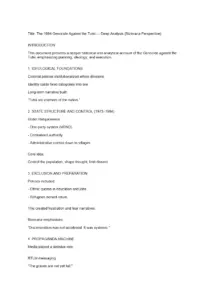
Title: Understanding the 1994 Genocide Against the Tutsi (Bizimana Perspective)
1. Historical Roots
The origins of the Genocide trace back to colonial policies that institutionalized ethnic divisions
between Hutu and Tutsi.
Identity cards and discrimination created long-term tension.
2. Habyarimana Regime (1973–1994)
After taking power, President Habyarimana established a one-party system (MRND).
While there was surface-level stability, ethnic quotas and exclusion of Tutsis persisted.
Refugees were denied return, increasing frustration among exiled communities.
3. Rise of Extremism
By the late 1980s and early 1990s, extremist ideology grew.
Propaganda through media like RTLM dehumanized Tutsis.
Political elites prepared the population psychologically for violence.
4. The Civil War (1990–1993)
The RPF invasion in 1990 intensified tensions.
Instead of resolving issues, the government used war to justify repression and spread fear.
5. Arusha Accords (1993)
A peace agreement intended to share power.
However, extremist factions opposed it and began planning genocide more actively.
6. The Trigger (April 6, 1994)
The plane carrying President Habyarimana was shot down.
This event was used as the immediate justification to launch mass killings.
7. The Genocide (April–July 1994)
Systematic killings of Tutsis and moderate Hutus occurred across the country.
Government forces, militias (Interahamwe), and civilians participated.
Approximately one million people were killed in 100 days.
8. International Failure
The international community failed to intervene effectively.
Warnings were ignored, and peacekeepers had limited mandates.
9. Aftermath
The RPF stopped the genocide in July 1994.
The country began rebuilding, focusing on unity and reconciliation.
Conclusion
As emphasized by Dr. Jean-Damascène Bizimana:
The Genocide was not spontaneous. It was planned, organized, and executed through ideology,
propaganda, and political strategy.
/ 2
End of Document
72

FAQs

what is genocide against the tutsi

The genocide against the Tutsi was a horrific event that occurred in Rwanda from April to July 1994.

It involved the systematic killing of Tutsis and moderate Hutus, resulting in approximately one million deaths in just 100 days. The genocide was fueled by longstanding ethnic tensions exacerbated by colonial policies, propaganda, and extremist ideologies. Key factors included:

  • Colonial Legacy: Institutionalized ethnic divisions between Hutu and Tutsi.
  • Political Context: The Habyarimana regime's exclusionary policies.
  • Media Propaganda: Dehumanizing portrayals of Tutsis in outlets like RTLM.

how did the genocide against the tutsi start

The genocide against the Tutsi was triggered by the assassination of President Habyarimana on April 6, 1994.

This event served as the immediate catalyst for the mass killings that followed. Extremist factions within the government used the assassination as a pretext to launch a coordinated campaign of violence against Tutsis. Key points include:

  • Plane Crash: The downing of Habyarimana's plane ignited violence.
  • Psychological Preparation: Years of propaganda had prepared the population for violence.
  • Militia Involvement: Groups like the Interahamwe played a significant role in the killings.

what were the consequences of the genocide against the tutsi

The consequences of the genocide against the Tutsi were profound and far-reaching, impacting Rwanda and the international community.

After the genocide, the Rwandan Patriotic Front (RPF) took control and stopped the killings in July 1994. The aftermath included:

  • Humanitarian Crisis: Millions of refugees fled to neighboring countries.
  • Rebuilding Efforts: Focus on unity and reconciliation within Rwanda.
  • International Reflection: The genocide highlighted failures in global intervention and prevention strategies.

how many people died in the genocide against the tutsi

Approximately one million people were killed during the genocide against the Tutsi in Rwanda.

This staggering figure represents a significant portion of the Tutsi population and also includes moderate Hutus who opposed the violence. The genocide lasted for about 100 days, characterized by brutal killings and widespread atrocities. Key statistics include:

  • Timeframe: April to July 1994.
  • Death Toll: Estimated at 800,000 to 1 million.
  • Perpetrators: Involvement of government forces, militias, and civilians.

what is the international response to the genocide against the tutsi

The international response to the genocide against the Tutsi was widely criticized as inadequate and ineffective.

Despite numerous warnings and evidence of escalating violence, the global community failed to take decisive action. Key aspects of the response included:

  • Limited Intervention: Peacekeepers had restricted mandates and were unable to intervene effectively.
  • Ignored Warnings: Many alerts about the impending genocide were overlooked.
  • Post-Genocide Reflection: The event led to discussions on the responsibility to protect (R2P) and reform in humanitarian intervention.

what were the causes of the genocide against the tutsi

The causes of the genocide against the Tutsi are complex and rooted in historical, political, and social factors.

Key causes include:

  • Colonial Policies: Ethnic divisions were institutionalized during colonial rule, creating deep-seated animosities.
  • Political Exclusion: The Habyarimana regime's oppressive policies marginalized Tutsis and fostered resentment.
  • Propaganda and Extremism: Media outlets like RTLM dehumanized Tutsis and incited violence.