Cambridge O Level Biology 5090/12 Past Paper May/June 2025
Cambridge O LevelBiology 5090/12 Past Paper for May/June 2025 offers a comprehensive assessment of biology concepts. It includes multiple-choice questions covering various topics such as cell structure, photosynthesis, and human physiology. This past paper is essential for students preparing for their O Level examinations, providing practice with exam-style questions. The document serves as a valuable resource for revision and understanding key biological principles.
Key Points
Includes 40 multiple-choice questions focused on key biology topics.
Covers essential concepts such as cellular processes and human anatomy.
Designed for Cambridge O Level Biology students preparing for exams.
Provides a practical resource for self-assessment and exam preparation.
This link leads to an external site. We do not know or endorse its content, and are not responsible for its safety. Click the link to proceed only if you trust this site.
Cambridge O Level Biology 5090/42 Paper 4 Alternative to Practical October/November 2025Past Paper
PDFPast Paper
Cambridge O Level Biology 5090/12 Paper 1 Multiple Choice October/November 2025Past Paper
PDFPast Paper
Cambridge O Level Physics 5054/12 Past Paper May/June 2024Past Paper
PDFPast Paper
Cambridge IGCSE Mathematics 0580/22 Past Paper February/March 2021Past Paper
PDFPast Paper
Cambridge IGCSE Mathematics 0580/42 Past Paper October/November 2021Past Paper
PDFPast Paper
Cambridge O Level Physics 5054 2025 Winter Paper 1 Multiple ChoicePast Paper
PDFPast Paper
Zimbabwe School Examinations Council Mathematics Past Paper 2021Past Paper
PDFPast Paper
Cambridge IGCSE Physics 0972/04 Specimen Paper 2023Past Paper
PDFPast Paper
Chemistry Unit 4 Question Paper – Edexcel International A LevelPast Paper
PDFPast Paper
January 2019 IAL Mark Scheme Paper 5 Edexcel Chemistry A LevelPast Paper
PDFPast Paper
Kinematics in Newtonian Mechanics – Cambridge O Level PhysicsPast Paper
PDFPast Paper
Grade 12 Physical Sciences June 2024 Paper 2 and MemoPast Paper
FAQs
What is the magnification of a human egg cell drawing?
A student observes a human egg cell with a diameter of 0.12 mm, which is drawn with a diameter of 4.2 cm. To find the magnification, you divide the drawing size by the actual size. The calculation yields a magnification of approximately 35 times, making the correct answer B 35.
Which enzyme catalyzes the breakdown of its substrate at low pH?
In the context of digestion, pepsin is the enzyme that catalyzes the breakdown of its substrate at an optimum rate in a low pH environment. This is significant because pepsin functions effectively in the acidic conditions of the stomach, where it plays a crucial role in protein digestion.
What is the balanced equation for photosynthesis?
The balanced equation for photosynthesis presented in the document is 6CO2 + 6H2O → C6H12O6 + 6O2. This equation illustrates the process by which plants convert carbon dioxide and water into glucose and oxygen, highlighting the importance of photosynthesis in energy production for plants.
What are the expected results of photosynthesis at different light intensities?
In an investigation of the rate of photosynthesis at varying light intensities, the expected results indicate that as the distance from the light source increases, the number of oxygen bubbles released per minute decreases. For instance, at 20 cm, 8 bubbles might be produced, while at 120 cm, only 4 bubbles are expected, reflecting the relationship between light intensity and photosynthesis efficiency.
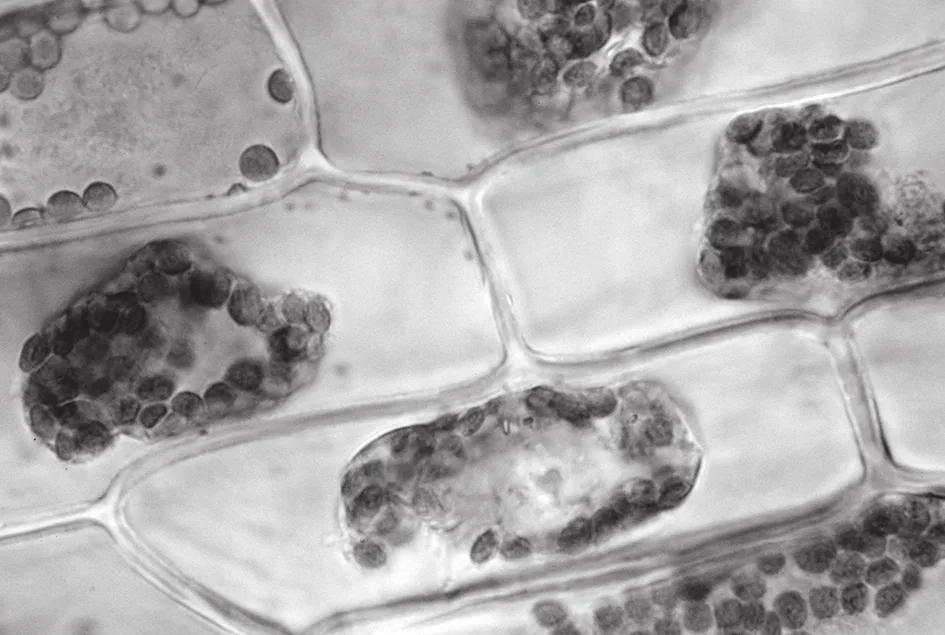
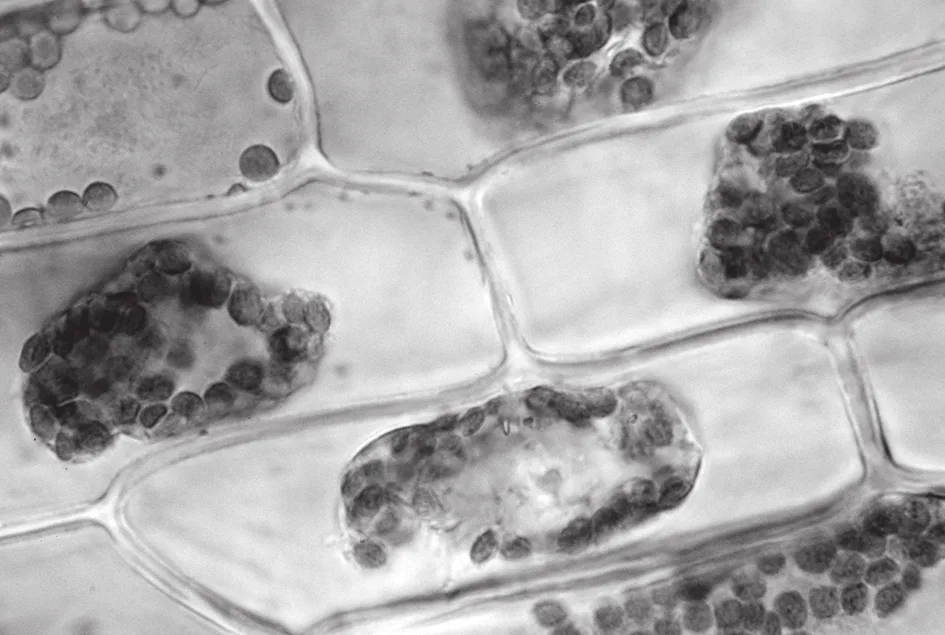
What happens to the cells of an Elodea leaf in sodium chloride solution?
When a leaf from the pondweed Elodea is placed in sodium chloride solution, the cells become plasmolysed because water moves out of the cells by osmosis. This process occurs as the concentration of solutes outside the cell is higher than inside, leading to a loss of turgor pressure and causing the cells to shrink away from the cell wall.
What is the role of memory cells in immunity?
Memory cells are produced as a result of both active and passive immunity. They play a crucial role in the immune response by remembering specific antigens, allowing for a faster and more effective response upon subsequent exposures to the same pathogen. This mechanism is fundamental to the effectiveness of vaccines, as they stimulate the production of memory cells.
What is the effect of pulmonary stenosis on blood flow?
Pulmonary stenosis, caused by the narrowing of the entrance to the blood vessel leaving the right ventricle, leads to reduced blood flow primarily to the lungs. This condition can significantly impact the oxygenation of blood, as the right ventricle struggles to pump blood effectively through the narrowed pathway.