Cambridge O Level Biology 5090/12 Paper 1 Multiple Choice October/November 2025
Cambridge O LevelBiology 5090/12 Paper 1 focuses on multiple-choice questions designed for students preparing for their biology examination. This paper includes 40 questions covering various topics in biology, including cell structure, photosynthesis, and human physiology. It is intended for O Level students aiming to enhance their understanding and performance in biology. The exam format allows students to practice their knowledge and application of biological concepts effectively.
Key Points
Includes 40 multiple-choice questions on key biology topics.
Covers essential concepts such as osmosis, cellular respiration, and genetics.
Designed for Cambridge O Level students preparing for their biology exams.
Helps students practice and reinforce their understanding of biological principles.
This link leads to an external site. We do not know or endorse its content, and are not responsible for its safety. Click the link to proceed only if you trust this site.
Cambridge O Level Biology 5090/12 Past Paper May/June 2025Past Paper
PDFPast Paper
Cambridge O Level Biology 5090/42 Paper 4 Alternative to Practical October/November 2025Past Paper
PDFPast Paper
Cambridge O Level Physics 5054 2025 Winter Paper 1 Multiple ChoicePast Paper
PDFPast Paper
Cambridge O Level Physics 5054/12 Past Paper May/June 2024Past Paper
PDFPast Paper
Cambridge IGCSE Mathematics 0580/22 Past Paper February/March 2021Past Paper
PDFPast Paper
Cambridge IGCSE Mathematics 0580/42 Past Paper October/November 2021Past Paper
PDFPast Paper
Cambridge IGCSE Physics 0972/04 Specimen Paper 2023Past Paper
PDFPast Paper
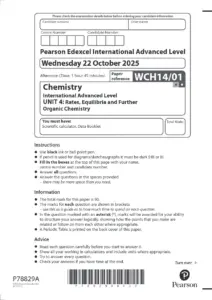
Chemistry Unit 4 Question Paper – Edexcel International A LevelPast Paper
PDFPast Paper
January 2019 IAL Mark Scheme Paper 5 Edexcel Chemistry A LevelPast Paper
PDFPast Paper
Kinematics in Newtonian Mechanics – Cambridge O Level PhysicsPast Paper
PDFPast Paper
Grade 12 Physical Sciences June 2024 Paper 2 and MemoPast Paper
PDFPast Paper
Zimbabwe School Examinations Council Mathematics Past Paper 2021Past Paper
FAQs
What is the maximum number of viruses produced by a single Herpes simplex virus in 36 hours?
A single Herpes simplex virus can replicate rapidly inside a living cell, producing 4000 copies in 12 hours. Therefore, in 36 hours, the maximum number of viruses that could be produced is calculated to be 2.6 × 10^14. This significant multiplication demonstrates the high replication rate of viruses within host cells.
Which structures in a dicotyledonous leaf are almost transparent to aid photosynthesis?
In a dicotyledonous leaf, the structures that are almost transparent to help increase the rate of photosynthesis are identified as structures 1 and 2. Their transparency allows more light to penetrate the leaf, facilitating the photosynthetic process, which is crucial for the plant's energy production.
What happens to plant cells in a strong sodium chloride solution?
When a plant cell is immersed in a strong sodium chloride solution, it becomes plasmolysed. This occurs because the high concentration of salt outside the cell causes water to move out of the cell, leading to the shrinkage of the cell membrane away from the cell wall. This process negatively affects the cell's turgor pressure and overall health.
What is the function of magnesium ions in newly germinated seeds?
Magnesium ions are essential for newly germinated seeds as they are needed to form chlorophyll molecules. Without sufficient magnesium, the seeds may fail to develop into healthy plants, as chlorophyll is crucial for photosynthesis, which provides the energy necessary for growth.
How does the concentration of substance X change during exercise?
During exercise, the concentration of substance X in a person's blood increases significantly. This change typically reflects the production of lactic acid, which is a byproduct of anaerobic respiration that occurs when the body is exerting itself and oxygen levels are insufficient for aerobic respiration.
What does the biuret test detect in biological substances?
The biuret test is used to detect the presence of proteins, such as globulin. When a protein is present, the biuret reagent changes color, indicating the presence of peptide bonds, which are characteristic of proteins. This test is a fundamental method in biochemistry for identifying proteins in various samples.
What is the effect of light intensity on the rate of transpiration?
The document includes a graph illustrating the effect of light intensity on the rate of transpiration. Generally, as light intensity increases, the rate of transpiration also increases, due to the opening of stomata for gas exchange, which is essential for photosynthesis and water regulation in plants.