Hate Speech, Misinformation, and Constitutional Limits explores the complex interplay between free speech and legal restrictions in India. It analyzes key legal frameworks such as the Indian Penal Code and the Information Technology Act, focusing on Articles 19(1)(a) and 19(2) of the Constitution. The document discusses landmark cases like Shreya Singhal v. Union of India and Pravasi Bhalai Sangathan v. Union of India, highlighting their implications for hate speech regulation. This resource is essential for law students, legal practitioners, and anyone interested in constitutional law and civil rights in India.

Key Points

  • Examines the balance between free speech and hate speech laws in India.
  • Analyzes key legal provisions under the Indian Penal Code and IT Act.
  • Discusses landmark cases that shaped hate speech regulations.
  • Explores constitutional articles related to freedom of speech and reasonable restrictions.
Vedika Airen
18 pages
Language:English
Type:Report
Vedika Airen
18 pages
Language:English
Type:Report
104
/ 18
Title – HATE SPEECH
TOPIC –HATE MISINFORMATION
AND CONSTITUTION LIMIT
Subtitles – A LEGAL & POLICY
ANALYSIS
NAME – VEDIKA AIREN
ROLL NO.–107
SUBJECT – LEGAL ENGLISH AND
LANGUAGE
HATE SPEECH MISINFORMATION AND CONSTITUTION LIMIT
Creates a complex balancing act between protecting individual
liberty and maintaining
Introduction – What is problem
Understanding the hate speech and misinformation
1.
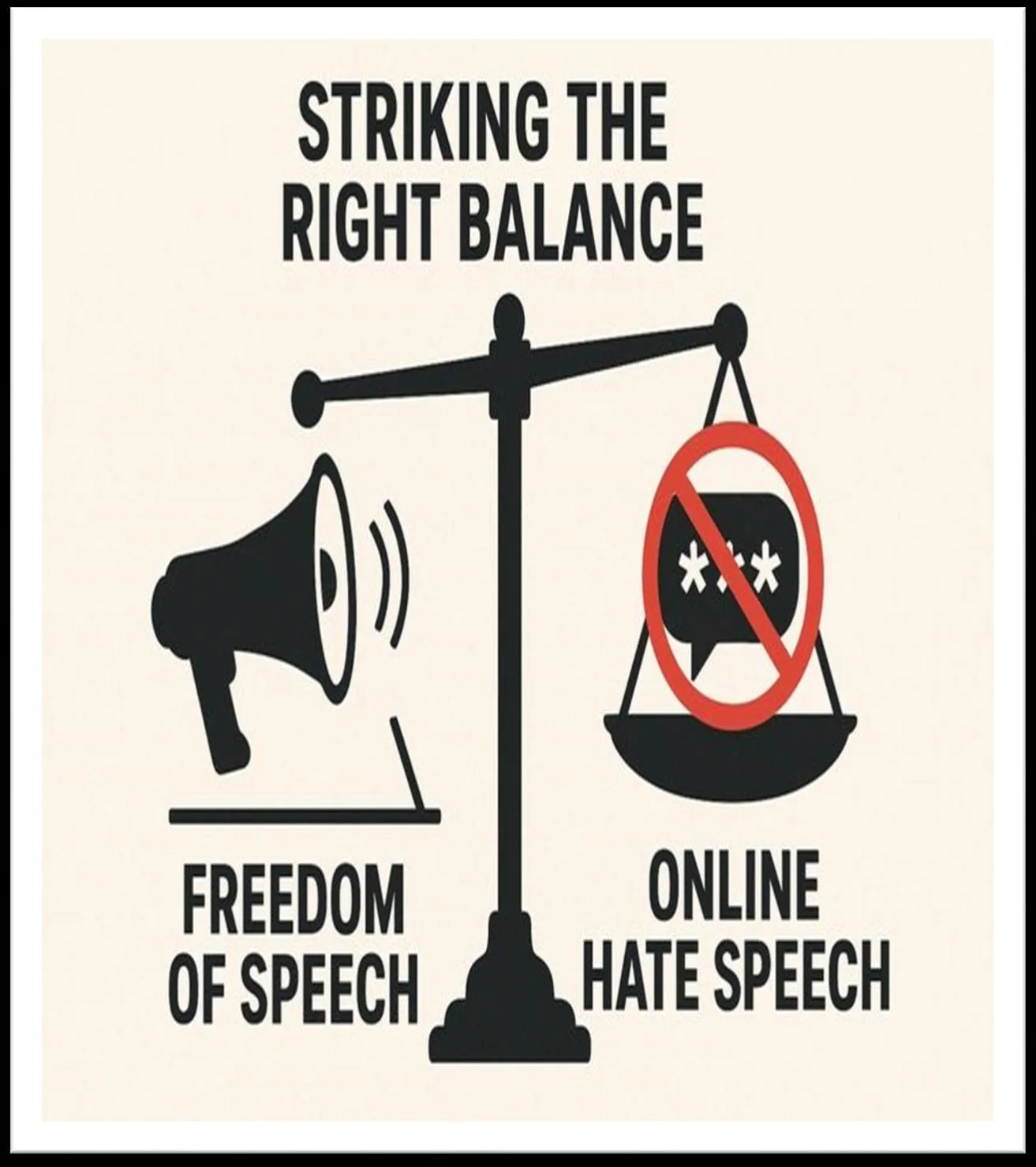
HATE SPEECH acts as a misuse of free expression,
targeting people based on identity factors like religion,
caste, or gender to incite hostility or violence
2.
Misinformation often serves as the fuel for this fire,
spreading false or unverified claims that amplify fear and
communal tension.
3.
Constitution limit –Article 19(1)(a) guarantees free
speech, it is bounded by Article 19(2), which permits
"reasonable restrictions" for reasons like public order,
national security, and preventing incitement to offences.
/ 18
End of Document
104

FAQs

What is the definition of hate speech according to the document?
Hate speech is defined in the document as speech that stigmatizes, insults, or incites hatred against a group based on factors such as religion, race, or caste. It must also demonstrate a 'clear and present danger' of violence or public disorder. This definition is crucial in distinguishing hate speech from protected free speech under Article 19(1)(a) of the Indian Constitution.
How does the document explain the relationship between hate speech and misinformation?
The document explains that hate speech often acts as a misuse of free expression, targeting individuals based on identity factors like religion or gender to incite hostility or violence. Misinformation serves to amplify this issue by spreading false or unverified claims, which can escalate fear and communal tension. Together, they create a complex challenge for legal frameworks aimed at maintaining public order.
What are the key legal provisions regulating hate speech in India?
Key legal provisions regulating hate speech in India include Sections 153A, 295A, and 505 of the Indian Penal Code (IPC), which address the promotion of enmity and malicious insults to religion. Additionally, Section 69A of the Information Technology Act empowers the government to block online content that threatens national security or public order. These laws aim to balance the right to free speech with the need for reasonable restrictions.
What landmark case established the vagueness test for laws restricting speech in India?
The landmark case establishing the vagueness test for laws restricting speech in India is Shreya Singhal v. Union of India (2015). In this case, the Supreme Court struck down Section 66A of the IT Act, ruling that vague definitions of 'offensive' speech led to arbitrary enforcement, violating Articles 14 and 19(1)(a) of the Constitution. This case set a precedent for ensuring that any restrictions on speech must be clear and narrowly defined.
What was the outcome of the Pravasi Bhalai Sangathan v. Union of India case?
In the Pravasi Bhalai Sangathan v. Union of India (2014) case, the Supreme Court refused to frame new guidelines for regulating hate speech, emphasizing that only Parliament could enact specific laws in this area. The Court upheld existing laws such as IPC Sections 153A, 295A, and 505, stating that these should be enforced to protect against hate speech. The decision highlighted the need for clear legislation rather than judicial intervention.
How does the document address the issue of online harassment and its legal implications?
The document discusses online harassment as a serious crime due to its psychological impact, leading to prosecutions under the relevant laws. It highlights investigations into harassment networks that utilize social media to silence individuals. The document notes that under the BNS (Bharat Net Safety) framework, strict penalties are imposed for stalking and online abuse, aiming to restore digital safety and protect victims.