実用コミュニケーション英語1の2025年度シラバス執筆用マニュアルは、学生が英語を実際に使用するための基礎を築くことを目的としています。授業では、海外および日本のオフィス文化について学び、会話の基礎を習得します。教科書は文法や語彙の強化に加え、実践的な会話練習を含んでいます。学生は、時事問題に基づいた英語の理解と表現力を高めることが期待されます。特に、英語でのコミュニケーション能力を向上させるための演習やグループ活動が行われます。

Key Points

  • 2025年度の実用コミュニケーション英語1のシラバスを提供
  • 英語の基礎的な4技能を実践的に学ぶ内容
  • 海外および日本のオフィス文化についての学習
  • 会話練習を通じて自信を持って英語を使用するスキルを養成
Southclimber
Author:ポハーボワポリーナ
4 pages
Language:Japanese
Type:Syllabus
Southclimber
Author:ポハーボワポリーナ
4 pages
Language:Japanese
Type:Syllabus
417
/ 4
2025 年度英語シラバス執筆用マニュアル(用コミュニケション用)
担当教員: Pokhabova Polina ポハーボワポリーナ
連番: 110960
曜日・時限・開講期: (1,2,3 )???
期間:
E-mail: t110960@st.daito.ac.jp
授業形態: 演習
講義名: 実用コミュニケーション英語 1
授業の概要 (Outline of Course)
本コースは、英語を実際に使用する第一歩を踏み出す学生を対象としており、他国につ
いての知識を深めるとともに、会話の基礎を習得し実践することを目的としています。
使用する教科書は、文法や語彙の弱点を補う内容と、会話練習をバランスよく組み合わ
せた構成となっています。授業では、海外および日本のオフィス文化について学び、ニ
ュースや関連するテキストを読みながら、英語で自分の言葉で話すスキルを養成します。
これにより、英語の基礎的な知識を強化し、実際に英語で表現・行動する自信を身につ
けることを目指します。現代社会の諸問題に対して自分がどう行動すべきかも考える。
これにより,1年次で培った知識を基礎に,英語で行動する積極的態度を養成し,より
実践的に英語で行動できることを目標とする。
授業の到達目標 (Attainment targets of Course)
知識・技能 1年次で学んだ英語の基礎的な4技能(listening, reading, writing,
speaking)を時事問題の実践的な理解と行動に応用できる. 思考・判断・表現
DP 一覧表・科目ナンバリングについて (DP List and Course Numbering)
■DP 一覧表
https://www.daito.ac.jp/information/open/collage/
■科目ナンバリング
https://www.daito.ac.jp/information/open/college/numbering/list.html
授業の方式(Course method
対面方式
2
授業の方法 (Methods of teaching)
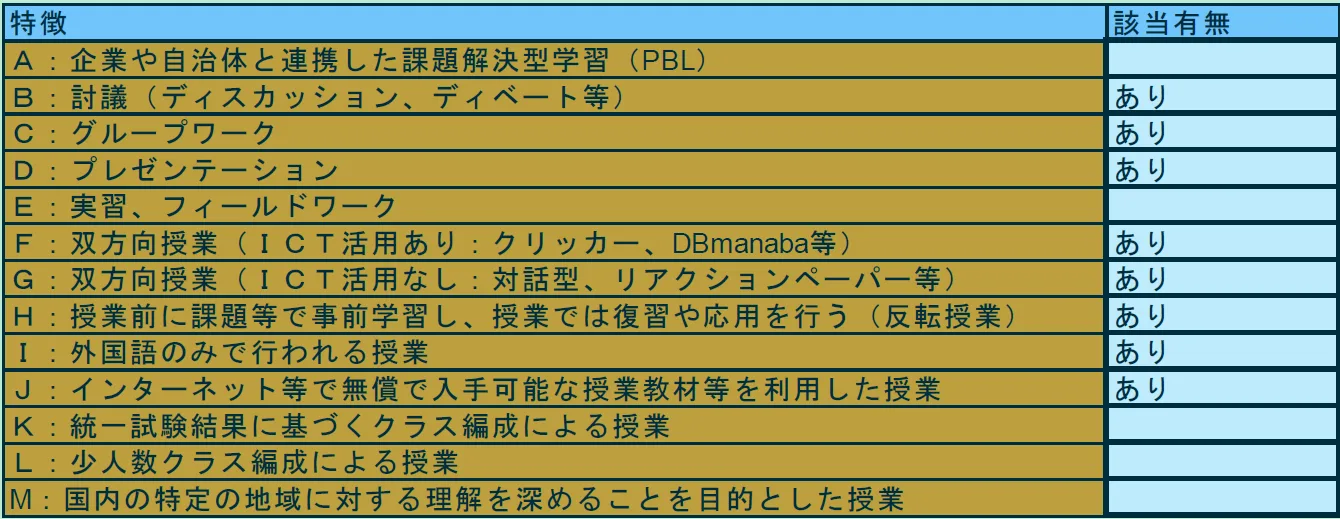
海外文化社会のテキストを用いた演習とグループ作業・発表,ディスカッションを行い
ます.毎週1課ずつ進む範囲の予習を行い,それに基づいた Quiz とその週のリフレク
ションのためのライティングを Google Classroom(あるいは manaba)により行います。
授業は英語で行われますので予習をしておき、授業中は教員の講義やグループ別の学生
の発表に集中して耳を傾け、日本語ではなく英語で感じ、考え、表現する態度とスキル
を活用する必要があります。シラバスに沿って教科書を予め読み,基本的内容を理解し
てから授業へ参加することで理解がさらに深まり、英語による思考回路が強化されるで
しょう90 )。科書の内容毎日聞いて発し、そをシドウィングること
で少しずつ舌ならしと口ならしをしながら内容理解を進めてください(1 5 分×6
=30 分)。また、授業では WiFi 接続して PC や携帯を使いますので、事前に指導者から
指示された G-Classroom(あるいは manaba)が使えるように設定すること。
また、のオンライン学習サイト(成美堂出版、教科書欄のリンク参照、詳細は別途
授業の方法 (Methods of teaching)
授業計画 (Class Schedule)
時間 (Day)
授業内容 (Content)
教員 (Instructor)
1 (Day 1)
Introduction/Strategy
and Planning
(Polina Pokhabova)
2 (Day 2)
Unit 1: Nice to Meet You
[現在時制(be
般動詞)]*
(Polina Pokhabova)
3 (Day 3)
Unit 2: Getting Started
[代名詞]*
(Polina Pokhabova)
3
4 (Day 4)
Unit 3: Office Tour
[前置詞(場所を表す前置
詞と時を表す前置詞)]*
(Polina Pokhabova)
5 (Day 5)
Unit 4: First Work
Assignment 名詞可算
名詞と不可算名詞)]*
(Polina Pokhabova)
6 (Day 6)
Unit 5: Small Talk with
Co-Workers
be 動詞と一般動詞)]*
(Polina Pokhabova)
7 (Day 7)
Unit 6: First Contact
with a Client
詞]*
(Polina Pokhabova)
8 (Day 8)
Group Presentations
(Polina Pokhabova)
9 (Day 9)
Unit 7: Client Meeting
Preparation
will be going to)]
*
(Polina Pokhabova)
10 (Day 10)
Unit 8: Final
Preparations
(現在進行形と過去進行
形)]*
(Polina Pokhabova)
11 (Day 11)
Unit 9: First Meeting
WH 疑問文]*
(Polina Pokhabova)
12 (Day 12)
Unit 10: Time Management
[不定詞と動名詞]*
(Polina Pokhabova)
13 (Day 13)
Unit 12: A Last-Minute
Request
級]*
(Polina Pokhabova)
14 (Day 14)
Unit 13: Giving Feedback
[接続詞(等位接続詞と従
属接続詞)]*
(Polina Pokhabova)
15 (Day 15)
Final Quiz, Summary &
Final Reflections
(Polina Pokhabova)
* Weekly Quizzes and Homework are expected
フィードバックの方法 (Feedback method)
Quiz の結果は指導者からフィードバックされます.また Reflection Sheet を用いて他
の学生と共有することで自分の学習の成果や学習内容を振り返ることができます。
/ 4
End of Document
417

FAQs

What is the main objective of the 実用コミュニケーション英語1 course?
The main objective of the 実用コミュニケーション英語1 course is to help students take their first steps in using English practically. It aims to deepen their knowledge about other countries while acquiring and practicing basic conversation skills. The course is designed to strengthen foundational English knowledge and build confidence in expressing and acting in English, particularly in the context of modern societal issues.
What teaching methods are used in the 実用コミュニケーション英語1 course?
The course employs various teaching methods, including exercises using texts about foreign cultures, group work, presentations, and discussions. Students are expected to prepare for each class by studying one unit per week, which is followed by quizzes and reflective writing via Google Classroom or manaba. The course is conducted entirely in English, encouraging students to engage with the material and express themselves in English.
What topics are covered in the 実用コミュニケーション英語1 syllabus?
The syllabus covers a range of topics through different units, including introductions, office tours, small talk with coworkers, client meetings, and time management. Specific grammatical points are also addressed in each unit, such as present tense, pronouns, prepositions, and the use of modals. The course culminates in a final quiz and reflections, reinforcing the skills learned throughout the semester.
How are students assessed in the 実用コミュニケーション英語1 course?
Students in the 実用コミュニケーション英語1 course are assessed through various methods. Practical evaluations account for 25% of the grade, focusing on group presentations. Reports based on topics of interest from the course contribute 50% to the final grade. Additionally, a final presentation evaluates content, presentation skills, and the ability to communicate in their own words, while weekly quizzes account for 15% of the overall assessment.
What is the textbook used for the 実用コミュニケーション英語1 course?
The textbook for the 実用コミュニケーション英語1 course is "English Spark!" written by Robert Hickling. It is designed to help students learn foundational English through practical examples relevant to new professionals, covering a total of 15 chapters.
What is the structure of the course schedule for 実用コミュニケーション英語1?
The course schedule for 実用コミュニケーション英語1 spans 15 sessions, starting with an introduction and strategy planning. Each subsequent session focuses on a specific unit, addressing various topics and grammatical structures. The final sessions include group presentations and a summary of the course, culminating in a final quiz and reflections.
What skills are targeted in the 実用コミュニケーション英語1 course?
The 実用コミュニケーション英語1 course targets the development of the four fundamental English skills: listening, reading, writing, and speaking. These skills are applied to practical understanding and actions related to current issues, encouraging students to think critically and express themselves effectively in English.