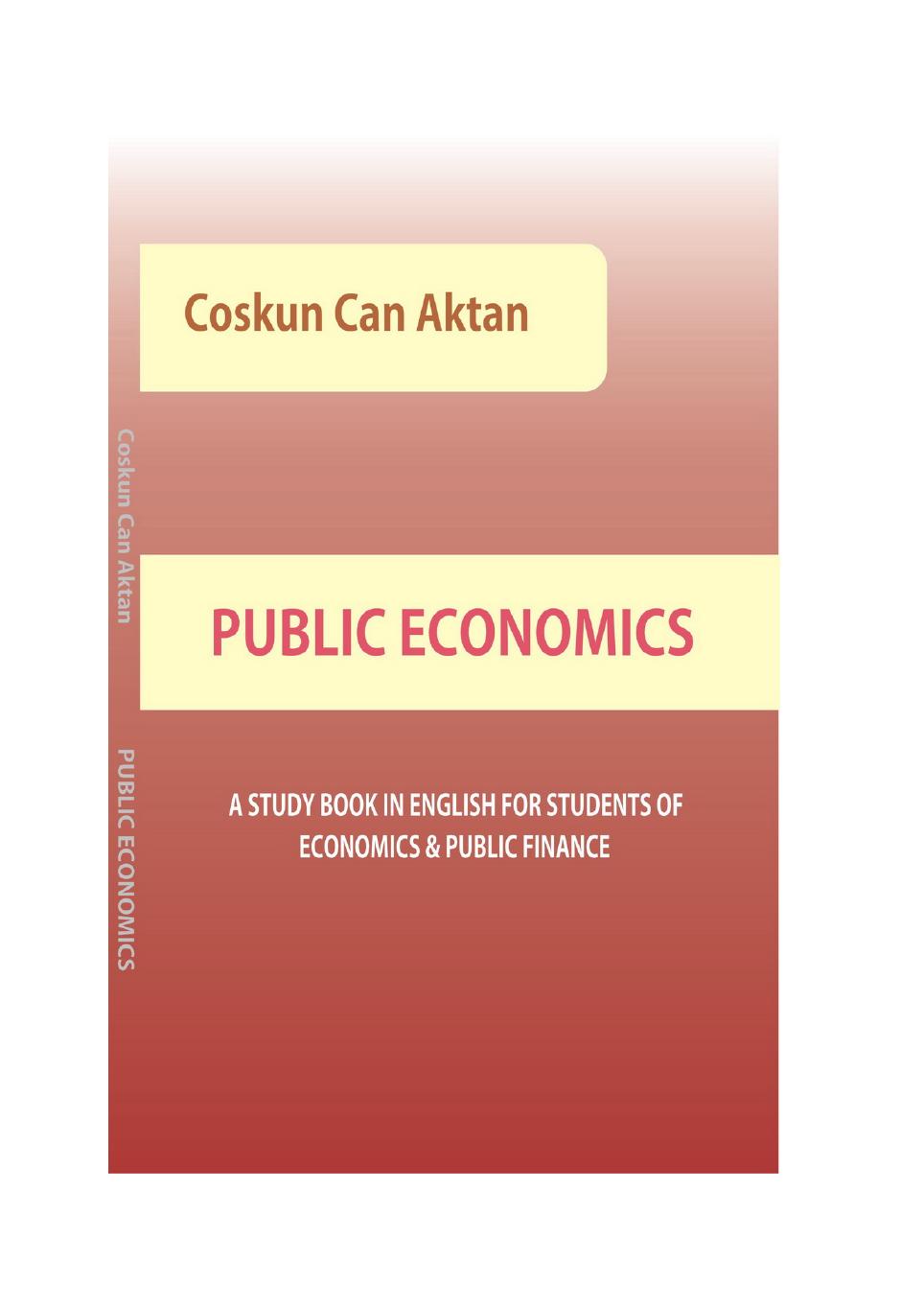
Public Economics Glossary offers a comprehensive collection of key economic terms and principles essential for students and professionals in economics and public finance. Authored by Coşkun Can Aktan, this glossary serves as a valuable resource for understanding fundamental concepts such as the ability-to-pay principle, aggregate demand, and fiscal policy. Ideal for economics students preparing for exams or professionals seeking to refresh their knowledge, this glossary covers a wide range of topics relevant to public finance and economic theory. The glossary includes definitions and explanations that facilitate a deeper understanding of public economics, making it an indispensable tool for academic and practical applications.
Key Points
Defines key economic terms like ability-to-pay principle and aggregate demand.
Explains fiscal policy and its implications for public finance.
Covers concepts such as budget surplus, budget deficit, and economic growth.
Includes essential terms for understanding public goods and market failure.
This link leads to an external site. We do not know or endorse its content, and are not responsible for its safety. Click the link to proceed only if you trust this site.
Engineering Economy 3rd Edition Solution Manual by Hipolito Sta MariaBook
PDFBook
Engineering Economy by Sta MariaBook
PDF
Microeconomics Unit 3 Demand and Supply Notes 2025 (2)
PDF
Microeconomics Unit 6 Perfect Competition Notes
PDF
Utility and Elasticity Concepts for Economics Revision
PDF
Microeconomics Unit 3 Demand and Supply Notes 2025
PDFPDF
NABARD ESI Preparation Guide for Economic and Social Issues
PDF
ENA 2025 Economics Entrance Exam Questions
PDF
Concours d’entrée 2025 Droit Public Général
PDF
Secondary School Examination Class X Results 2026
PDFPDF
Mock Test Paper Series II Business Economics January 2025
PDF
The Short Second Life of Bree Tanner by Stephenie Meyer
FAQs
What are the key principles of public economics covered in this glossary?
The glossary covers essential principles such as the ability-to-pay principle, which states that individuals who can afford to pay should contribute more in taxes. It also explains the concept of public goods, which are non-excludable and non-rivalrous, meaning they can be consumed by everyone without diminishing their availability. Additionally, it addresses fiscal policy, detailing how government spending and taxation influence economic activity and public welfare. These principles are crucial for students and professionals aiming to understand the dynamics of public finance.
How does the glossary define aggregate demand and its components?
Aggregate demand is defined in the glossary as the total amount that all consumers, businesses, and government agencies are willing to spend on final goods and services. It encompasses various components, including consumer spending, business investment, government expenditures, and net exports. Understanding aggregate demand is vital for analyzing economic performance and the factors that drive economic growth or recession. The glossary provides insights into how shifts in aggregate demand can impact overall economic stability.
What is the significance of the budget surplus and budget deficit terms in public finance?
The glossary highlights the importance of budget surplus and budget deficit in public finance. A budget surplus occurs when government revenues exceed expenditures, allowing for savings or investment in public projects. Conversely, a budget deficit arises when expenditures surpass revenues, often leading to increased government borrowing. These terms are critical for understanding fiscal health and the implications of government financial management on economic stability and growth.
What role does fiscal policy play in public economics according to the glossary?
Fiscal policy is described in the glossary as the use of government spending and taxation to influence economic activity. It plays a crucial role in managing economic fluctuations, promoting growth, and achieving social objectives. The glossary discusses how fiscal policy can be used to stimulate demand during economic downturns or to cool off an overheating economy. Understanding fiscal policy is essential for students and professionals who wish to analyze government strategies for economic management.
Related
PDF
Monetary Economics 2nd Edition by Jagdish Handa
PDF
Dramione Fanfiction Literary Reconstruction in Harry Potter
PDF
Crime and Punishment: An Economic Approach by Gary Becker
PDF
Redes Sociales y Administración Pública por Carlos Gómez