GROUP 1
DEVELOPMENTAL STAGES IN MIDDLE
AND LATE ADOLESCENCE
Engage:
1. What was/were the changes you have
experience when you reach 13 years of
age?
2. What are your parents usually complain
or praise about you?
Age bracket of Adolescence:
• Early Adolescence – 10 to 13
• Middle Adolescence – 14 to 16
• Late Adolescence – 17 to 20
Difference between Asian and American
Adolescents. American, early adolescence
at 11 to 12 and late adolescence at 18
because child usually out in the house at the
age of 18.
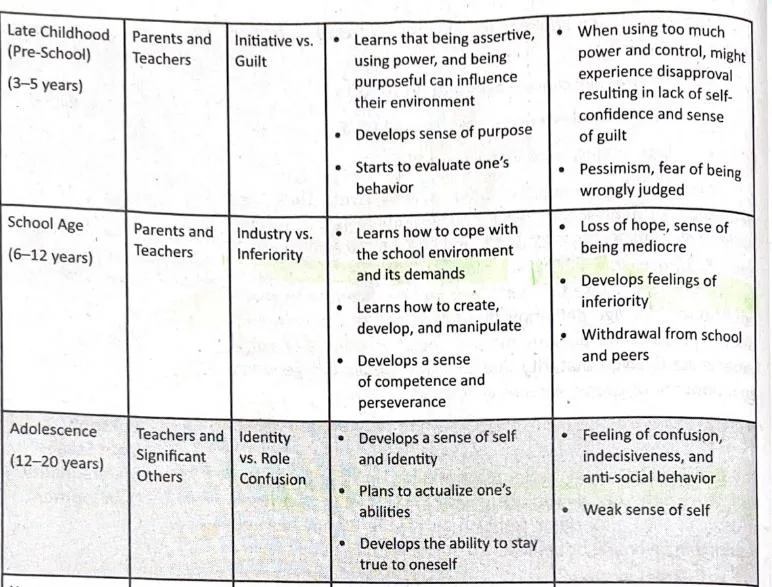
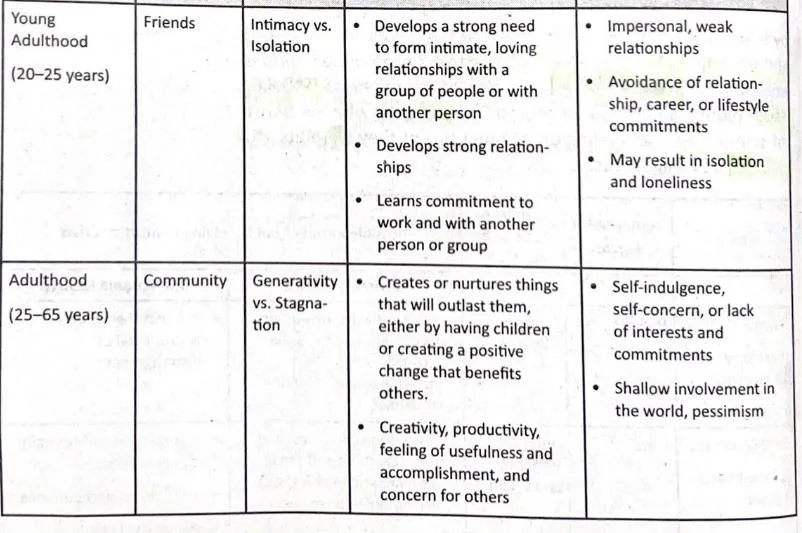
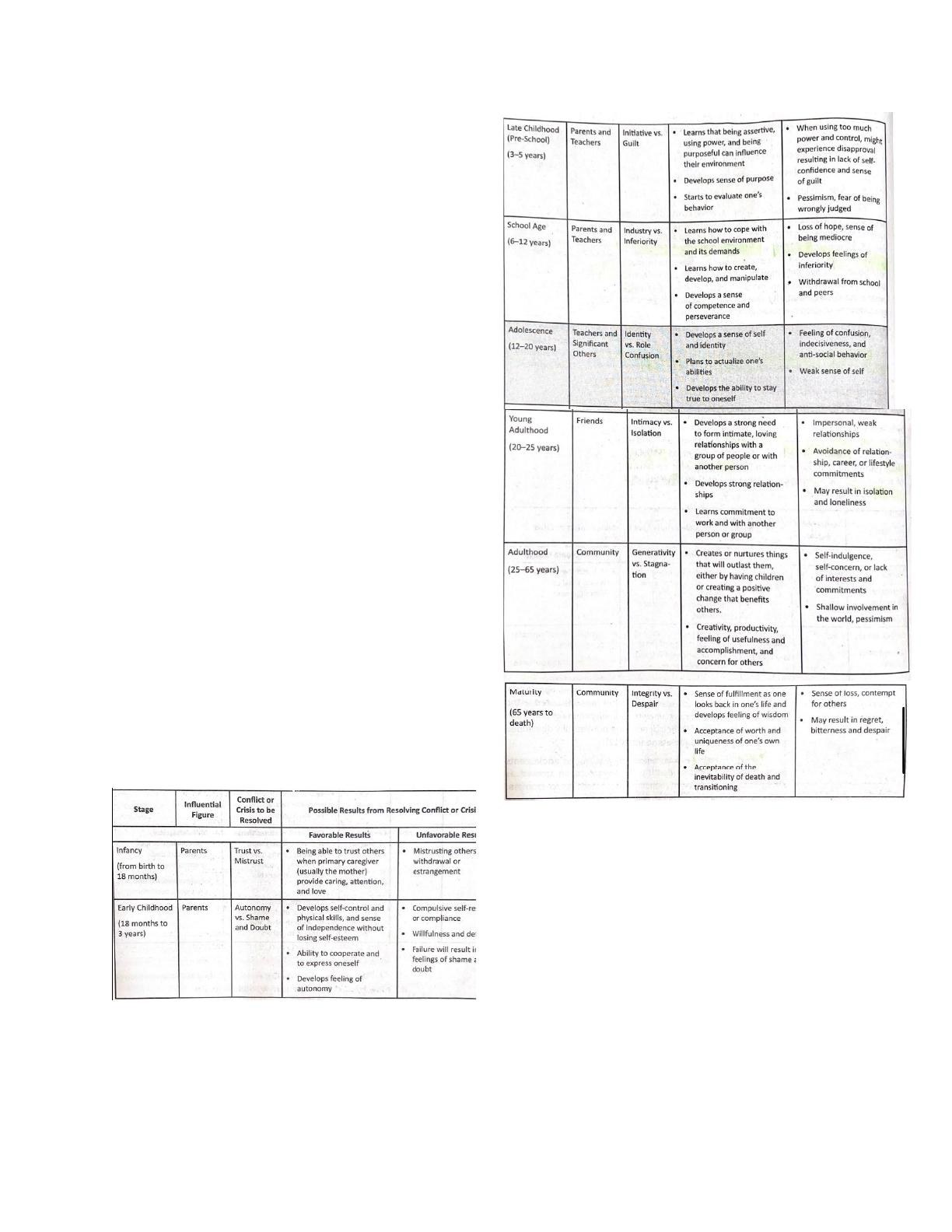
Erik Erikson’s Eight Stages of Personality
Development:
- Each stage of human development
with crisis and conflict either gets
resolved or left unresolved.
Adolescents with identity issues may also
be experiencing intimacy issues (young
adult) and struggling with inferiority
(school age).

GROUP 2
Personal Development (Discussion 7)
DEVELOPMENTAL STAGES IN MIDDLE
AND LATE ADOLESCENCE (Identity vs
Role Confusion)
Identity is the concept of an individual about
himself, “self-identity”, molded thru various
interactive experiences around himself, such
as their family, community, and responses –
thinking, attitude, and behavior to external
stimuli.
Roles, part of self-identity such as birth order
in the family, nature of work, occupation or
title and academic and social standing.
Role confusion is the negation of self-
identity, there is confusion over one’s self or
the absence or lack of such concept.
Changes During Adolescence
1. Physiological Transitioning. Puberty
2. Cognitive Growth. Comprehend
abstract concepts, beliefs, and
politics. Includes idealism.
3. Experimentation. Happens as they
search for their identity. Smoking and
drinking, clothing and fashion styles,
search of social groups.
4. Socializing. Online friendships and
online games.
5. Sexual Experimentation. Teenage
pregnancies and sexual diseases due
to underdeveloped cognitive and
affective capacity and sex education.
Adolescence and Social Behavior
- Different culture, different
representation of adolescence
behavior
1. Mahatma Gandhi – Indian lawyer,
politician, social activist who become
the leader of the national movement
against British rule in India.
2. Martin Luther King, Jr. – American
religious leader and civil-rights
activist.
3. Malcolm X. America muslim leader,
articulated the concepts of race pride
and black nationalism.
4. Nelson Mandela. President of South
Africa, black nationalist and the first
black president.
5. Teenage Rebellion. Social and
political activism, (Kabataan Partylist,
Anakbayan and etc.
- Millennials, 1980 to 2000 so called as
digital natives.
Skills and Tasks Appropriate for Middle
and Late Adolescence
7 desirable developmental tasks of Filipino
Adolescents:
1. Developing occupational skills
2. Self-reliance
3. Ability to manage finances
4. Social responsibility
5. Mature work orientation
6. Personal responsibility
7. Positive attitude toward work
Additional list of developmental tasks and
skills:
1. Being courageous in standing up and
being different from your friends
2. Developing self-esteem
3. Being true to yourself and avoiding
tendency to please others
4. Learning how media and advertising
are trying to influence your thinking
and feelings
5. Becoming aware, critical, and being
involved with social issues
6. Embracing a healthy lifestyle
7. Developing your spiritual

GROUP 3
PERSONAL DEVELOPMENT (Discussion 8)
THE CHALLENGES OF MIDDLE AND LATE
ADOLESCENCE
Common challenges encountered by normal
adolescents:
COMMON CHALLENGES NORMAL
ADOLESCENTS ENCOUNTER:
1. Attitude and behavior toward sexuality
and sexual relationship
• Limits – adolescents exploring their
sexuality should not lose control over one’s
sexual drives which inevitably end up
lifetime regrets.
• Sexual relationship is healthy when the
adolescent sees this as part of loving
relationship.
• Love is genuine when the intent is to help
the other person develop others potential.
2. Academic Concerns
Attitude – the most important thing they need to
embrace study.
Academic Concerns/Learning Difficulties
• Poor study habits.
• Difficulty grasping course material.
• Test anxiety that leads to poor
performance on exams.
Solution to academic problems
• Manage your time.
• Learn study skills.
3. Group Belongingness
Awareness – adolescents should not be lured by
organizations that promise exclusivity and
superiority often flaunting false courage through
strength in their numbers.
4. Health and Nutrition
Healthy mind and body – adolescent should strive.
Unhealthy people:
• Your skin isn't clear.
• The whites of your eyes aren't white.
Steps to a Healthy Lifestyle
• Drink more water. ...
• Get enough sleep. ...
• Exercise. ...
• Eat more fruits and vegetables
5. Developing or Regaining Self-esteem
Being objective and balanced – seeing oneself as
having both strengths and weaknesses and/or
having positive and negative characteristics
6. Roles
Role integration – one should know how to
integrate all the roles and should be clear that all
roles are related to the tasks expected of them by
others.
7. Material Poverty
Poverty cannot hinder success.
8. Parents Working Abroad
9. Career Choice
10. Relationships
11. Value and Beliefs
12. Other Challenges
Three Adolescents, Three Heroes
Gregorio del Pilar (“Goyong,” “Boy General”)
Edgar Jopson (“Edjop”)
Efren Penaflorida (“Efren”)
Figures