2
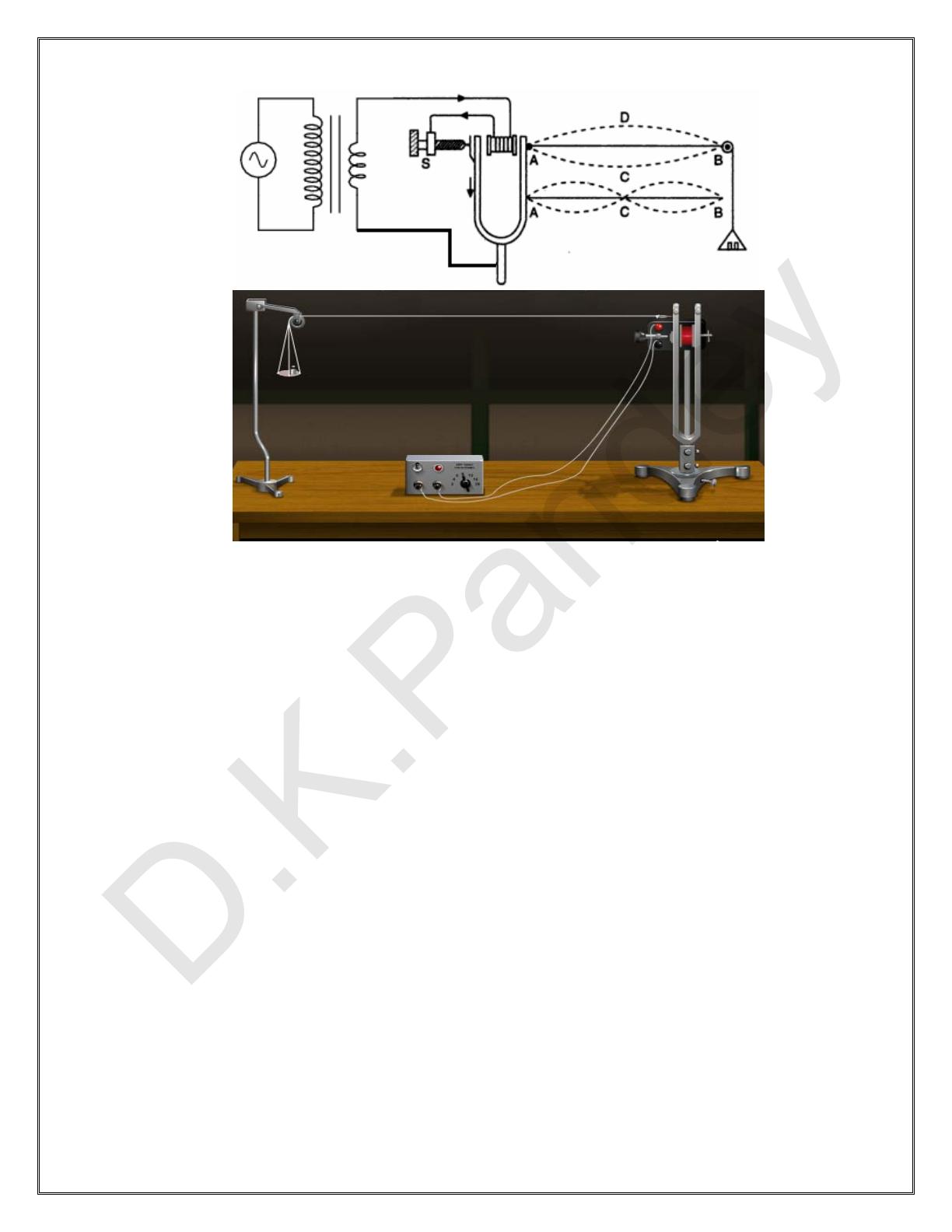
Fig.3: Arrangement for longitudinal mode of vibration
Procedure:
1. Connect the primary of the step down transformer to A.C mains, while the secondary to the given point of
electrically maintained tuning fork.
2. Tight the one end of thread to the prong of tuning fork and other end to a scale pan. Hang the scale pan with
pulley that is fixed at end of table.
3. Arrange the electrically maintained tuning fork in transverse situation (Fig.2) (i.e. arrange in such a way that
length of string is parallel to the prong of tuning fork) and load a mass of 5gm on its pan. Now rotate the
screw S (i.e. excite the tuning fork), so that vibration in tuning fork gets started.
4. Move the tuning fork toward or away from pulley to adjust the length of thread, so that loops could be
formed. Now measure the length thread for one and two loop when stable loops are formed in horizontal
plane. This will give the value l for one and two loops.
5. Now increase the mass on scale pan (m=10, 20 gm) and repeat the step 4.
6. After it arrange the electrically maintained tuning fork in longitudinal situation (Fig.3) (i.e. arrange in such a
way that length of string is perpendicular to the prong of tuning fork) and load a mass of 5gm on its pan.
Excite the tuning fork, so that vibrations get started in tuning fork.
7. Move the tuning fork toward or away from pulley to adjust the length of thread, so that loops could be
formed. Now measure the length thread for one and two loop when stable loops are formed in transverse
plane. This will give the value l for one and two loops. The observed length should come double length of
transverse case.
8. Now increase the mass on scale pan (m=10, 20 gm) and repeat the step 7 for this arrangement.
9. Find out length of thread per loop (l/p) for each case of load.
10. Measure the mass (m
T
) of 10m length of thread and mass of scale pan (m
P
). Value of m
T
/10 gives mass per
unit length of thread.
11. Calculate frequency of tuning fork for transverse and longitudinal case using M, m and l/p,