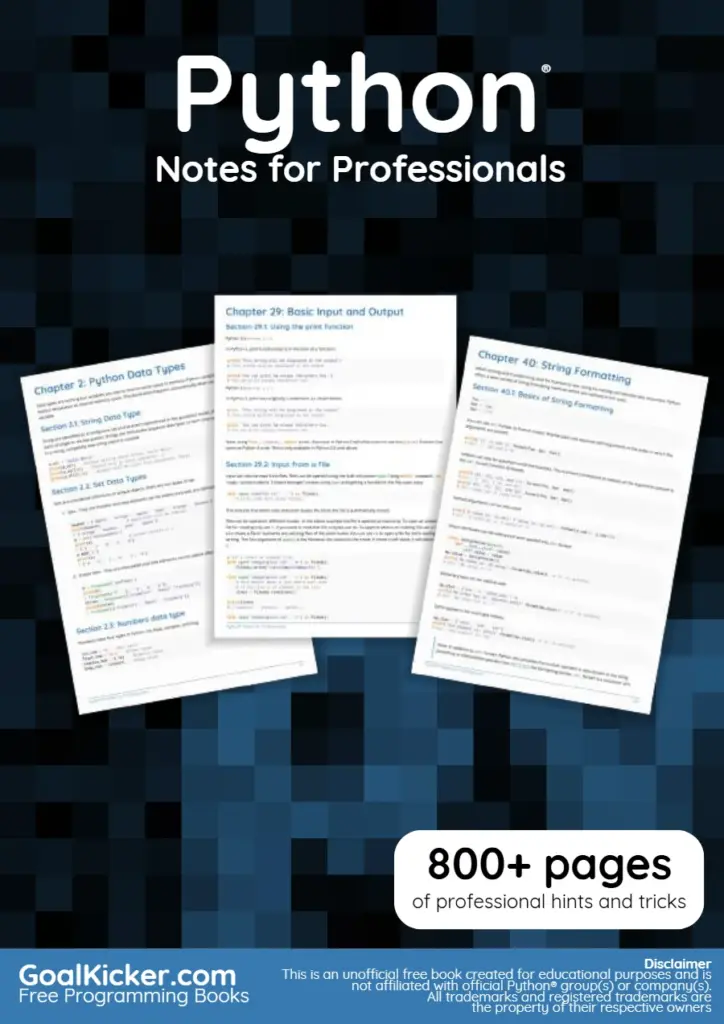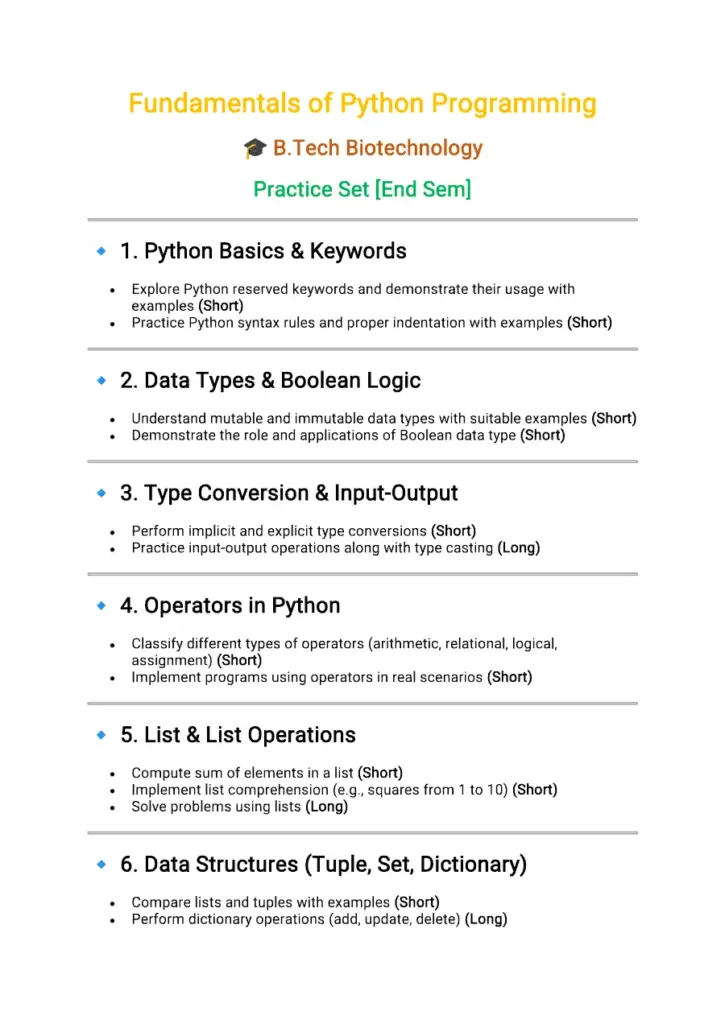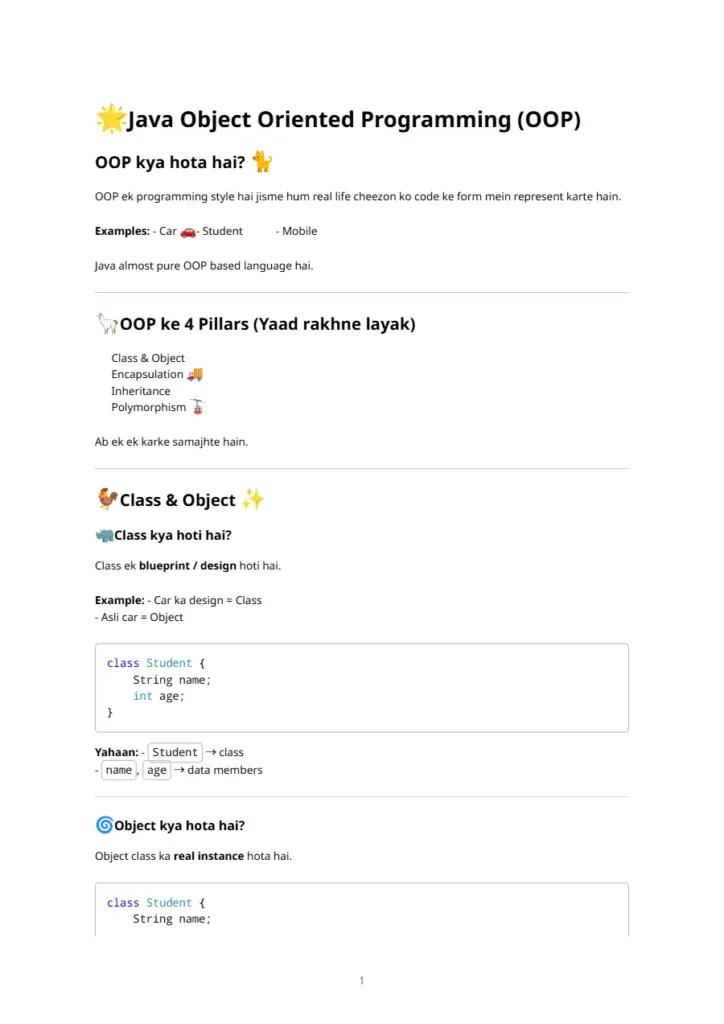


Programming is the foundational discipline of computer science, involving the transformation of abstract logical concepts into executable instructions for computational systems. Beyond the syntax of individual languages, programming is an exercise in structural problem-solving, algorithmic efficiency, and the design of maintainable software architectures. Whether engineering high-frequency financial platforms, distributed web backends, or deep learning models, the fundamental challenge remains consistent: mapping complex human intent onto the rigorous constraints of physical machine hardware. For students and practitioners, our comprehensive Programming category offers an expansive repository of textbooks, architectural patterns, code examples, and university-level lecture materials.
At the heart of the discipline is the interplay between data structures and algorithms. Data structures—ranging from simple arrays and linked lists to complex trees and hash tables—define the organizational layout of information in memory. Algorithms, conversely, are the sequential operations applied to those structures to retrieve, modify, or transform data. Mastery of this relationship is what separates entry-level coding from senior-level software engineering; choosing the wrong data structure for a massive, real-time input stream can trigger catastrophic performance bottlenecks. To understand the foundational blueprints of efficient computing, students can consult resources such as the Database Management Systems Lecture Notes.
Modern programming relies heavily on the paradigm of abstraction. High-level languages like Python, Java, and C++ provide layers of insulation—memory management frameworks, type systems, and garbage collection mechanisms—that allow developers to build complex logic without directly manipulating raw hardware registers. However, understanding the underlying mechanisms remains vital. For instance, knowing how a compiler optimizes code, how a runtime environment handles memory, or how a network protocol facilitates data exchange determines a developer’s ability to debug, secure, and scale high-load enterprise systems. Advanced topics such as low-level memory control are thoroughly explored in resources like the C and C++ Programming Notes.
To understand how the expansive field of programming organizes its techniques, paradigms, and professional roles, review the following academic hierarchy:
Parent Category: Computer Science
Core Domain: Programming
Fundamental Paradigms:
Procedural Programming (C, Go, Fortran)
Object-Oriented Programming (Java, C++, C#)
Functional Programming (Haskell, Lisp, Scala, Elixir)
Declarative Programming (SQL, HTML/CSS)
Operational Specialties:
Software Engineering (System Design, DevOps, CI/CD, Testing)
Web Development (Frontend/Backend frameworks, API design)
Systems Programming (Kernel development, Embedded systems)
Data Science & AI Engineering (Machine Learning, Statistical Computing)
| Programming Paradigm | Core Philosophy | Strength | Primary Trade-Off |
| Procedural | Sequence of functional instructions | High control, efficient hardware access | Difficult to scale in complex systems |
| Object-Oriented | Bundling data and logic into objects | Modular design, high code reuse | Can lead to overly complex hierarchies |
| Functional | Declarative evaluation of math expressions | Thread-safety, predictable state | Steeper learning curve, higher memory usage |
| Declarative | Defining what to solve, not how | Concise, readable, highly abstracted | Limited procedural control |
Chesser Resources is a free online study-and-research library at chesserresources.com. It holds 300,000+ documents — books, textbooks, past papers, lecture notes, study guides, research papers and much more — across exams, the sciences, math, literature, the humanities and beyond. Everything is readable in the browser with no account, alongside free AI summaries, an Ask-AI chatbot, highlights, notes and read-aloud audio. Instead of a subscription, downloads are unlocked by contributing back to the community, so the library stays genuinely free.
A compiler translates the entire source code into native machine code (a binary executable) before the program is executed, which generally leads to faster runtime performance. An interpreter translates and executes code line-by-line during runtime, which offers faster development cycles and improved portability but typically results in slower execution speeds compared to fully compiled binaries.
“Big O” notation provides a mathematical framework for describing the worst-case time complexity or space complexity of an algorithm as the input size ($n$) grows toward infinity. It allows programmers to compare the scalability of different algorithms (e.g., $O(1)$ constant time versus $O(n^2)$ quadratic time) independent of specific hardware performance variations.
OOP focuses on encapsulation, inheritance, and polymorphism, which allow large teams to modularize complex features into reusable “objects.” This structure simplifies debugging, promotes code reuse across massive platforms, and maps logically to real-world business entities, making it highly effective for large-scale, long-term software maintenance.
Hard-coding sensitive credentials (like API keys or database passwords) directly into source code is a critical security vulnerability. If the code is ever committed to a version control system (like GitHub), those credentials can be exposed to attackers, leading to catastrophic system breaches and data exfiltration. Credentials should always be managed using secure, encrypted environment variables or dedicated secret management services.
Version control systems manage the evolution of source code by maintaining a comprehensive, time-stamped history of every change. It allows developers to branch the codebase to work on new features in isolation, merge those changes back into the main line, and roll back to previous stable versions instantly if a bug is introduced, ensuring team-wide synchronization and stability.
A race condition occurs when the behavior of a program depends on the relative timing or interleaving of multiple concurrent threads accessing shared memory. If two threads attempt to read and modify a shared variable simultaneously without proper synchronization (like locks or semaphores), the final value becomes unpredictable, leading to erratic system crashes or logical corruption.
Separating the interface (what a function does) from the implementation (how it does it) allows for “loose coupling.” If the internal implementation of a component needs to change—for example, replacing a slow sorting algorithm with a faster one—the rest of the application remains unaffected as long as the interface remains consistent, significantly reducing the surface area for regression bugs.