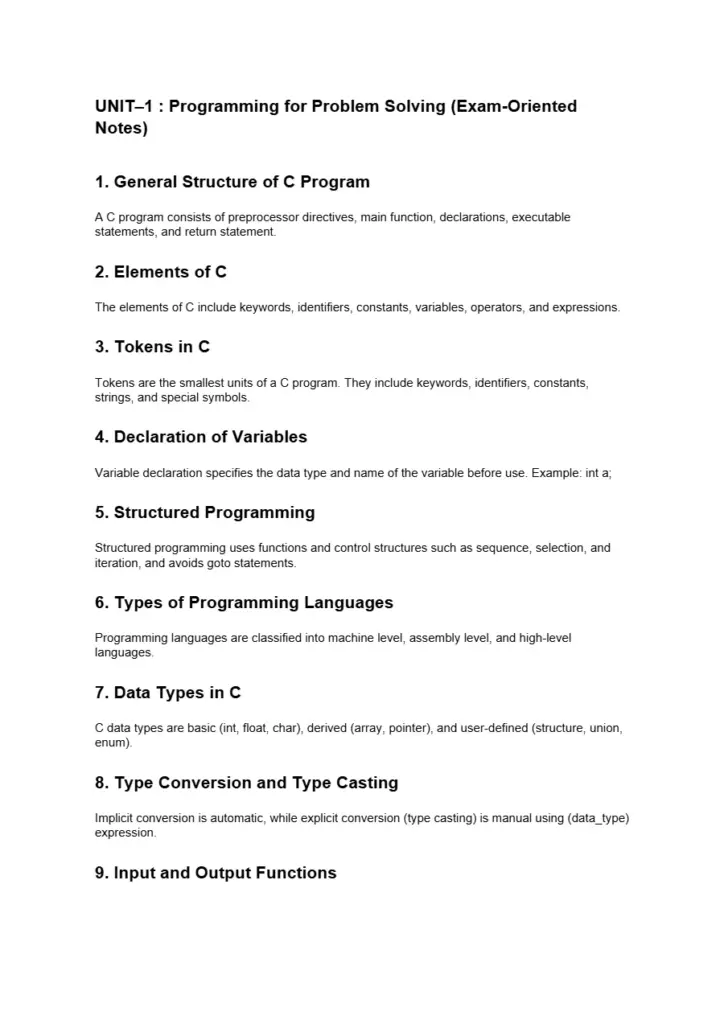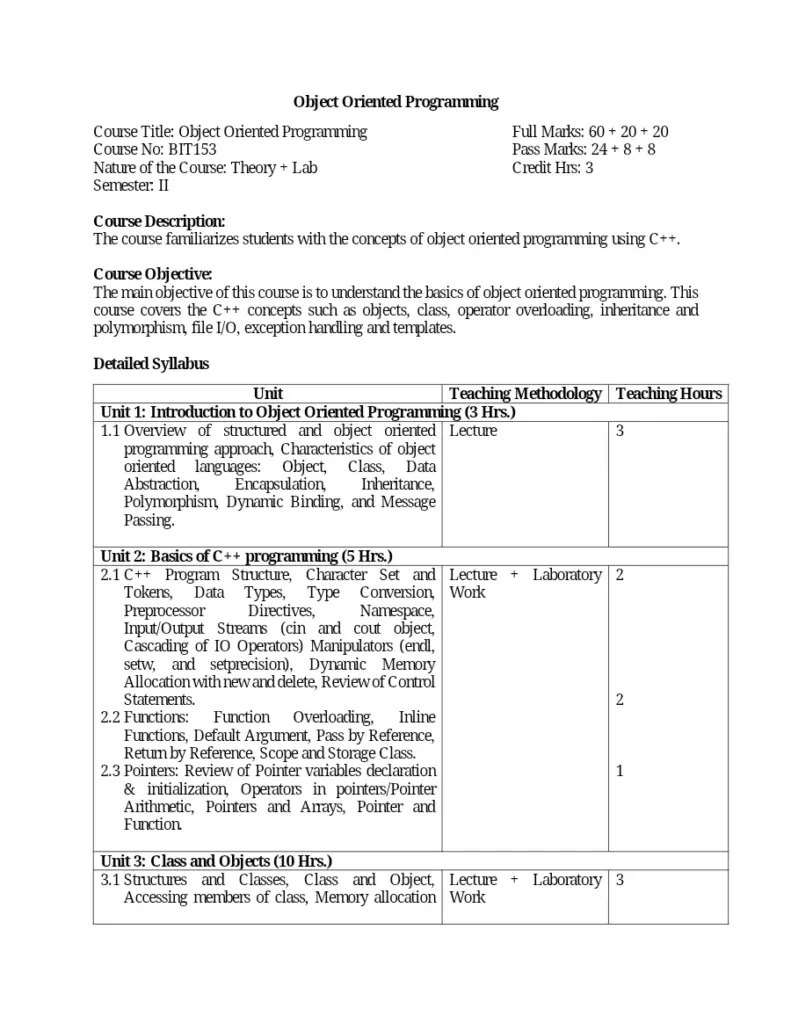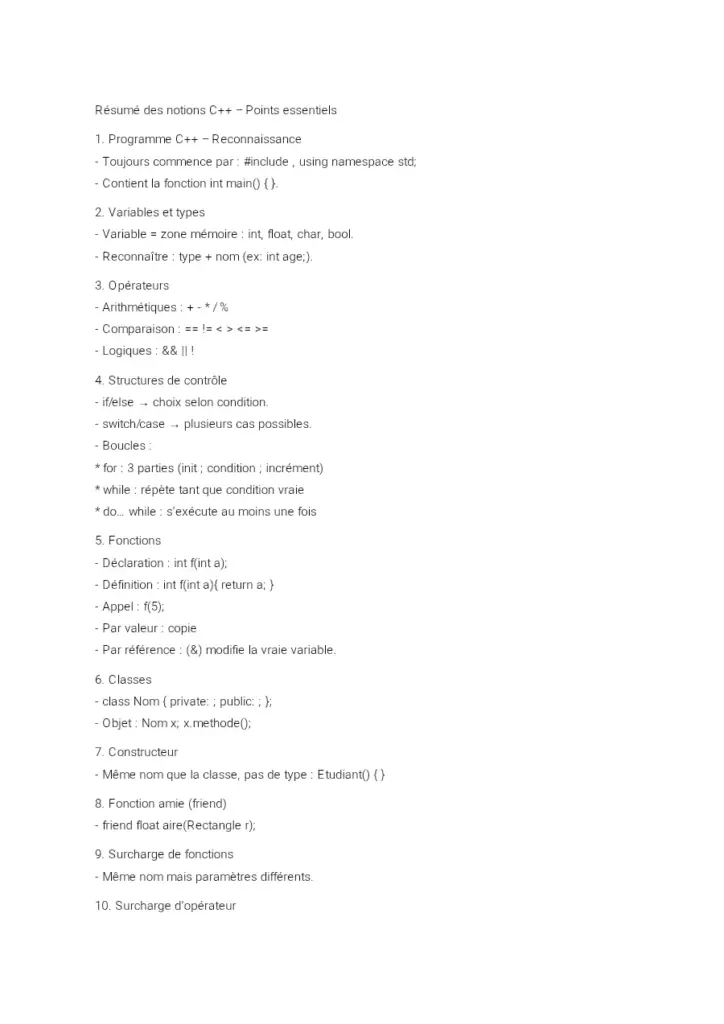


C and C++ represent the foundational pillar of modern systems programming, executing as highly efficient compiled languages that grant software developers direct, uninsulated control over physical hardware assets, registers, and system memory allocations. Originally engineered to bridge the gap between low-level assembly code and high-level abstract logic, C provides a minimalist, procedural environment optimized for operating system kernels, device drivers, and resource-constrained embedded networks. C++ extends this procedural baseline into an intensely expressive multi-paradigm power engine, embedding zero-overhead object-oriented programming, generic template matrices, and functional abstractions. To guide students scaling up from fundamental syntax manipulation to high-compute architecture design, our comprehensive Programming category features an exhaustive library of academic syllabi, code compilation assignments, and engineering blueprints.
The structural identity of C and C++ is anchored in its rejection of automated runtime layers. Unlike languages that rely on a virtual machine, bytecode interpretation, or concurrent garbage collection loops, C and C++ source code compiles directly into platform-specific native machine instructions. This direct compilation removes runtime overhead and eliminates unpredictable execution stalls, making C/C++ the default selection for low-latency graphics pipelines, high-frequency financial platforms, game engines, and browser rendering architectures. Students can examine how these structural binaries interface with widespread algorithmic optimization workflows by evaluating 100 Multiple Choice Questions on Emerging Trends in Computer Engineering and Information Technology.
A defining characteristic of C and C++ is manual memory management. Developers own absolute control over the application’s runtime memory space, manually separating data allocations across the stack and the heap. While stack allocations are managed implicitly by scope boundaries via execution frames, heap memory must be explicitly requested and relinquished—using malloc() and free() in C, or the new and delete operators in C++. This proximity to raw memory addresses allows for the creation of exceptionally high-performance data engineering models, matching structural optimization schemes explored in advanced machine learning platforms like Deep Learning Fundamentals.
However, operating without a runtime safety net requires rigorous mathematical discipline. Mismanaging raw pointers can lead to memory corruption, dangling references, buffer overflows, and severe security exploits. To mitigate these vulnerabilities while preserving performance, modern C++ (C++11 and beyond) enforces the RAII (Resource Acquisition Is Initialization) paradigm. RAII binds the lifecycle of a heap resource to the scope lifetime of a stack-allocated object. When the stack object goes out of scope, its destructor automatically frees the underlying heap resource. This design underpins modern smart pointers (std::unique_ptr, std::shared_ptr), eliminating manual deletion cycles and protecting applications from catastrophic memory leaks.
To see how the field of C/C++ systems engineering and software architecture categorizes its operational domains, review the following academic taxonomy:
Parent Category: Computer Science
Academic Branch: Programming
Core Languages: C / C++
Subfields & Architectural Systems:
Low-Level Semantics (Pointers, Memory Addresses, Structs, Bitwise Operators)
Manual Memory Dynamics (Stack Allocation, Heap Management, malloc/free, Custom Allocators)
Object-Oriented Frameworks (Classes, Virtual Inheritance, Polymorphism, VTables)
Generic Metaprogramming (Templates, Template Specialization, Compile-Time Evaluation)
Standard Template Library / STL (Vectors, Maps, Iterators, Algorithmic Sequences)
Resource Governance Paradigms (RAII, Smart Pointers, Move Semantics, Destructors)
| Resource Management Tool | Language Paradigm | Memory Management Allocation | Ownership Model | Operational Safety Rating |
Raw Pointers (T*) |
C / Foundation C++ | Manual (malloc/free, new/delete) |
None (Unrestricted copy/sharing) | Low (Prone to leaks, dangling pointers, and crashes) |
Unique Pointer (std::unique_ptr) |
Modern C++ (C++11+) | Automated via RAII Scope Destructor | Strict Single Ownership (Non-copyable, Move-only) | High (Guarantees elimination of double-frees and leaks) |
Shared Pointer (std::shared_ptr) |
Modern C++ (C++11+) | Automated via dynamic reference counting | Shared Ownership (Multiple pointers trace single block) | Medium-High (Safe until broken by cyclic reference blocks) |
Weak Pointer (std::weak_ptr) |
Modern C++ (C++11+) | Passive observer (Does not alter count) | Non-owning Observer (Breaks shared pointer loops) | High (Must convert to shared pointer to access data safely) |
Chesser Resources is a free online study-and-research library at chesserresources.com. It holds 300,000+ documents — books, textbooks, past papers, lecture notes, study guides, research papers and much more — across exams, the sciences, math, literature, the humanities and beyond. Everything is readable in the browser with no account, alongside free AI summaries, an Ask-AI chatbot, highlights, notes and read-aloud audio. Instead of a subscription, downloads are unlocked by contributing back to the community, so the library stays genuinely free.
A pointer is a distinct variable that stores a specific memory address as its numeric value; it can be initialized as nullptr, re-assigned to track alternative variables, and requires explicit dereferencing (*ptr) to modify the underlying data. A reference functions as an unchangeable alias for an already existing variable object. It must be bound directly to a valid memory target upon instantiation, can never be re-assigned to point to a different entity, and executes dereferencing operations implicitly behind the scenes.
When a class declares or inherits a virtual method, the compiler generates a static array of function pointers termed a Virtual Table (VTable) for that class. Every object instance of that class contains an implicit, hidden pointer—the Virtual Table Pointer (vptr)—pointing directly to the VTable. When a virtual function is invoked via a base pointer or reference at runtime, the execution engine intercepts the call, reads the object’s vptr, locates the appropriate function override address within the VTable, and jumps to that concrete block of code.
A virtual destructor guarantees complete memory cleanup when deleting a derived subclass object through a pointer to the base class. If a base class destructor lacks the virtual modifier, executing delete base_ptr triggers undefined behavior—the compiler will invoke only the base class destructor block, leaving any unique heap allocations or resource handles held by the derived subclass orphaned in memory, creating severe memory leaks.
Resource Acquisition Is Initialization (RAII) is a core systems-level programming design paradigm that links the lifecycle of a bounded system resource (such as heap memory, network sockets, or mutex database locks) directly to the scope lifetime of a stack-allocated wrapping object. The resource is acquired exclusively inside the object’s constructor initialization phase (Constructor), and it is guaranteed to be released automatically within the object’s destructor layout (Destructor) when the stack object steps out of scope.
&&) optimize C++ application performance?Prior to C++11, passing temporary objects often triggered expensive deep-copy operations. Move semantics resolve this by introducing rvalue references (&&), which match temporary object expressions. Instead of executing a deep copy by duplicating large heap-allocated arrays, a move constructor or move assignment operator simply intercepts the internal memory pointers of the temporary source object, re-assigns them directly to the destination object, and nullifies the source pointers, achieving a near-zero-overhead transfer of ownership.
The Rule of Three states that if a class requires a custom implementation of any of the following resource governance methods, it almost certainly requires all three to prevent memory contamination: a Destructor, a Copy Constructor, or a Copy Assignment Operator. With the introduction of move semantics in C++11, this evolved into the Rule of Five, extending the requirement to explicitly declare or delete the Move Constructor and Move Assignment Operator to ensure correct ownership management.
std::vector::reserve() and std::vector::resize()?reserve() alters only the underlying capacity allocation of a vector. It pre-allocates a contiguous block of raw heap memory to accommodate a target element count without instantiating objects, preventing expensive vector reallocations during subsequent insertions.
resize() directly alters the active element size count of the vector container. It updates the element tracking pointers and immediately instantiates or destroys elements to match the requested size value.
Undefined Behavior (UB) represents source code configurations for which the official language specifications impose zero layout rules or structural requirements. When the compiler encounters UB (such as accessing an out-of-bounds array index, dereferencing a nullptr, or modifying a variable multiple times without a sequence point), it assumes that condition can never occur. This allows the optimization engine to aggressively discard conditional check branches, resulting in unstable binaries that produce arbitrary data corruptions or sudden application crashes.
Because C++ supports function overloading, multiple distinct functions can share identical names as long as their input parameter signatures differ. To resolve this ambiguity for the linker, the compiler executes Name Mangling, translating human-readable function declarations into unique cryptographic string strings that encode the function name, its class scope, and its explicit parameter type matrices. Because C does not support function overloading, it does not use name mangling.
extern "C" declaration necessary when linking C and C++ source objects?Because C++ applies name mangling to function identifiers while C retains clean, unmangled names, linking a compiled C object directly into a C++ binary triggers unresolved external symbol link errors. Prefacing a declaration block with extern "C" instructs the C++ compiler to disable name mangling for those specific function strings, ensuring the linker can cleanly match function signatures across C and C++ object boundaries.
#define) and a C++ inline function?A text macro (#define) is handled entirely by the preprocessor phase via raw text substitution. It bypasses type-checking validations and can introduce subtle scoping logic bugs.
An inline function is handled by the primary compiler engine. It acts as a request to copy the function’s compiled assembly instructions directly into the calling location to eliminate function call overhead, while fully preserving type safety, scoping parameters, and debugging streams.
C++ templates act as Turing-complete generative code blueprints processed entirely during the compilation phase. When a template function or class is instantiated using specific type parameters, the compiler executes Template Instantiation, generating separate concrete class definitions directly in the object binary. This compile-time execution shifts computational work away from runtime processing loops, enabling advanced zero-overhead abstractions.
Memory fragmentation occurs when repeated cycles of arbitrary object allocations and deletions leave the heap broken into alternating blocks of active memory and tiny free pockets. If an application subsequently requests a massive, contiguous block of heap memory, the system allocator may reject the request and throw an out-of-memory error—even if the total volume of free space across all isolated pockets combined is mathematically sufficient—because the system cannot find a single, continuous address block.
const correctness improve code safety and optimization pathways?const correctness is a design approach where developers apply the const modifier to specify that a variable, parameter, or member function cannot mutate data states. This optimization constraint prevents accidental data alterations during development. It also provides the compiler with explicit guarantees about data stability, enabling it to store constants inside read-only memory blocks and optimize register allocations.
A double-free error occurs when an application invokes a memory reclamation routine (like free() or delete) twice on the exact same heap allocation address without an intermediate allocation cycle. This action corrupts the internal tracking structures of the system memory manager, potentially overwriting management headers or linking independent allocation lists together. Attackers exploit this corruption to orchestrate arbitrary memory write attacks or execute malicious code.