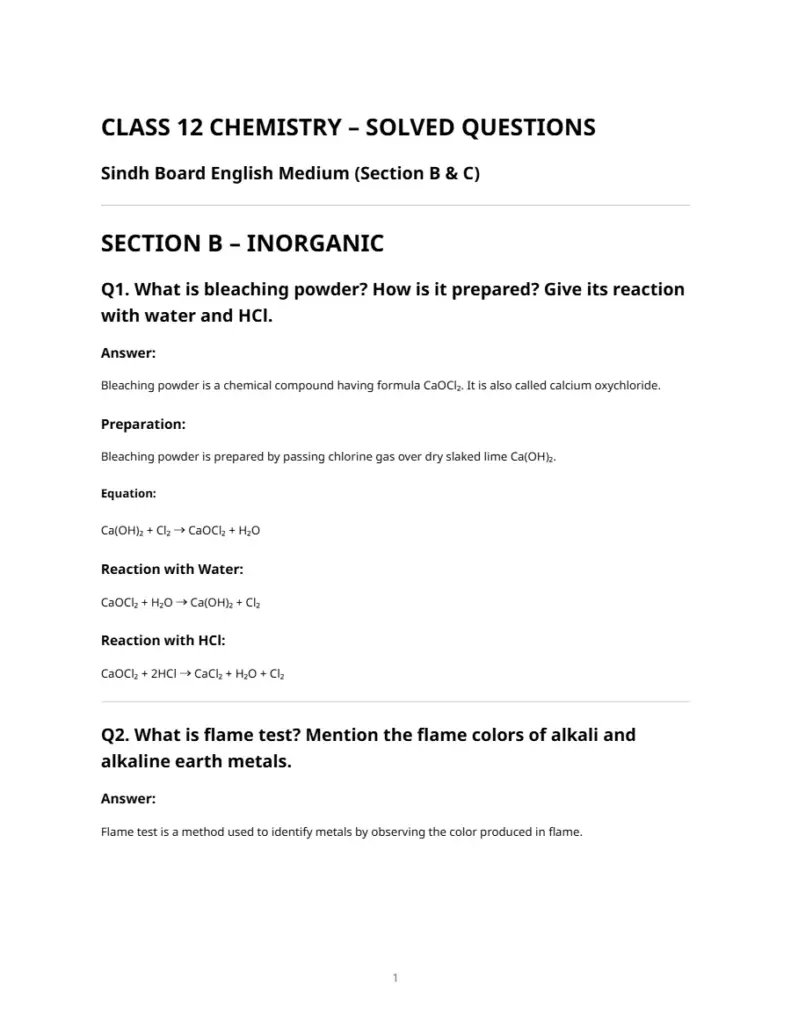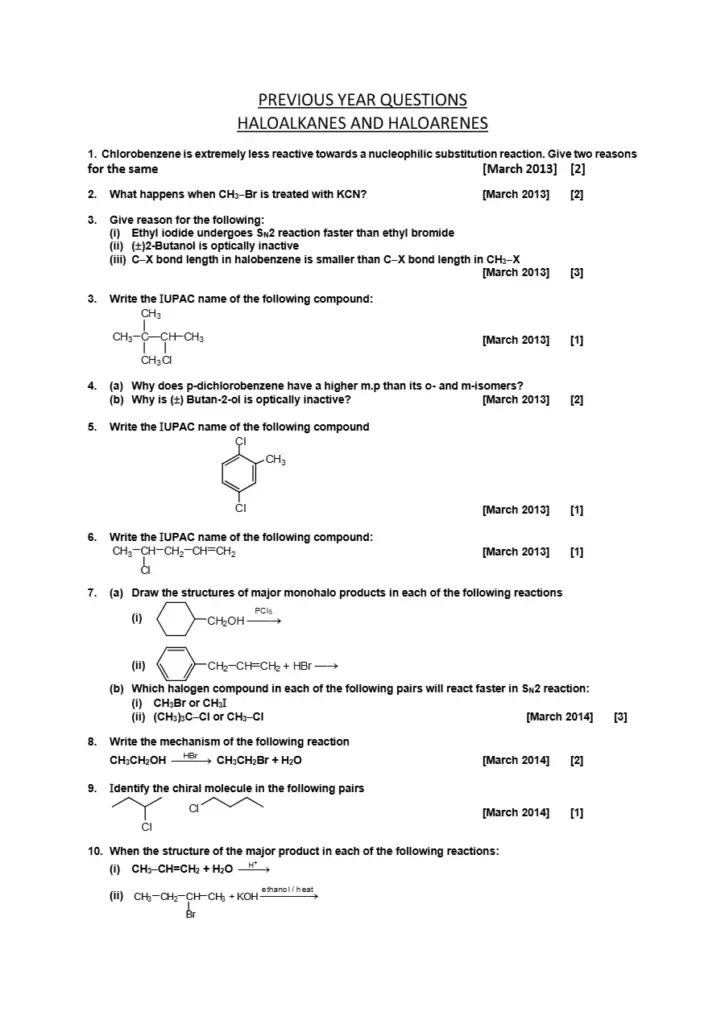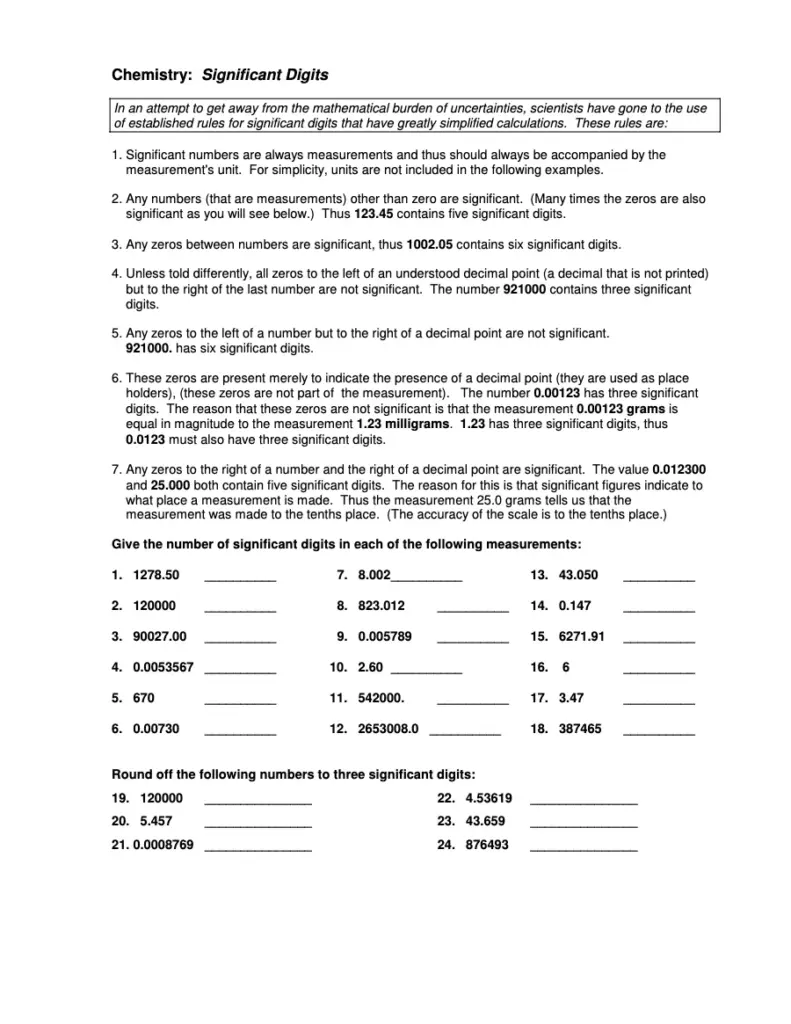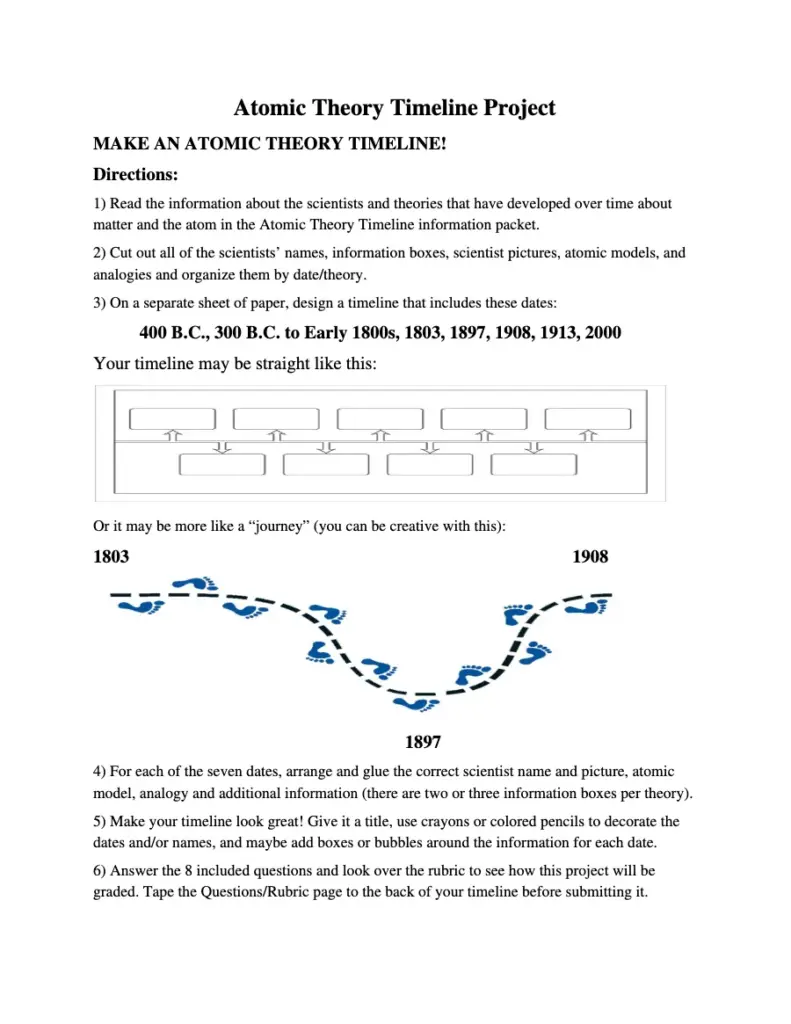


Access an extensive, community-driven library of chemistry PDFs, stoichiometry worksheets, molecular structure diagrams, and thermodynamics study guides on Chesser Resources. We provide a centralized, 100% free-to-read hub for scientific and academic study material, featuring over 300,000 documents across the sciences. This dedicated collection tracks the fundamental language of matter—ranging from the quantum mechanics of electron orbitals and covalent bonding to the macroscopic kinetics of chemical reactions and chemical equilibrium. Whether you are troubleshooting the complexities of organic synthesis, mapping the stoichiometry of a redox reaction, or preparing for an advanced university general, analytical, or physical chemistry exam, our browser-based reader, AI summaries, and Ask-AI tools provide instant, deep-dive clarity.
Chemistry is the central science that bridges physics and biology, focusing on the composition, structure, properties, and changes of matter. It is the study of how atoms interact to form compounds and how those compounds transform under different energy conditions. The field branches into three fundamental frameworks: General & Physical Chemistry (the laws of energy, thermodynamics, and kinetics), Organic Chemistry (the study of carbon-based life chemistry), and Inorganic & Analytical Chemistry (the composition of non-carbon materials and quantitative measurement). Studying chemistry builds advanced competencies in quantitative reasoning, laboratory precision, and structural visualization—skills foundational to every career in medicine, engineering, environmental science, and materials research.
Our library hosts a vast array of student-shared reaction logs, spectral analysis maps, and comprehensive review packages organized for deep study:
Matter & Energy: Find high-yield stoichiometry and thermodynamics worksheets detailing molar calculations, heat transfer, and reaction spontaneity ($ΔG$).
Quantum Models: Access atomic structure and bonding guides mapping electron configurations, periodic trends, and molecular orbital theory.
Carbon Chemistry: Download functional organic reaction mechanism PDFs analyzing functional groups, nomenclature, and synthesis pathways (e.g., $S_N1, S_N2$).
Inorganic Properties: Browse study materials on coordination chemistry and crystal lattice structures, focusing on the properties of metals and non-metals.
Measurement: Access laboratory techniques and safety notes covering chromatography, titration, and spectroscopy (IR, NMR, $MS$).
Real-World Application: Browse dossiers on biochemistry and environmental chemistry, exploring how chemical principles apply to medicine and planetary health.
| Chemical Variable | Definition | Scientific Significance |
| Mole | $6.022 \times 10^{23}$ particles | Fundamental unit for quantifying matter |
| Enthalpy ($H$) | Heat content of a system | Governs the energy flow in reactions |
| pH | $-\log[H^+]$ | Measure of acidity/basicity in aqueous solutions |
| Electronegativity | Tendency of an atom to attract electrons | Predicts bond polarity and molecular shape |
In an ionic bond, one atom completely “steals” an electron from another, creating charged ions that are attracted to each other by electrostatic forces (typical in salts like $NaCl$). In a covalent bond, atoms share one or more pairs of electrons to achieve a stable octet (typical in biological molecules like $H_2O$ and $CO_2$). This distinction is the bedrock of molecular structure.
The Law of Conservation of Mass states that matter cannot be created or destroyed. In any chemical reaction, the number of atoms of each element must be exactly the same on the reactant side and the product side. Balancing equations isn’t just a math exercise; it’s a direct reflection of the physical reality that every atom accounted for at the start must be accounted for at the finish.
Not every reaction that can happen will happen spontaneously. Thermodynamics uses Gibbs Free Energy ($ΔG$) to predict spontaneity. If $ΔG < 0$, the reaction is spontaneous (it releases energy). If $ΔG > 0$, the reaction requires an external energy input. This concept is why photosynthesis (non-spontaneous) requires light energy from the sun to drive the production of glucose.
Chesser Resources is a free, open library of study and research material designed to democratize access to academic success. We host over 300,000+ documents—including textbooks, lecture notes, research papers, and study guides—across every subject imaginable. We believe students shouldn’t have to navigate paywalls or blurry preview pages just to get the information they need to learn.
Everything on Chesser Resources is free to read and search in your browser. We’ve built in powerful, free tools to help you actually learn from the material: AI summaries for fast comprehension, an Ask-AI chatbot to answer specific questions about your document, highlighting and annotation tools, and even read-aloud audio. Our platform is kept free by the community; by contributing your own notes or sharing content, you earn credits that unlock document downloads and prints, ensuring the library remains a high-performance, open-access resource for students everywhere.
Ready to dive into chemistry study guides or stoichiometry worksheets? You don’t need to sign up to start learning. Browse our library, use our AI tools to summarize complex molecular pathways, and contribute your own notes to help the student community grow.