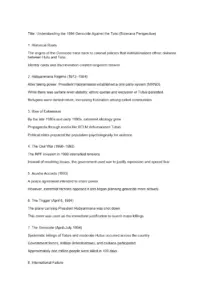
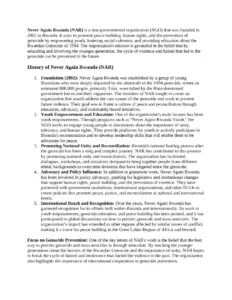
The 1994 Genocide Against the Tutsi provides a comprehensive analysis of the historical, ideological, and structural factors leading to the genocide. It examines the role of propaganda, state control, and the militarization of society in the execution of this tragic event. The document emphasizes that the genocide was a planned and organized act rather than a spontaneous occurrence. It also discusses the failure of international intervention and the consequences of systemic discrimination against the Tutsi population. This analysis is essential for understanding the complexities of genocide and the importance of historical context in preventing future atrocities.
Key Points
- Analyzes the ideological foundations of the 1994 Genocide Against the Tutsi.
- Explores the role of propaganda in inciting violence against the Tutsi population.
- Details the systematic discrimination and exclusion faced by the Tutsi before the genocide.
- Examines the international community’s failure to intervene during the genocide.