Biodiversity 2025 Unlocked focuses on critical questions surrounding biodiversity, including its significance, conservation strategies, and current challenges. This resource is tailored for students and educators looking to deepen their understanding of biodiversity concepts and prepare for related examinations. Key themes include biodiversity loss, conservation methods, and the role of ecosystems. It serves as a valuable tool for those studying environmental science or preparing for assessments in related subjects.

Key Points

  • Covers essential biodiversity questions relevant for 2025 assessments.
  • Explains conservation strategies and their importance in preserving ecosystems.
  • Discusses the impact of biodiversity loss on global ecosystems.
  • Includes a variety of questions designed for exam preparation.
Dr.Dharshan Bose
24 pages
Language:English
Type:Study Guide
Dr.Dharshan Bose
24 pages
Language:English
Type:Study Guide
400
/ 24
Page
1
Biodiversity and Conservation
NEET Syllabus
Biodiversity and its conservation: Concepts of biodiversity, patterns of biodiversity, Importance of
Biodiversity, Loss of Biodiversity, Biodiversity conservation, Hotspots, endangered organisms,
extinction, red data book, biosphere reserve, national parks and sanctuaries
01.
Match List – I with List – II with reference to vast diversity of
earth:
A.
Ant
species I. 20.000
B. Beetles species II. 28.000
C. Fish species III. 3.00.000
D. Orchid species
IV. 20.000
Choose the correct answer from the options given below.
1. A – III, B – II, C – IV, D – I 2. A – II, B – IV, C – I, D – II
I
3. A
– IV, B – II, C – III,
D – I 4. A – IV, B – III, C – II, D – I
02. ________ and _________ biologists have been trying to understand the significance of
biodivers
ity.
1. E
cologists
and physiologists
2.
Evolution
ary and ecologists
3. E
mbryologists and ec
ologists 4. Ecologist
s and Geneticians
0
3.
Within our biosphere, the heterogeneity or biodiversity is observed at the level of:
1. Species 2. Cell 3. Biome 4. All of these
04.
Assertion (A): In different himalayan ranges, Rauwolfia vomitoria exhibit good example
of
genetic di
versity.
Reason (R): In Himalayan ranges, single species of Rauwolfia show great diversity in terms of
the potency and concentration of the chemical reserpine that the plant produces.
1. Both (A) and (R) are true and the (R) is correct explanation of the (A).
2. Both (A) and (R) are true but the (R) is not correct explanation of the (
A).
3. (A) is true but (R) is false.
4. B
oth (A) and (R) are false.
0
5.
Find out the correct statement:
A. The term biodiversity was popularized by sociobiologist Edward Wilson.
B. Wilson described the combined diversity at all the levels of biological organization.
C. A single
species might show high diversity at the genetic level over its distributional range.
D. In
the world, 50,000 genetically different strains of rice and 1000 varieties of Mangoes are
examples of genetic diversity.
1. O
n
ly B abd C 2. A and C 3. A, B and C 4. A, B, C and D.
0
6.
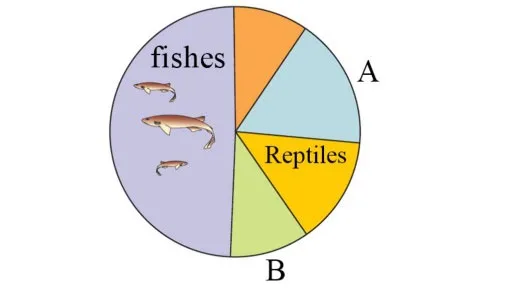
Westren ghats have a greater _________ species diversity than the eastern ghats.
1. Fishes 2. Reptilian 3. Avian 4. Amph
ibian
0
7.
Read the following statements carefully:
A. As
per IUCN (2004) data, the total number of plant and animal species described so far is
slightly more than 1.5 million.
B. For man
y taxonomical groups, species inventories are more complete in tropics than in
temperate countries.
C. Overwhelmingly large proportion of the species waiting to be discovered are in the tropics.
D. Robery May places
the global species diversity estimate of about 7 billion.
The correct statements among the above are:
1. Only B abd C 2. A and C 3. Only A 4. A, B, C and D.
0
8
.
Gi
ven below are two statements:

Page
2
Statement – I: More than 70% of all the species recorded are animals.
Statement – II: The remaining 30% are the plants (including algae, fungi, bryophytes,
gymnosperms and angiosperms).
1. Both the statements – I and II are correct
2. Both the statements – I and II are incorrect
3. Statement – I is incorrect but statement – II is correct
4. Statement – I is only correct
09. Assertion (A): Insects are the most species rich taxonomcal group.
Reason (R): Insects make up more than 70 percent of the total inventories done yet.
1. Both (A) and (R) are true and the (R) is correct explanation of the (A).
2. Both (A) and (R) are true but the (R) is not correct explanation of the (A).
3. (A) is true but (R) is false.
4. Both (A) and (R) are false.
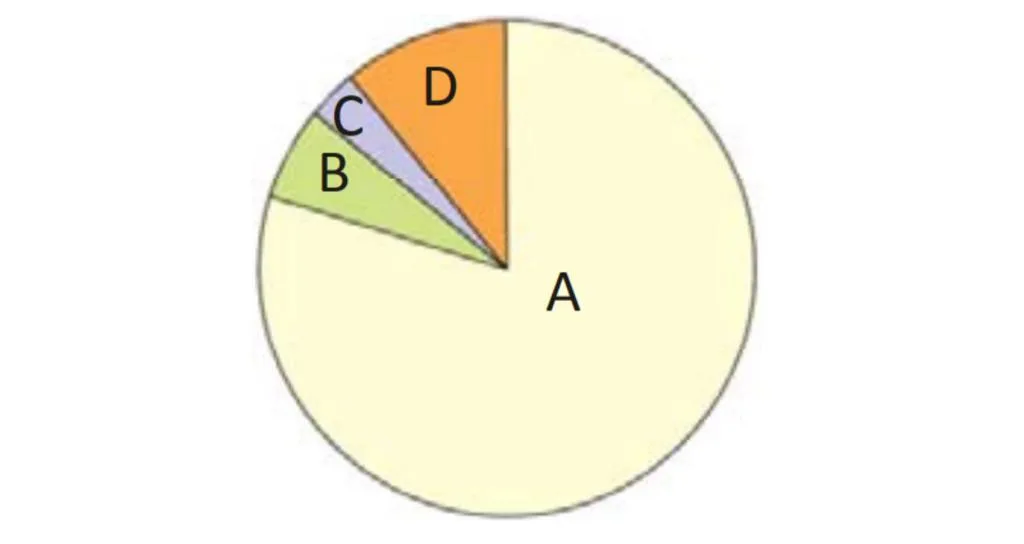
10. The number of _______ species in the world is more than the combined total of the species of
fishes, amphibians, reptiles and mammals:
1. Gymnosperms 2. Pteridophytes 3. Angiosperms 4. Fungi
11. Observe the following taxonomic groups:
A. Crustaceans B. Hexapoda C. Nematoda D. Mollusca
Arrange the following Invertebrate group in an ascending order of their number:
1. A – B – C – D 2. B – C – D – A 3. D – C – B – A 4. A – D – C – B
12. Observe the following taxonomic groups:
A. Mammalia B. Fishes C. Birds D. Reptiles
Arrange the following vertebrate group in a descending order of their number:
1. A – B – C – D 2. B – C – D – A 3. D – C – B – A 4. A – D – C – B
13. Observe the following taxonomic groups:
A. Lichens B. Mosses C. Algae D. Angiosperms
Arrange the following groups in an ascending order of their number:
1. A – B – C – D 2. B – C – D – A 3. D – C – B – A 4. A – D – C – B
14. Which of the following option correctly represent function of an ecosystem
A. Energy flow B. Decomposition C. Productivity D. Nutrient cycling
1. A and D only 2. A, C and D only 3. B, C and D only 4. A, B, C and D
15. Biologists are not sure about the number of __________ species:
1. Prokaryotes 2. Angiosperms 3. Algae 4. Lichens
16. Assertion (A): Biologists are not sure about how many prokaryotic species there might be.
Reason (R): If we accept biochemical or molecular criteria for delineating prokaryotes, then
their diversity alone might runs into millions.
1. Both (A) and (R) are true and the (R) is correct explanation of the (A).
2. Both (A) and (R) are true but the (R) is not correct explanation of the (A).
3. (A) is true but (R) is false.
4. Both (A) and (R) are false.
17. India has 2.4% of the world’s land area, its share of the global species diversity is an
approximately ______ %:
1. 5.2 2. 3.3 3. 11.6 4. 8.1.
18. Find out the correct statement:
A. India is one of the 12 mega diversity countries of the world.
Page
3
B. Nearly 45,000 species of animals and 90,000 species of plants have been recorded from
India till now.
C. It was estimated that more than 1,00,000 plant species and more than 3,00,000 animal
species yet to be discovered and described.
D. A large fraction of these species faces the threat of becoming extinct even before we
discover them.
1. Only B abd C 2. A and C 3. A, C and D 4. A, B, C and D.
19. Assertion (A): A large fraction of these species faces the threat of becoming extinct even before
we discover them.
Reason (R): The immense trained manpower (taxonomists) and the time required to complete
the job is very poor.
1. Both (A) and (R) are true and the (R) is correct explanation of the (A).
2. Both (A) and (R) are true but the (R) is not correct explanation of the (A).
3. (A) is true but (R) is false.
4. (A) is false and (R) is true.
20. Assertion (A): Nature’s biological library is burning even before we catalogued the titles of all
the books stocked there.
Reason (R): Global warming could be the reason for the burning out the Narure’s biological
library.
1. Both (A) and (R) are true and the (R) is correct explanation of the (A).
2. Both (A) and (R) are true but the (R) is not correct explanation of the (A).
3. (A) is true but (R) is false.
4. (A) is false and (R) is true.
21. Match List – I with List – II with reference to area and bird species diversity:
A. California I. 1200
B. New York II. 56
C. Greenland III. 105
D. India IV. 1400
Choose the correct answer from the options given below.
1. A – III, B – II, C – IV, D – I 2. A – II, B – IV, C – I, D – III
3. A – IV, B – II, C – III, D – I 4. A – IV, B – III, C – II, D – I
22. One can observe maximum species diversity between the lattitudes of:
1. 90
o
N to 23.5
o
N 2. 23.5
o
N to 90
o
N 3. 90
o
S to 23.5
o
S 4. 23.5
o
N to 23.5
o
S
23. Given below are two statements:

Statement – I: Equador forest has 10 times as many species of vascular plants as a Midwest
Forest of equal area in USA.
Statement – II: Equadoe is a forest of tropical area and Midwest is a forest of temperate area.
1. Both the statements – I and II are correct
2. Both the statements – I and II are incorrect
3. Statement – I is incorrect but statement – II is correct
4. Statement – I is only correct
24. Greatest biodiversity on earth can be seen in:
1. Tropical Amazon Rain Forest of South America
2. Tropical Amazon Rain Forest of North America
3. Temperate Amazon Rain Forest of South America
4. Temperate Amazon Rain Forest of North America
25. Match List – I with List – II with reference to the vast species diversity of tropical Amazon rain
forest in South America:
/ 24
End of Document
400

FAQs

what is biodiversity 2025 unlocked about

Biodiversity 2025 Unlocked is a comprehensive study guide focused on key concepts and questions related to biodiversity conservation and its significance in the modern world.

  • It covers various aspects of biodiversity, including definitions, importance, and conservation strategies.
  • The guide includes detailed questions and answers that help clarify complex topics.
  • It addresses current trends and challenges in biodiversity, making it relevant for students and professionals alike.

biodiversity 2025 unlocked key concepts

The key concepts in Biodiversity 2025 Unlocked revolve around the understanding and preservation of biodiversity.

  • Biodiversity Definitions: Understanding what biodiversity means and its various components.
  • Conservation Strategies: Exploring methods for conserving biodiversity in different ecosystems.
  • Importance of Biodiversity: Discussing why biodiversity is crucial for ecological balance and human survival.

biodiversity 2025 unlocked exam tips

To excel in exams related to Biodiversity 2025 Unlocked, consider the following tips.

  • Understand Key Terms: Familiarize yourself with essential terminology and definitions.
  • Review Case Studies: Analyze case studies provided in the guide to understand real-world applications.
  • Practice Questions: Utilize the question and answer format to test your knowledge and identify areas needing improvement.

biodiversity 2025 unlocked summary

The summary of Biodiversity 2025 Unlocked encapsulates the essential themes and findings of the document.

  • It highlights the critical role of biodiversity in maintaining ecological balance.
  • The document discusses various threats to biodiversity, including climate change and habitat destruction.
  • Conservation efforts and strategies are outlined to promote sustainable practices.

biodiversity 2025 unlocked examples of biodiversity

Biodiversity 2025 Unlocked provides numerous examples of biodiversity across different ecosystems.

  • Terrestrial Biodiversity: Includes forests, grasslands, and deserts, showcasing various flora and fauna.
  • Aquatic Biodiversity: Highlights the diversity found in oceans, rivers, and lakes.
  • Endemic Species: Discusses species unique to specific regions, emphasizing their conservation importance.

biodiversity 2025 unlocked conservation strategies

The conservation strategies outlined in Biodiversity 2025 Unlocked focus on preserving and protecting biodiversity.

  • Protected Areas: Establishing national parks and reserves to safeguard habitats.
  • Restoration Projects: Initiatives aimed at restoring degraded ecosystems.
  • Community Involvement: Engaging local communities in conservation efforts to ensure sustainable practices.

biodiversity 2025 unlocked significance of biodiversity

The significance of biodiversity is a central theme in Biodiversity 2025 Unlocked.

  • Ecological Balance: Biodiversity maintains the balance of ecosystems, supporting life on Earth.
  • Economic Value: Many industries, including agriculture and pharmaceuticals, rely on biodiversity.
  • Cultural Importance: Biodiversity enriches cultures and traditions, providing resources and inspiration.

biodiversity 2025 unlocked challenges to biodiversity

Biodiversity 2025 Unlocked addresses several challenges facing biodiversity today.

  • Climate Change: Alters habitats and threatens species survival.
  • Habitat Destruction: Urbanization and agriculture lead to loss of natural habitats.
  • Pollution: Contaminates ecosystems, affecting both flora and fauna.

biodiversity 2025 unlocked future of biodiversity

The future of biodiversity is a critical discussion point in Biodiversity 2025 Unlocked.

  • Sustainable Practices: Emphasizes the need for sustainable development to protect biodiversity.
  • Innovative Solutions: Encourages the use of technology and science in conservation efforts.
  • Global Cooperation: Highlights the importance of international collaboration in addressing biodiversity loss.