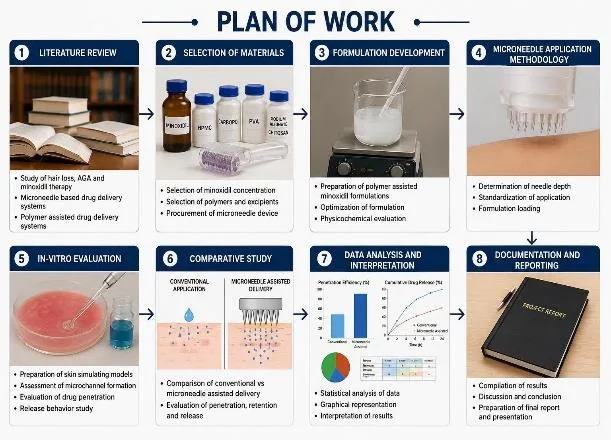
Microneedle-assisted delivery systems enhance the effectiveness of low-concentration minoxidil in treating androgenetic alopecia. This study evaluates the formulation’s physicochemical properties, penetration efficiency, and controlled release behavior. The polymer-based system aims to improve drug retention and reduce side effects associated with conventional topical applications. Ideal for researchers and students in dermatology and pharmaceutical sciences, this work explores innovative methods for hair loss treatment. Key findings include improved drug delivery performance compared to traditional methods, making it a valuable resource for those seeking effective hair restoration solutions.

Key Points

  • Explores microneedle technology for enhanced minoxidil delivery
  • Evaluates physicochemical properties of polymer-based formulations
  • Demonstrates improved penetration efficiency for hair loss treatment
  • Highlights reduced side effects compared to conventional therapies
Tanmay Nimbalkar
32 pages
Language:English
Type:Thesis
Tanmay Nimbalkar
32 pages
Language:English
Type:Thesis
87
/ 32
1
CHAPTER 1: INTRODUCTION
Hair loss disorders represent a major dermatological concern worldwide, affecting millions of individuals
irrespective of gender and age. Among these disorders, androgenetic alopecia (AGA), commonly known as
male or female pattern baldness, is the most prevalent form of progressive hair loss. AGA is characterized
by gradual miniaturization of hair follicles, shortening of the anagen (growth) phase, and prolongation of
the telogen (resting) phase, ultimately resulting in reduced hair density and visible scalp exposure.
The pathogenesis of AGA is multifactorial and involves genetic susceptibility, hormonal influence
particularly dihydrotestosterone (DHT)and alterations in follicular signaling pathways. Elevated
sensitivity of hair follicles to DHT causes follicular shrinkage, leading to thinner and shorter hair strands
over time.
Apart from cosmetic concerns, hair loss significantly affects psychological well-being. Patients frequently
experience reduced self-esteem, anxiety, social withdrawal, emotional distress, and decreased quality of
life. Therefore, effective management of alopecia is important not only for restoring hair growth but also
for improving overall psychosocial health.
Current Treatment Approaches for Androgenetic Alopecia
Various treatment modalities have been explored for AGA, including:
Oral medications such as finasteride
Topical therapies such as minoxidil
Platelet-rich plasma (PRP) therapy
Hair transplantation
Laser therapy
Nutritional supplementation
Among these, topical minoxidil remains one of the most widely accepted and clinically approved first-line
treatments due to its established efficacy and non-invasive administration.
Minoxidil: Mechanism of Action
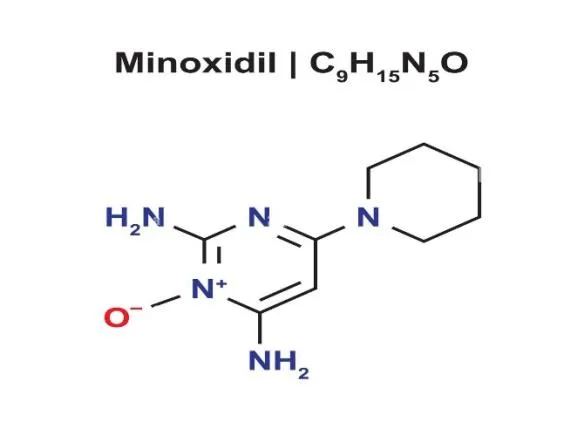
Minoxidil was initially developed as an antihypertensive drug; however, its hair growthpromoting effect
led to its repurposing for alopecia treatment.
The exact mechanism is not completely understood, but several actions contribute to hair growth
stimulation:
1. Vasodilation
Minoxidil acts as a potassium channel opener causing dilation of scalp blood vessels, thereby increasing
oxygen and nutrient supply to hair follicles.
2. Prolongation of Anagen Phase
Hair follicles remain in the active growth phase for a longer duration, promoting increased hair production.
3. Enlargement of Miniaturized Follicles
Minoxidil helps reverse follicular miniaturization associated with androgenetic alopecia. The mechanism of
2
action (MOA) of minoxidil in hypertension is:
Minoxidil is a direct arteriolar vasodilator.
Its active metabolite, minoxidil sulfate, opens ATP-sensitive potassium (K⁺) channels in vascular
smooth muscle.
Opening these K⁺ channels causes efflux of potassium, leading to hyperpolarization of the smooth
muscle cell membrane.
Hyperpolarization prevents calcium entry through voltage-gated calcium channels, resulting in
relaxation of arteriolar smooth muscle.
This causes arteriolar dilation, decreases peripheral vascular resistance (afterload), and lowers blood
pressure.
BP \propto CO \times PVR
Since minoxidil decreases peripheral vascular resistance (PVR), blood pressure falls.
Compensatory effects
The fall in blood pressure activates:
Sympathetic nervous system → reflex tachycardia, increased cardiac output.
Reninangiotensin–aldosterone system (RAAS) → sodium and water retention.
Because of these effects, oral minoxidil is usually given with:
A β-blocker (to control reflex tachycardia).
A loop diuretic (to prevent fluid retention).
Minoxidil is a K⁺ channel opener and direct arteriolar vasodilator, used mainly for severe/resistant
hypertension and also for androgenetic alopecia (hair loss).
3
1. Hair plays a significant role in personal appearance, self-esteem, and social confidence.
Therefore, effective management of hair loss disorders has become an important area of
dermatological and pharmaceutical research.
2. Androgenetic alopecia (AGA), commonly known as pattern hair loss, affects a substantial
proportion of the global population and is characterized by progressive reduction in hair
follicle size and shortened hair growth cycles.
3. Minoxidil is one of the few FDA-approved drugs for the treatment of androgenetic
alopecia. It promotes hair growth by prolonging the anagen (growth) phase, increasing
blood supply to hair follicles, and stimulating follicular activity.
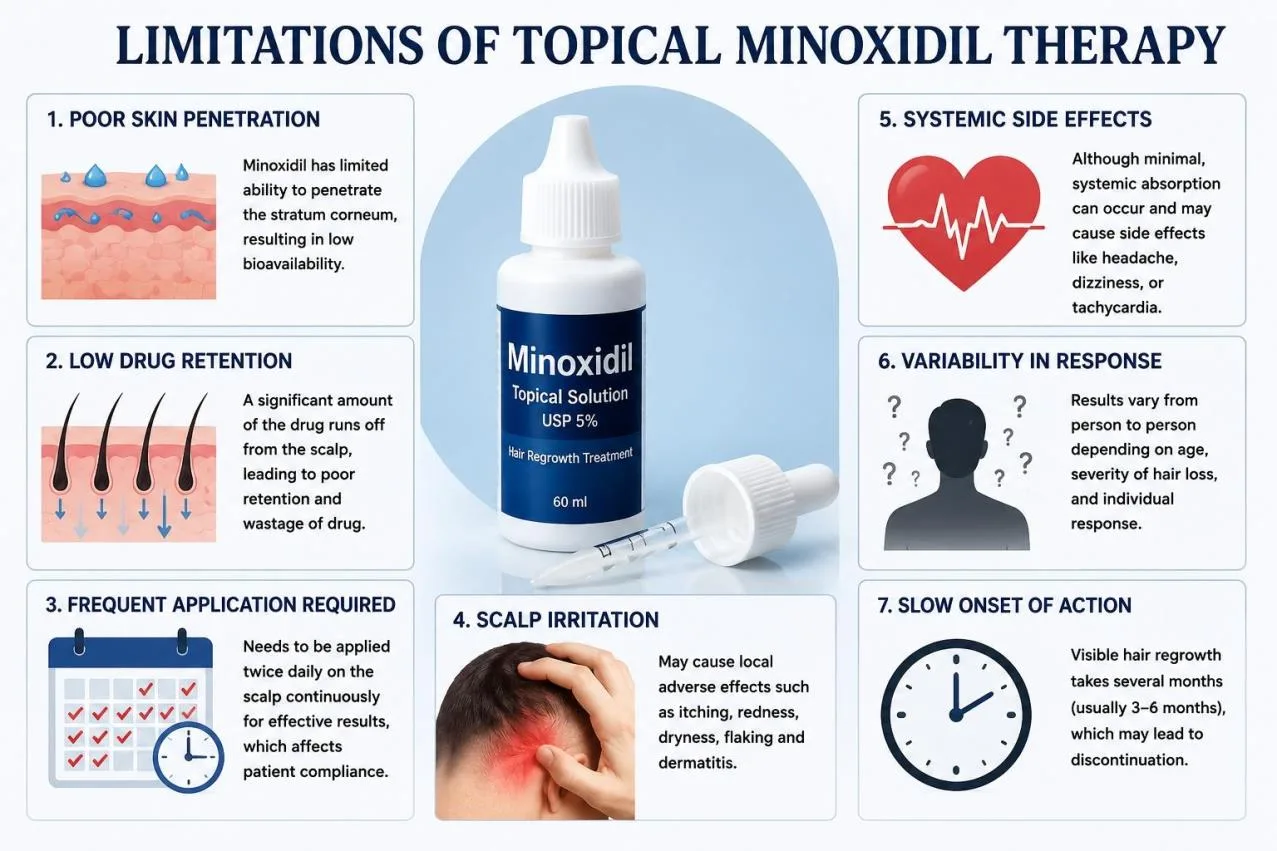
4. Despite its proven efficacy, conventional topical minoxidil formulations exhibit limited
therapeutic outcomes due to poor skin permeability, inadequate follicular targeting, rapid
drug loss from the scalp surface, and patient non-compliance resulting from frequent
application requirements.
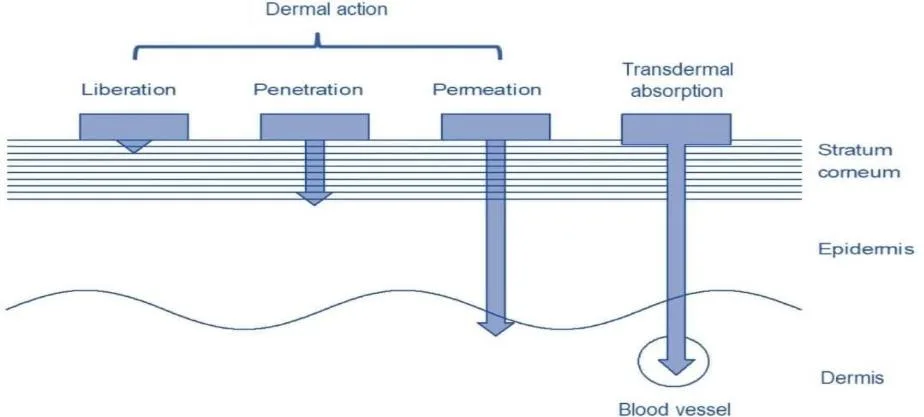
5. The outermost layer of the skin, the stratum corneum, acts as a major barrier to drug
penetration, significantly reducing the amount of minoxidil reaching the deeper follicular
structures where its therapeutic action is required.
6. Recent advances in transdermal drug delivery systems have introduced microneedle
technology as a promising strategy to overcome the limitations associated with traditional
topical formulations.
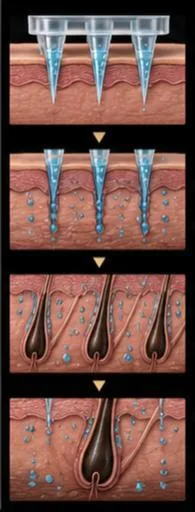
7. Microneedles are microscopic projections capable of creating temporary microchannels in
the skin without causing significant pain, bleeding, or tissue damage, thereby enhancing
drug permeation across the skin barrier.
8. Microneedle-assisted delivery enables direct access to hair follicles and surrounding tissues,
resulting in increased local drug concentration and improved therapeutic efficacy.
9. Controlled drug delivery systems integrated with microneedles can provide sustained
release of minoxidil over an extended period, reducing dosing frequency and improving
patient adherence to treatment.
10. Enhanced follicular targeting achieved through microneedle-assisted delivery may reduce
systemic drug exposure and minimize adverse effects such as scalp irritation, itching,
dryness, and unwanted hair growth in non-target areas.
11. The combination of microneedle technology with controlled-release formulations represents
an innovative approach that can significantly improve the bioavailability and retention of
minoxidil within the scalp.
12. This approach has the potential to increase treatment effectiveness while improving patient
comfort, making it a promising alternative to conventional topical therapies.
13. The present project focuses on the design and evaluation of a microneedle-assisted
controlled delivery system for minoxidil with the aim of enhancing hair follicle penetration,
achieving sustained drug release, and improving overall therapeutic outcomes in
androgenetic alopecia management.
14. The successful development of such a system may contribute to the advancement of
targeted transdermal therapies and provide a more efficient treatment option for individuals
suffering from hair loss disorders.

/ 32
End of Document
87

FAQs

what is the microneedle-assisted minoxidil delivery system for hair loss

The microneedle-assisted minoxidil delivery system for hair loss is an innovative approach designed to enhance the effectiveness of minoxidil, a common treatment for androgenetic alopecia.

  • Microneedles: These are tiny projections that create microchannels in the skin, allowing for better penetration of the drug.
  • Minoxidil: This topical solution promotes hair growth by increasing blood flow to hair follicles.
  • Benefits: The system aims to improve drug delivery, reduce side effects, and enhance patient compliance by minimizing the frequency of applications.

how does the microneedle-assisted minoxidil delivery system work

The microneedle-assisted minoxidil delivery system works by utilizing microneedles to create temporary microchannels in the skin, facilitating the absorption of minoxidil.

  • Step 1: Microneedles penetrate the outer layer of the skin.
  • Step 2: Microchannels are formed, reducing the barrier resistance.
  • Step 3: The minoxidil formulation is applied, allowing deeper penetration into the hair follicles.
  • Step 4: The system promotes sustained release of the drug, enhancing its therapeutic effects.

what are the advantages of microneedle-assisted minoxidil delivery for hair loss

The advantages of microneedle-assisted minoxidil delivery for hair loss include improved drug penetration and reduced side effects.

  • Enhanced Absorption: Microneedles allow for better delivery of minoxidil directly to hair follicles.
  • Reduced Frequency: The system can decrease the need for frequent applications, improving patient adherence.
  • Minimized Side Effects: Lower concentrations of minoxidil can be used, reducing the risk of irritation and other adverse effects.

what findings support the use of microneedle-assisted minoxidil delivery

Research findings support the use of microneedle-assisted minoxidil delivery by demonstrating significant improvements in hair growth outcomes.

  • Clinical Studies: Studies show that patients using microneedle-assisted systems experience better hair density compared to traditional methods.
  • Mechanism of Action: The microneedle system enhances the delivery of minoxidil, leading to more effective follicular stimulation.
  • Patient Compliance: Improved comfort and reduced application frequency lead to higher patient satisfaction and adherence to treatment.

how does the polymer-based formulation enhance minoxidil delivery

The polymer-based formulation enhances minoxidil delivery by providing controlled release and improved retention at the application site.

  • Controlled Release: The polymers regulate the diffusion of minoxidil, allowing for a sustained release over time.
  • Improved Stability: The formulation maintains the stability of minoxidil, preventing rapid degradation.
  • Increased Viscosity: Higher viscosity formulations improve retention on the scalp, reducing runoff and enhancing effectiveness.

what are the limitations of conventional minoxidil therapy for hair loss

Conventional minoxidil therapy for hair loss has several limitations that microneedle-assisted delivery aims to overcome.

  • Poor Penetration: Traditional topical applications often fail to penetrate the stratum corneum effectively.
  • Frequent Applications: Patients must apply minoxidil twice daily, which can lead to poor adherence.
  • Side Effects: High concentrations can cause local irritation, dryness, and unwanted hair growth in non-target areas.

what is the role of microneedles in hair loss treatment

Microneedles play a crucial role in hair loss treatment by enhancing drug delivery through the skin barrier.

  • Microchannel Formation: They create microchannels that allow for deeper penetration of therapeutic agents like minoxidil.
  • Reduced Pain: The procedure is minimally invasive and typically causes little discomfort.
  • Enhanced Efficacy: By improving drug localization at hair follicles, microneedles can significantly boost treatment effectiveness.

how does microneedle technology improve patient compliance in hair loss treatments

Microneedle technology improves patient compliance in hair loss treatments by simplifying the application process and reducing discomfort.

  • Minimized Frequency: The system often requires fewer applications than traditional therapies.
  • Ease of Use: Patients find the microneedle application straightforward and less time-consuming.
  • Comfort: The minimally invasive nature of microneedles reduces pain and irritation, making patients more likely to adhere to treatment regimens.

what types of polymers are used in microneedle-assisted minoxidil delivery

Various types of polymers are used in microneedle-assisted minoxidil delivery to enhance drug formulation and release.

  • Hydroxypropyl Methylcellulose (HPMC): Used for its gel-forming properties.
  • Carbopol: Helps in controlling drug release and improving viscosity.
  • Chitosan: Known for its biocompatibility and ability to enhance drug penetration.
  • Sodium Alginate: Often used for its gelling properties and controlled release capabilities.