The History P1 November 2025 Addendum provides comprehensive insights into key historical events and themes relevant to the Cold War, including the policy of containment and its impact on U.S.-Soviet relations. It features primary sources such as Winston Churchill's 'Iron Curtain' speech and political cartoons from the era, offering students a rich context for understanding historical narratives. This resource is ideal for Grade 12 history students preparing for their national examinations. The addendum also explores the Angolan Civil War and the non-violent approach of Martin Luther King Jr., making it a valuable tool for educators and learners alike. It includes multiple sources and analyses to enhance critical thinking and historical interpretation skills.

Key Points

  • Analyzes the policy of containment and its role in Cold War tensions
  • Includes primary sources like Churchill's 'Iron Curtain' speech
  • Explores U.S. involvement in the Angolan Civil War
  • Examines Martin Luther King Jr.'s philosophy of non-violence
ovayo
14 pages
Language:English
Type:Past Paper
ovayo
14 pages
Language:English
Type:Past Paper
390
/ 14
Confidential
Copyright reserved Please turn over
This addendum consists of 14 pages.
HISTORY P1
NOVEMBER 2025
ADDENDUM
NATIONAL
SENIOR CERTIFICATE
GRADE 12
History/P1 2 DBE/November 2025
NSC Addendum
Confidential
Copyright reserved Please turn over
QUESTION 1:
HOW DID THE POLICY OF CONTAINMENT CONTRIBUTE TO
COLD WAR TENSIONS BETWEEN THE UNITED STATES OF
AMERICA AND THE SOVIET UNION IN 1947?
SOURCE 1A
The source below is an extract from the 'Iron Curtain' speech delivered by Britain's
former Prime Minister, Winston Churchill, in Fulton, Missouri in the USA on
5 March 1946. It was taken from Chambers Book of Great Speeches edited by A Burnet.
It highlights how communism had spread into Eastern Europe.
A shadow has fallen upon the scenes so lately lighted by the Allied victory. Nobody
knows what Soviet Russia and its communist international organisation intend to do in
the immediate future, or what are the limits, if any, to their expansive and proselytising
(persuasive) tendencies. I have a strong admiration and regard for the valiant (brave)
Russian people and for my wartime comrade, Marshal Stalin. There is deep sympathy
and goodwill in Britain and I doubt not here also towards the peoples of all the
Russias and a resolve (decision) to persevere (continue) through many differences and
rebuffs (rejections) in establishing lasting friendships.
We understand the Russian need to be secure on her W
estern frontiers by the
removal of all possibility of German aggression. We welcome Russia to her rightful
place among the leading nations of the world. We welcome her flag upon the seas.
Above all, we welcome constant, frequent and growing contacts between the Russian
people and our own people on both sides of the Atlantic. It is my duty, however for I
am sure you would wish me to state the facts as I see them to you to place before you
certain facts about the present position in Europe.
From Stettin in the Baltic to Trieste in the Adriatic, an Iron Curtain
has descended
(fallen) across the continent. Behind that line lie all the capitals of the ancient states of
Central and Eastern Europe. Warsaw, Berlin, Prague, Vienna, Budapest, Belgrade,
Bucharest and Sofia: all these famous cities and the populations around them lie in
what I must call the Soviet sphere, and all are subject, in one form or another, not only
to Soviet influence but to a very high and, in many cases, in
creasing measure of
control from Moscow …
[From Chambers Book of Great Speeches edited by A Burnet]

History/P1 3 DBE/November 2025
NSC
Addendum
Confidential
Copyright reserved Please turn over
SOURCE 1B
2025
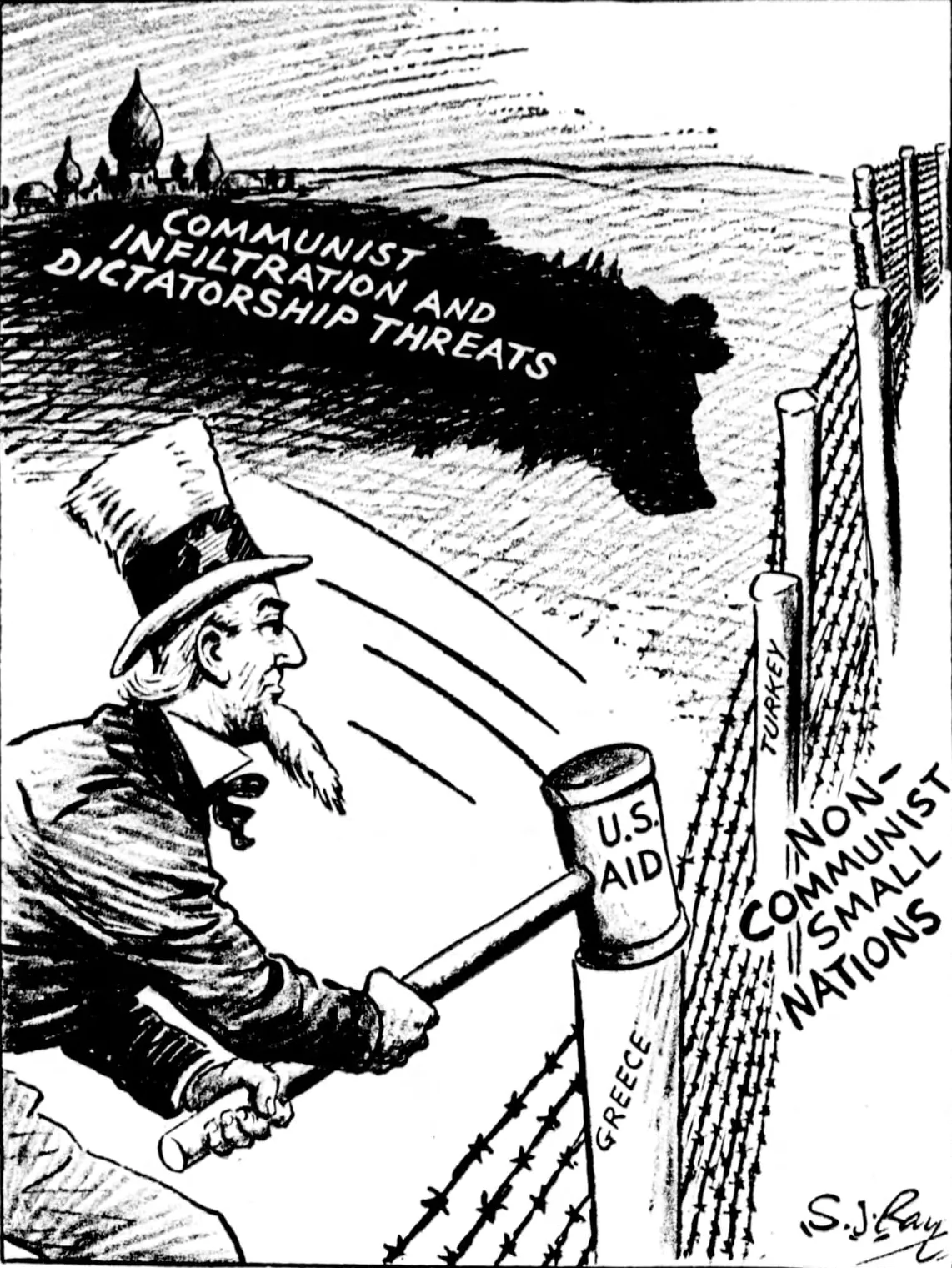
The cartoon below titled 'WHAT WE'RE DRIVING AT' by SJ Ray appeared in the Kansas
City Star newspaper in the United States of America (USA) on 13 March 1947. It depicts
President Truman using a hammer called 'U.S. AID' to stop the ideological and political
threats posed by the communists.
[From the Kansas City Star newspaper, 13 March 1947]
GREECE
TURKEY
WHAT WE'RE DRIVING AT
/ 14
End of Document
390

FAQs

What was the main message of Churchill's 'Iron Curtain' speech?
In Winston Churchill's 'Iron Curtain' speech delivered on March 5, 1946, he expressed concerns about the spread of communism in Eastern Europe. He described an 'Iron Curtain' that had descended across the continent, indicating that countries like Warsaw, Berlin, and Prague were under Soviet influence and control. Churchill emphasized the need for the Western nations to recognize the threat posed by Soviet expansionism while also expressing admiration for the Russian people and a desire for friendship.
How did the Marshall Plan aim to contain communism?
The Marshall Plan was introduced by the United States to rebuild European economies after World War II, with the dual aim of preventing the growth of communism and containing the Soviet Union. Policymakers feared that broken economies could lead to the rise of communist movements, particularly in countries like France, Italy, and Greece. The plan sought to create a politically and economically integrated Europe, which would serve as a barrier against Soviet expansion and promote stability in the region.
What was the Molotov Plan and its purpose?
The Molotov Plan, introduced by the Soviet Union in 1947, was designed to provide aid to Eastern European countries aligned with Soviet interests, serving as a counter to the U.S. Marshall Plan. It aimed to strengthen the economies of these nations while ensuring they remained under Soviet influence. The plan was a response to the perceived threat of Western aid, which the Soviets believed would weaken their control over satellite states and create economic dependency on the United States.
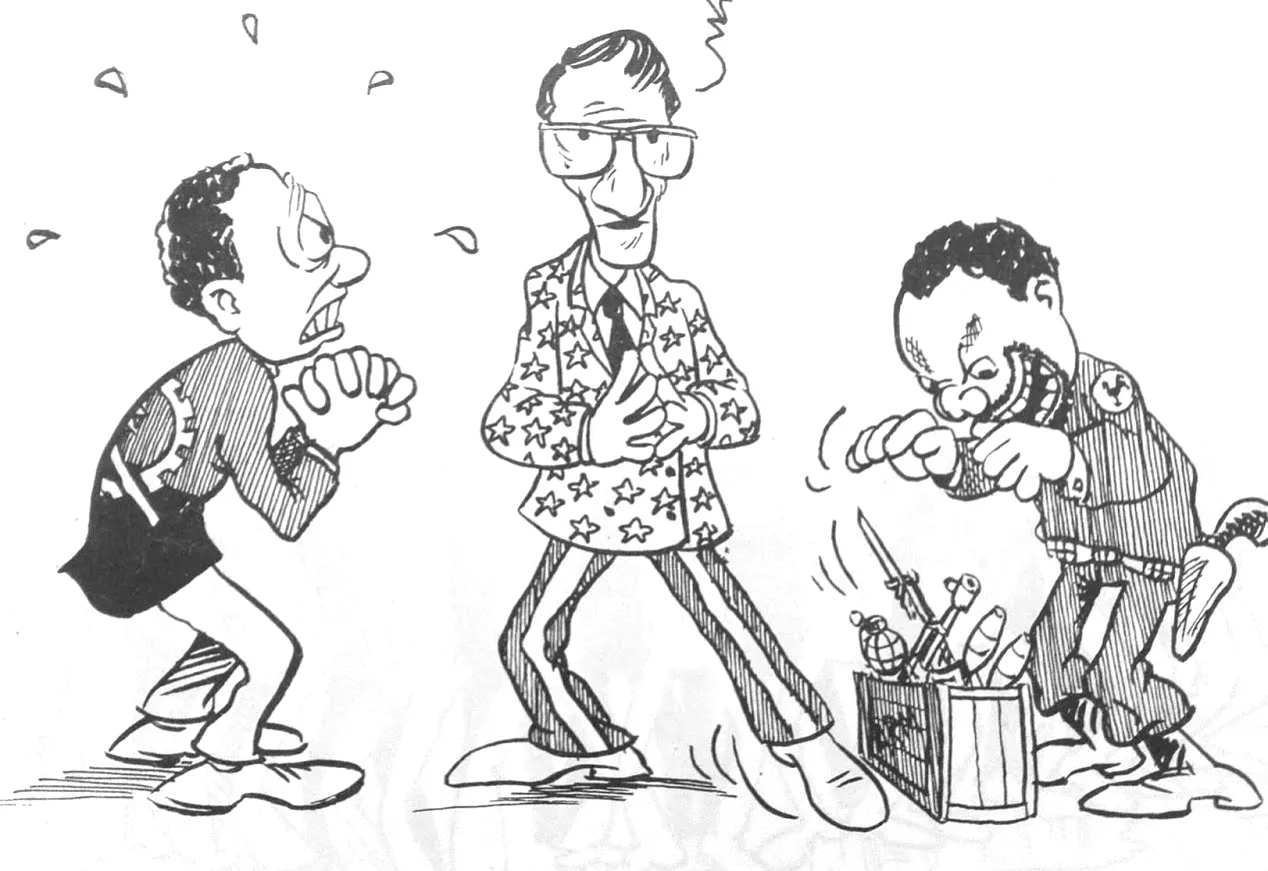
What role did Henry Kissinger play in the Angolan Civil War?
Henry Kissinger, as U.S. Secretary of State, played a significant role in shaping American foreign policy towards Angola during the civil war that began in 1975. He directed CIA operations to prevent the Popular Movement for the Liberation of Angola (MPLA) from gaining control, providing covert support to opposition groups like the FNLA and UNITA. Kissinger's involvement was partly motivated by a desire to redeem U.S. foreign policy following the Vietnam War and to demonstrate that the U.S. remained a global power.
What were the main concerns of U.S. policymakers regarding the Angolan Civil War?
U.S. policymakers were primarily concerned about the potential rise of Soviet influence in Angola following its independence. They feared that a victory for the MPLA, which was backed by the Soviet Union, would destabilize the region and lead to increased communist presence in Southern Africa. To counter this, the U.S. aimed to support anti-communist factions like the FNLA and UNITA, hoping to prevent a swift victory for the Soviet-aligned forces and maintain a balance of power.
How did Martin Luther King Jr. define non-violence?
Martin Luther King Jr. defined non-violence not merely as a refusal to retaliate but as a proactive approach to confronting violence with love. He believed that non-violence was aggressive in its own right, requiring individuals to face violent oppression directly. King's philosophy aimed to channel deep-seated anger and frustration into constructive actions, emphasizing that non-violent protests could effectively demonstrate the strength and resolve of the African American community.
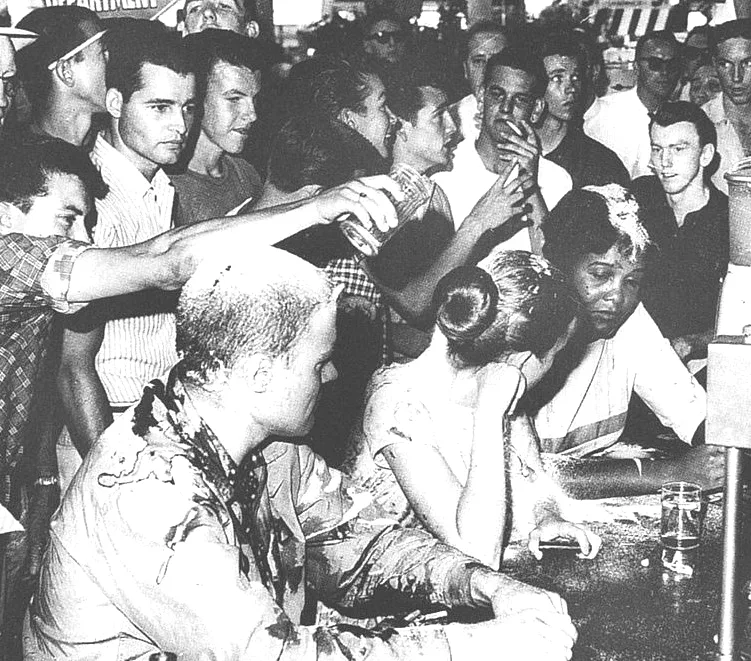
What was the significance of the sit-in movement in the civil rights protests?
The sit-in movement, exemplified by student protests at lunch counters, was a pivotal strategy in the civil rights movement during the 1960s. It illustrated the commitment to non-violent resistance against racial segregation and served as a direct challenge to discriminatory practices in public spaces. The sit-ins garnered national attention, highlighting the injustices faced by African Americans and mobilizing support for the broader civil rights agenda.