The Drafting Resource Guide by CS Vikas Vohra serves as an essential tool for students and professionals in corporate law. It covers various aspects of legal drafting, including types of documents, general principles, and commercial contract management. This guide is particularly useful for CS Professional candidates preparing for their exams, providing insights into judicial frameworks and advocacy. Key topics include pleadings, applications under the Companies Act, and drafting agreements. With detailed chapters and practical examples, this resource is invaluable for mastering legal documentation.

Key Points

  • Covers essential types of documents and general principles of legal drafting.
  • Includes detailed sections on commercial contract management and judicial frameworks.
  • Provides practical insights into drafting pleadings and applications under the Companies Act.
  • Features comprehensive guidance on the art of opinion writing and advocacy.
akshara joshi
Author:CS Vikas Vohra
4 pages
Language:English
Type:Guide
akshara joshi
Author:CS Vikas Vohra
4 pages
Language:English
Type:Guide
424
/ 4
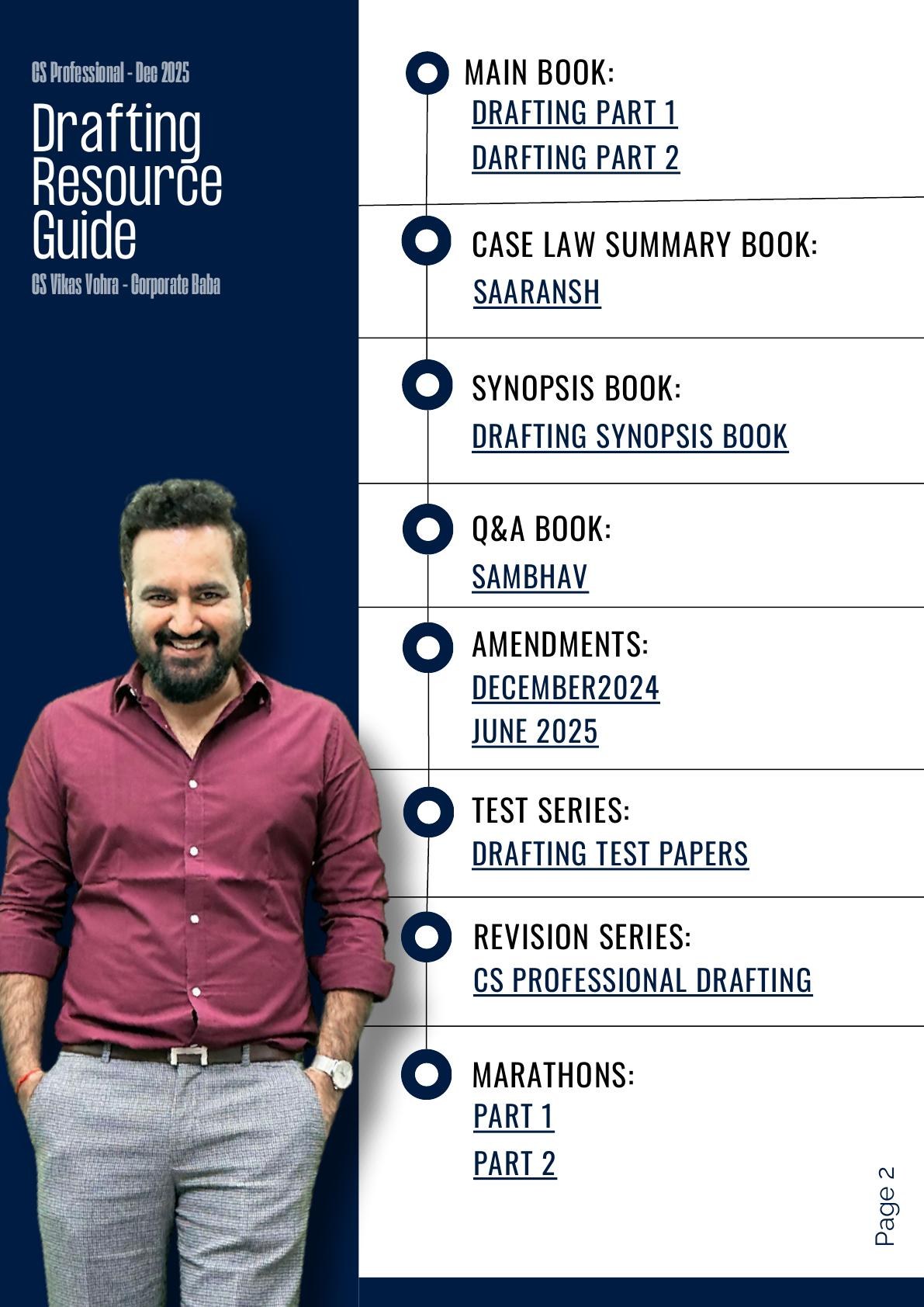
Drafting
Resource
Guide
CS Professional - Dec 2025
CS Vikas Vohra - Corporate Baba
Drafting
Resource
Guide
CS Professional - Dec 2025
CS Vikas Vohra - Corporate Baba
MAIN BOOK:
CASE LAW SUMMARY BOOK:
SYNOPSIS BOOK:
Q&A BOOK:
TEST SERIES:
MARATHONS:
AMENDMENTS:
Page 2
PART 1
PART 2
DRAFTING TEST PAPERS
DECEMBER2024
JUNE 2025
SAMBHAV
DRAFTING SYNOPSIS BOOK
SAARANSH
DRAFTING PART 1
DARFTING PART 2
REVISION SERIES:
CS PROFESSIONAL DRAFTING
Handwritten
Summary
Notes
Drafting
Resource
Guide
CS Vikas Vohra - Corporate Baba
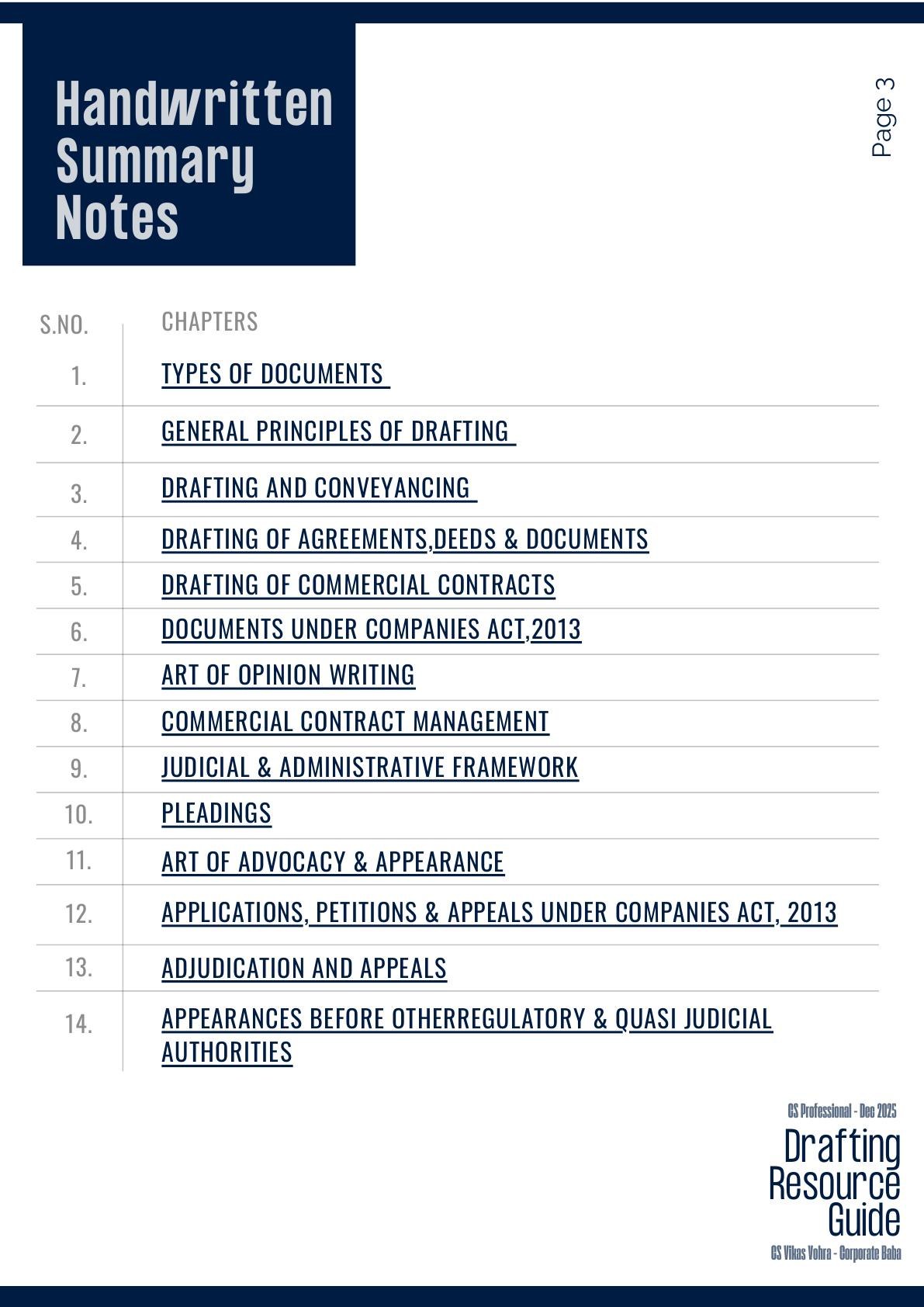
CHAPTERS
TYPES OF DOCUMENTS
GENERAL PRINCIPLES OF DRAFTING
DRAFTING AND CONVEYANCING
ART OF OPINION WRITING
COMMERCIAL CONTRACT MANAGEMENT
JUDICIAL & ADMINISTRATIVE FRAMEWORK
PLEADINGS
ART OF ADVOCACY & APPEARANCE
APPEARANCES BEFORE OTHERREGULATORY & QUASI JUDICIAL
AUTHORITIES
DRAFTING OF AGREEMENTS,DEEDS & DOCUMENTS
DRAFTING OF COMMERCIAL CONTRACTS
ADJUDICATION AND APPEALS
DOCUMENTS UNDER COMPANIES ACT,2013
APPLICATIONS, PETITIONS & APPEALS UNDER COMPANIES ACT, 2013
S.NO.
Page 3
1.
2.
3.
4.
5.
6.
7.
8.
9.
10.
11.
12.
13.
14.
/ 4
End of Document
424

FAQs

what is the Drafting Resource Guide about

The Drafting Resource Guide is a comprehensive tool designed for professionals and students in the field of corporate law and drafting.

  • It covers various chapters including types of documents, general principles of drafting, and commercial contract management.
  • The guide also includes sections on judicial and administrative frameworks, pleadings, and advocacy.
  • It serves as a valuable resource for understanding the intricacies of drafting legal documents and agreements.

what are the key chapters in the Drafting Resource Guide

The Drafting Resource Guide includes several key chapters essential for mastering drafting skills.

  • Types of Documents: Understanding different legal documents.
  • General Principles of Drafting: Fundamental rules and techniques.
  • Commercial Contract Management: Managing contracts effectively.
  • Pleadings: Drafting court documents.
  • Applications and Petitions under Companies Act, 2013: Legal frameworks for corporate applications.

how to use the Drafting Resource Guide effectively

To use the Drafting Resource Guide effectively, follow these steps:

  1. Identify Your Needs: Determine which area of drafting you need assistance with.
  2. Refer to Relevant Chapters: Use the table of contents to find specific topics.
  3. Practice Drafting: Apply the principles learned by drafting your own documents.
  4. Review Case Studies: Analyze case law summaries included in the guide for practical insights.

what is included in the Drafting Resource Guide's test series

The Drafting Resource Guide features a comprehensive test series designed to assess understanding and application of drafting principles.

  • It includes sample questions that cover various topics from the guide.
  • Each test is structured to mimic real exam conditions, helping users prepare effectively.
  • Feedback and explanations are provided for each question to enhance learning.

what are the main principles of drafting in the Drafting Resource Guide

The main principles of drafting outlined in the Drafting Resource Guide focus on clarity, precision, and legal compliance.

  • Clarity: Ensure that the language used is straightforward and easily understandable.
  • Precision: Use specific terms and avoid ambiguity to prevent misinterpretation.
  • Legal Compliance: Adhere to relevant laws and regulations when drafting documents.
  • Consistency: Maintain uniformity in terminology and structure throughout the document.

how does the Drafting Resource Guide help with commercial contracts

The Drafting Resource Guide provides essential insights into the drafting and management of commercial contracts.

  • It covers key components of contracts, including terms, conditions, and obligations.
  • The guide emphasizes the importance of clarity and precision in contract language.
  • It also offers practical examples and templates to assist in drafting effective agreements.

what is the art of opinion writing in the Drafting Resource Guide

The art of opinion writing, as discussed in the Drafting Resource Guide, involves articulating legal opinions clearly and persuasively.

  • It includes understanding the legal issues at hand.
  • Structuring the opinion logically, with clear reasoning and supporting evidence.
  • Using appropriate legal terminology to convey authority and credibility.

what are the types of documents covered in the Drafting Resource Guide

The Drafting Resource Guide covers various types of legal documents essential for practitioners.

  • Agreements: Contracts between parties outlining terms and conditions.
  • Deeds: Legal documents that signify a formal agreement.
  • Petitions: Requests made to a court or authority.
  • Applications: Formal requests for permissions or approvals.

how to draft effective pleadings according to the Drafting Resource Guide

According to the Drafting Resource Guide, effective pleadings are crucial for legal proceedings.

  • Start with a clear statement of the facts.
  • Clearly outline the legal basis for the claims.
  • Use precise language and avoid unnecessary jargon.
  • Conclude with a clear request for relief or action.

what is the significance of the Drafting Resource Guide for legal professionals

The Drafting Resource Guide is significant for legal professionals as it enhances their drafting skills and legal knowledge.

  • It provides comprehensive coverage of drafting principles and practices.
  • Offers practical examples and templates for real-world application.
  • Helps in staying updated with amendments and changes in laws.