AP Calculus BC Unit 3 Progress Check focuses on multiple-choice questions designed to assess understanding of calculus concepts. This assessment includes topics such as derivatives, the chain rule, and tangent lines, providing a comprehensive review for students preparing for AP exams. It features various questions that challenge students to apply calculus principles in different scenarios. Ideal for AP Calculus BC students, this progress check is a valuable tool for exam preparation and self-assessment.

Key Points

  • Includes multiple-choice questions covering key calculus concepts such as derivatives and the chain rule.
  • Designed for AP Calculus BC students to assess their understanding and readiness for the exam.
  • Features various problem types that require application of calculus principles in real-world scenarios.
  • Helps students identify areas of strength and weakness in their calculus knowledge.
newtopiccyclegrowin
6 pages
Language:English
Type:Study Guide
newtopiccyclegrowin
6 pages
Language:English
Type:Study Guide
273
/ 6
1.
If and is a differentiable function of , which of the following is equivalent to the
derivative of
with respect to ?
(A)
(B)
(C)
(D)
2.
For which of the following functions is the chain rule an appropriate method to find the derivative with respect to
?
I.
II.
III.
(A) I only
(B) II only
(C) III only
(D) I and III only
3.
Let be a differentiable function. If , which of the following gives a correct process for
finding
?
(A)
(B)
(C)
(D)
4.
What is the slope of the line tangent to the curve
at the point ?
(A)
(B)
(C)
(D)
5.
If
, then
AP CALCULUS BC Scoring Guide
Unit 3 Progress Check: MCQ
AP Calculus BC
Page 1 of 6
(A)
(B)
(C)
(D)
6.
The point lies on the curve in the -plane given by the equation , where is a
differentiable function of
and is a differentiable function of . Selected values of , , , and are given in
the table above. What is the value of
at the point ?
(A)
(B) 4
(C) 5
(D) 13
7.
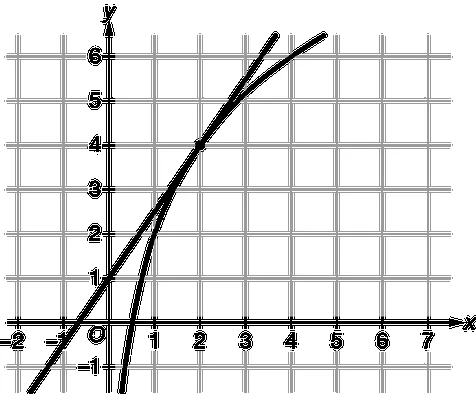
The graph of the increasing differentiable function is shown above. Also shown is the line tangent to the graph of
at the point . Let be the inverse of . Which of the following statements about is true?
Scoring Guide
Unit 3 Progress Check: MCQ
Page 2 of 6
AP Calculus BC
(A)
(B)
(C)
(D)
8.
Let
be the decreasing function defined by , where . If is the
inverse function of
, which of the following is a correct expression for ?
(A)
(B)
(C)
(D)
9.
The table above gives selected values for a differentiable and increasing function and its derivative. If
for all , which of the following is a correct expression for ?
(A)
(B)
(C)
(D)
10.
(A)
(B)
(C)
(D)
11.
Scoring Guide
Unit 3 Progress Check: MCQ
AP Calculus BC
Page 3 of 6
/ 6
End of Document
273

FAQs

What is the process for finding the derivative of a function in the document?
To find the derivative of a function, you can apply various rules such as the chain rule, product rule, or quotient rule, depending on the function's form. The document outlines specific methods for different types of functions, emphasizing the importance of knowing when to use each rule. For instance, if a function is a composition of functions, the chain rule is the appropriate method. Additionally, implicit differentiation may be necessary for certain relations.
How do you determine the slope of the tangent line to a curve?
The slope of the tangent line to a curve at a given point can be found by evaluating the derivative of the function at that point. The document provides examples where specific functions are analyzed to find their derivatives, which represent the slopes of the tangent lines. For instance, if a curve is defined by a function and a point on that curve is given, calculating the derivative at that point yields the slope of the tangent line.
Which methods can be used to differentiate specific functions in the document?
The document mentions several methods for differentiation, including the quotient rule, chain rule, and implicit differentiation. For example, the quotient rule is suitable for functions expressed as a ratio of two other functions. The chain rule is applicable for composite functions, while implicit differentiation is necessary when dealing with equations that define y in terms of x without explicitly solving for y. Each method is illustrated with examples to clarify their application.
What is the significance of the inverse function in the context of the document?
The document discusses the concept of inverse functions, particularly in relation to differentiable functions. It highlights that if a function is increasing and differentiable, its inverse will also be differentiable. The document provides specific statements about the properties of the inverse function, emphasizing how the derivative of the inverse can be related back to the derivative of the original function. This relationship is crucial for solving problems involving inverse functions.
What are the key characteristics of the functions analyzed in the document?
The document analyzes various functions, noting their differentiability and behavior, such as increasing or decreasing trends. For instance, it mentions that certain functions are increasing and differentiable, which affects the methods used for finding their derivatives. The behavior of these functions is critical in determining the appropriate techniques for differentiation and understanding their graphical representations.
How is implicit differentiation applied in the document?
Implicit differentiation is used in the document to differentiate functions that are not explicitly solved for one variable in terms of another. The document provides examples where implicit differentiation is necessary to find derivatives of equations involving both x and y. This method allows for the differentiation of equations that define relationships between variables without isolating one variable.
What types of functions require the use of the product rule for differentiation?
The product rule is applicable to functions that are expressed as the product of two or more functions. The document specifies that when differentiating such functions, the product rule allows for the calculation of the derivative by taking the derivative of each function and applying the appropriate formula. Examples in the document illustrate how to correctly apply the product rule to find derivatives.