The Animal Cell Answer Key provides detailed solutions for coloring and labeling animal cell diagrams. It includes functions of various cell parts such as the nucleus, mitochondria, and lysosomes. This resource is ideal for students studying biology at the high school level, particularly those preparing for exams. The answer key enhances understanding of cell structure and function, making it a valuable tool for educators and learners alike.

Key Points

  • Includes detailed answers for labeling animal cell diagrams.
  • Covers functions of key cell components like the nucleus and mitochondria.
  • Designed for high school biology students preparing for exams.
  • Enhances understanding of animal cell structure and function.
newtopiccyclegrowin
Author:Bluebird Teaching Materials
6 pages
Language:English
Type:Worksheet
newtopiccyclegrowin
Author:Bluebird Teaching Materials
6 pages
Language:English
Type:Worksheet
368
/ 6
Ce-3
©Bluebird Teaching Materials 2011 All rights reserved. Bluebird is a trademark of Bluebird Teaching Materials.
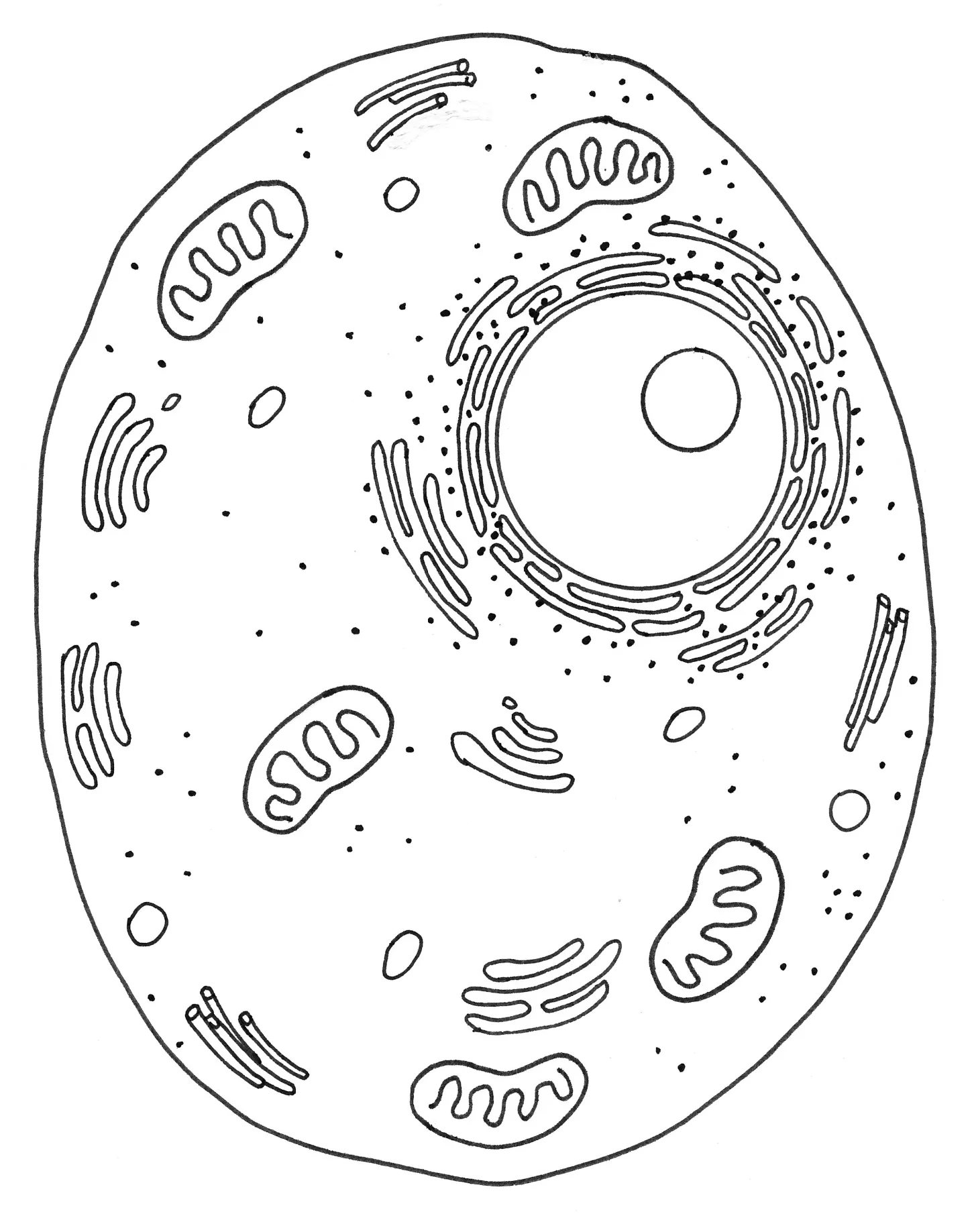
The Animal Cell to Color Name:
Color the animal cell drawn below. Use the colors indicated in the box.
(Note: The lysosomes are oval and the vacuoles are more rounded.)
1. cytoskeleton ribosome 6.
2. mitochondria
ER 7.
nucleolus 8.
3. Golgi body
nucleus 9.
4. cytoplasm
lysosome 10.
cell 11.
5. vacuole membrane
Parts of an animal cell:
cell membrane surrounds the internal cell parts; controls passage of materials in and out of the cell
cytoplasmeverything inside of the cell membrane except for the nucleus (light yellow)
nucleuscontrol center of the cell; contains DNA (light pink)
nucleoluscomposed of protein and RNA; involved in ribosome production (dark pink)
cytoskeleton – provides strength and shape to the cell; network of protein fibers (orange)
endoplasmic reticulum (ER) – passageways that transport proteins within the cell (purple)
mitochondria – produces energy (rust or red)
vacuolevesicle that provides storage of water and other materials (navy)
lysosome – vesicle that contains substances that break down materials (blue)
Golgi body – packages and transports proteins from the ER to other parts of the cell (gold)
ribosomes (the dots) – where proteins are made in the cell
Ce-3
©Bluebird Teaching Materials 2011 All rights reserved. Bluebird is a trademark of Bluebird Teaching Materials.
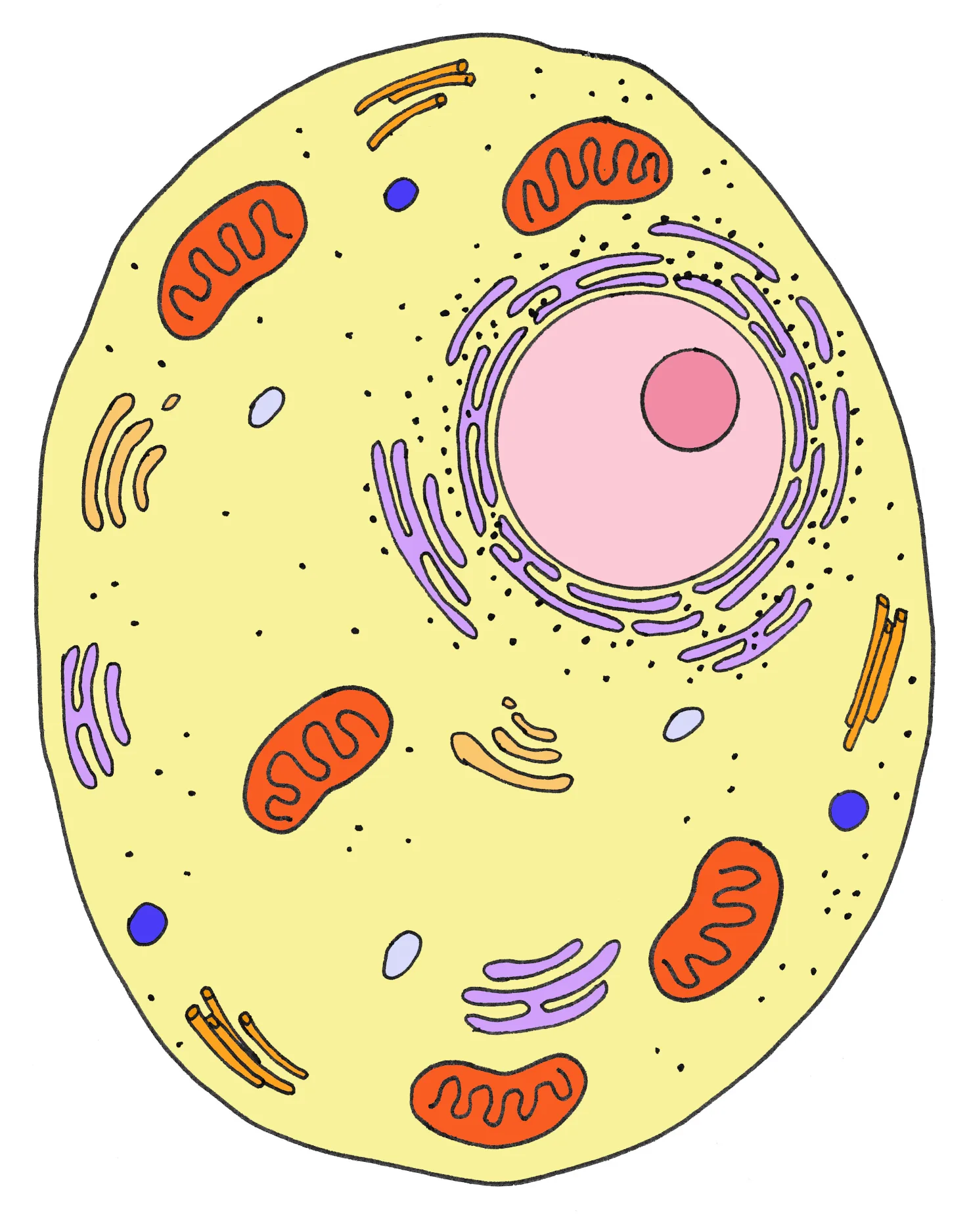
The Animal Cell to Color Name: KEY
Color the animal cell drawn below. Use the colors indicated in the box.
(Note: The lysosomes are oval and the vacuoles are more rounded.)
1. cytoskeleton ribosome 6.
2. mitochondria
ER 7.
nucleolus 8.
3. Golgi body
nucleus 9.
4. cytoplasm
lysosome 10.
cell 11.
5. vacuole membrane
Parts of an animal cell:
cell membrane surrounds the internal cell parts; controls passage of materials in and out of the cell
cytoplasmeverything inside of the cell membrane except for the nucleus (light yellow)
nucleuscontrol center of the cell; contains DNA (light pink)
nucleoluscomposed of protein and RNA; involved in ribosome production (dark pink)
cytoskeleton – provides strength and shape to the cell; network of protein fibers (orange)
endoplasmic reticulum (ER) passageways that transport proteins within the cell (purple)
mitochondria – produces energy (rust or red)
vacuolevesicle that provides storage of water and other materials (navy)
lysosome – vesicle that contains substances that break down materials (blue)
Golgi body – packages and transports proteins from the ER to other parts of the cell (gold)
ribosomes (the dots) – where proteins are made in the cell
Ce-3
©Bluebird Teaching Materials 2011 All rights reserved. Bluebird is a trademark of Bluebird Teaching Materials.
The Animal Cell Worksheet Name:
Label the animal cell drawn below and then give the function of each cell part.
(Note: The lysosomes are oval and the
vacuoles are more rounded.)
1. 7.
8.
2.
9.
3. 10.
4. 11.
5.
6.
Cell Part:
Function of Cell Part:
12. nucleus
13. endoplasmic
reticulum
14. ribosome
15. cytoplasm
16. nucleolus
17. Golgi body
18. cell
membrane
19. cytoskeleton
20. lysosome
21. mitochondria
22. vacuole
/ 6
End of Document
368

FAQs

What are the main parts of an animal cell and their functions?
The main parts of an animal cell include the nucleus, which acts as the control center and contains DNA; the cytoplasm, which encompasses everything inside the cell membrane except the nucleus; and the cell membrane, which surrounds internal cell parts and controls material passage. Other components include the mitochondria, responsible for energy production; ribosomes, where proteins are synthesized; and the Golgi body, which packages and transports proteins from the ER to other cell parts.
How does the endoplasmic reticulum function in an animal cell?
The endoplasmic reticulum (ER) serves as passageways that transport proteins within the cell. It plays a crucial role in the synthesis and processing of proteins, ensuring they reach their destinations. The ER is integral to maintaining cellular organization and function, facilitating communication between different parts of the cell.
What is the role of lysosomes in animal cells?
Lysosomes are vesicles that contain substances responsible for breaking down materials within the cell. They play a vital role in digestion and waste removal, helping to maintain cellular health by degrading unwanted or damaged components. This function is essential for recycling cellular materials and supporting overall cell function.
What is the significance of the cytoskeleton in an animal cell?
The cytoskeleton provides strength and shape to the animal cell, acting as a network of protein fibers. It is crucial for maintaining the cell's structural integrity, enabling it to withstand various stresses. Additionally, the cytoskeleton facilitates cellular movement and division, playing a key role in processes such as cell signaling and transport.
What is the function of the nucleolus in an animal cell?
The nucleolus is composed of protein and RNA and is involved in ribosome production within the cell. It plays a critical role in synthesizing ribosomal RNA (rRNA) and assembling ribosomal subunits, which are essential for protein synthesis. The nucleolus is thus vital for the cell's ability to produce proteins efficiently.
How do vacuoles function in animal cells?
Vacuoles are vesicles that provide storage for water and other materials within the animal cell. They help maintain osmotic balance and store nutrients, waste products, and other substances necessary for cellular function. While animal cells typically have smaller vacuoles compared to plant cells, they are still important for maintaining cellular homeostasis.
What does the Golgi body do in an animal cell?
The Golgi body functions to package and transport proteins from the endoplasmic reticulum (ER) to other parts of the cell. It modifies proteins and lipids received from the ER, preparing them for secretion or delivery to specific cellular locations. This organelle is essential for ensuring that proteins are correctly processed and directed within the cell.