Secondary Math II Module 3 focuses on solving quadratics and other equations, providing detailed explanations and examples for students. This module includes various methods for factoring, using the quadratic formula, and understanding the properties of quadratic functions. Ideal for high school students preparing for math exams, it covers essential concepts and problem-solving techniques. The module also features practice problems with solutions to reinforce learning and comprehension.

Key Points

  • Explains the quadratic formula and its applications in solving equations.
  • Covers methods for factoring quadratic expressions and identifying roots.
  • Includes practice problems with step-by-step solutions for better understanding.
  • Discusses the properties of quadratic functions and their graphs.
newtopiccyclegrowin
3 pages
Language:English
Type:Worksheet
newtopiccyclegrowin
3 pages
Language:English
Type:Worksheet
367
/ 3
SECONDARY MATH II // MODULE 3
SOLVING QUADRATICS & OTHER EQUATIONS – 3.4
Mathematics Vision Project
Licensed under the Creative Commons Attribution CC BY 4.0
mathematicsvisionproject.org
$""
READY
 
!
(
001& !"
'!
(
0)0(1& (! (
(
0)0'1& )!
(
#*#'(1&
1
1
1
1
1
1
1
1
1
"
*!
(
0)0( +! (
(
0)0' ,!
(
#*#'(
-!
(
")0( .!
(
#+#, /!
(
#*0*
'&!
(
0.#(& ''!
(
0#'( '(!
(
#-0'(
READY, SET, GO!
  
ʹͲ
0IWWSR
I
2
I
3
3
-
4
2
I
-12
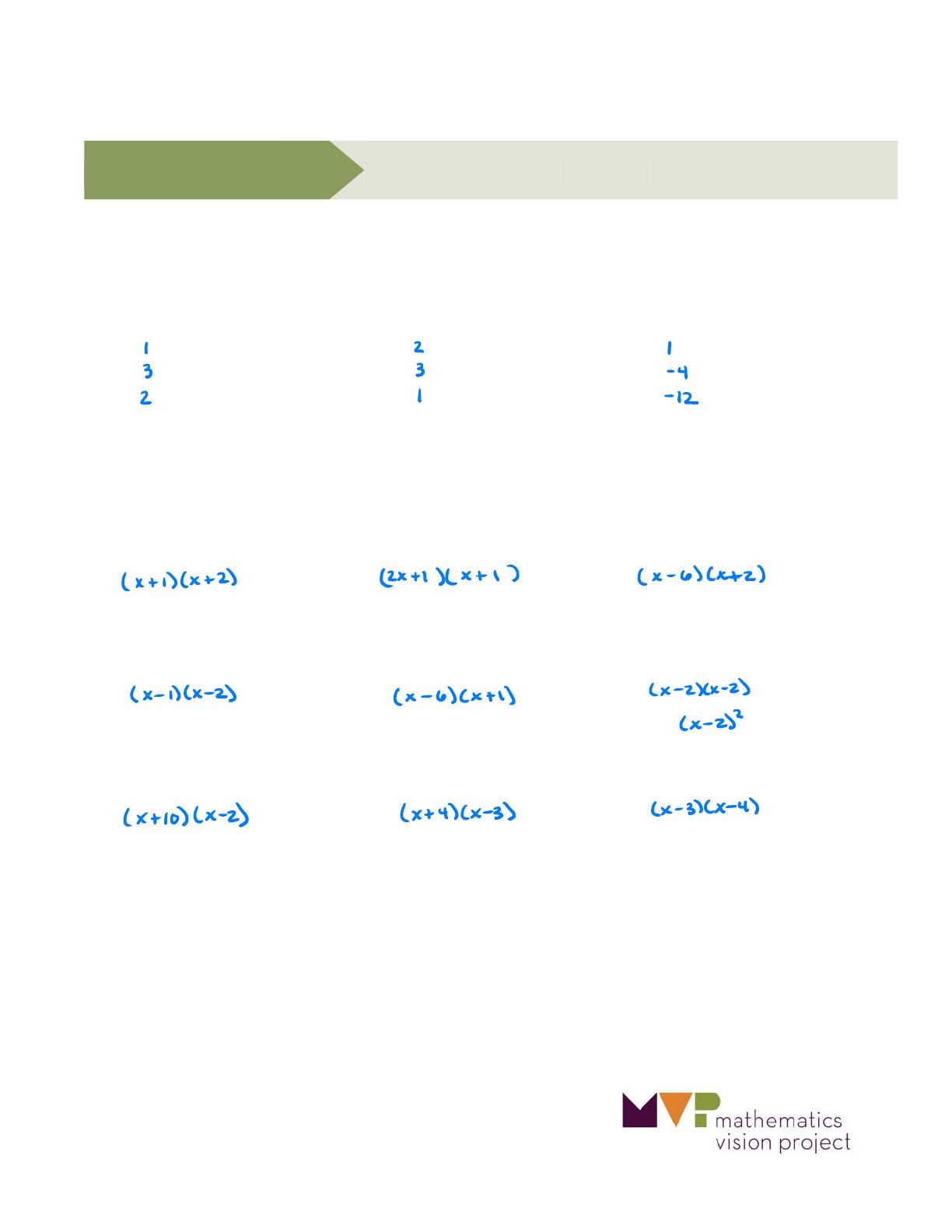
(
xti
)Cxt2
)
(2×+21×+1)
(
x
-
6)
Cx*z
)
(
x
-
1)
(
x
-2
)
(
x
-
6)
Citi
)
(
x
-
2)
Cx
-2
)
(
x
-
233
(
xtlo
)
(
x
-2
)
(
Xt
4)
Cx
-3
)
Cx
-
3)
Cx
-4
)
SECONDARY MATH II // MODULE 3
SOLVING QUADRATICS & OTHER EQUATIONS – 3.4
Mathematics Vision Project
Licensed under the Creative Commons Attribution CC BY 4.0
mathematicsvisionproject.org
$""
SET
 
!


""
"
 
')!
'*!
'+!
',!







!"
('! Ǧʹ
ʹ
൅ͷͳͶ
((! 
ʹ
͵ͷ
3DJH
ͳ͹Ǥ
ʹ

ͳͺ! ͳ

ʹ
͸Ͷ
ͳͻ! ͵൅͸ሻ
ʹ

͵ͲͲ
(Ͳ! Ͷ

ʹ
ͳʹͺ
T
U

0IWWSR
13
21
5-
5
x
y
3÷a÷b
}
=3aEsb
}
253×7
¥s=E
s
'
-97T
tr
-
r
×+5=±9
x
-
I
8×+5=-9
4+5=9
×
-
1=-8
X
-
1=8
×=-@
x=@
Texture
¥422
-
-645×+6--110×+6=-10
X
-16=10
x
-
4=18
x
'
'
-5--3
z
(
x
-732=32
fT×I5=9f
Ttx
-732--165×-2--1=3
×
-7=14
x
-
2=-3
X
-
2=3
×
-7=-4
x
-7=4
ossssssnoomsmsoomsxeso
SECONDARY MATH II // MODULE 3
SOLVING QUADRATICS & OTHER EQUATIONS – 3.4
Mathematics Vision Project
Licensed under the Creative Commons Attribution CC BY 4.0
mathematicsvisionproject.org
$""
GO
 ""
!#%& # 
"
()!
(*!
! "$% ! " ! "$% ! "
(+!
(,!
! "$% ! " ! "$% ! "
3DJH
0IWWSR
(
Io
)
12L
=
g.
2-
1.
2×=5zL2×
)
*
.
I
9
(
:
:
÷
:
.
.
-
as
.mn#s=o
Do
1-
&
:/
20.25
s.si
'
-20
I
5
-
I
I
2
I
C-
5,03dg
(
4,0
)
(
o
,
-20
)
NONE
(
O
,5z
)
ro
r
:
if
i
:
(
-3,0
)
(
O
,
-6
)
(
2, 0
)
(
o
,
-4
)
(
-2,0
)
/ 3
End of Document
367

FAQs

What are the key topics covered in Secondary Math II Module 3?
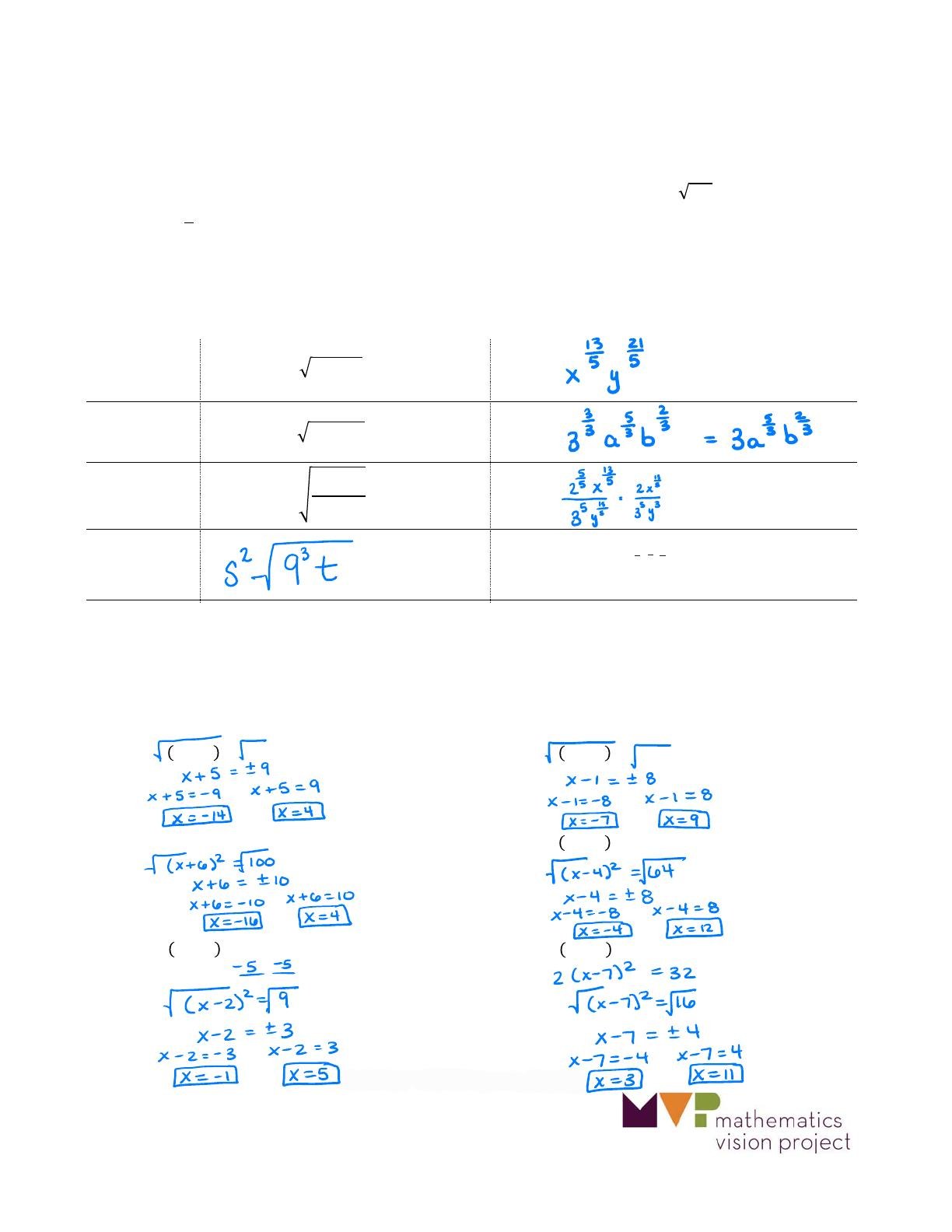
Secondary Math II Module 3 focuses on solving quadratics and other equations. It includes sections on standard form and quadratic form, as well as radical notation and rational exponents. The module emphasizes identifying coefficients and constants in quadratic equations, factoring expressions, and rewriting equations in simplified forms.
How do you identify the coefficients and constants in a quadratic equation?
In a quadratic equation of the form ax² + bx + c = 0, the coefficients are the numerical factors of the terms. Specifically, 'a' is the coefficient of x², 'b' is the coefficient of x, and 'c' is the constant term. For example, in the equation 2x² + 3x + 1 = 0, a = 2, b = 3, and c = 1.
What methods are suggested for solving quadratic equations in this module?
The module suggests several methods for solving quadratic equations, including factoring, using the quadratic formula, and completing the square. Each method is appropriate depending on the specific form of the quadratic equation. For example, factoring is often the simplest method if the equation can be easily expressed as a product of binomials.
What is the significance of the x-intercepts and y-intercepts in quadratic functions?
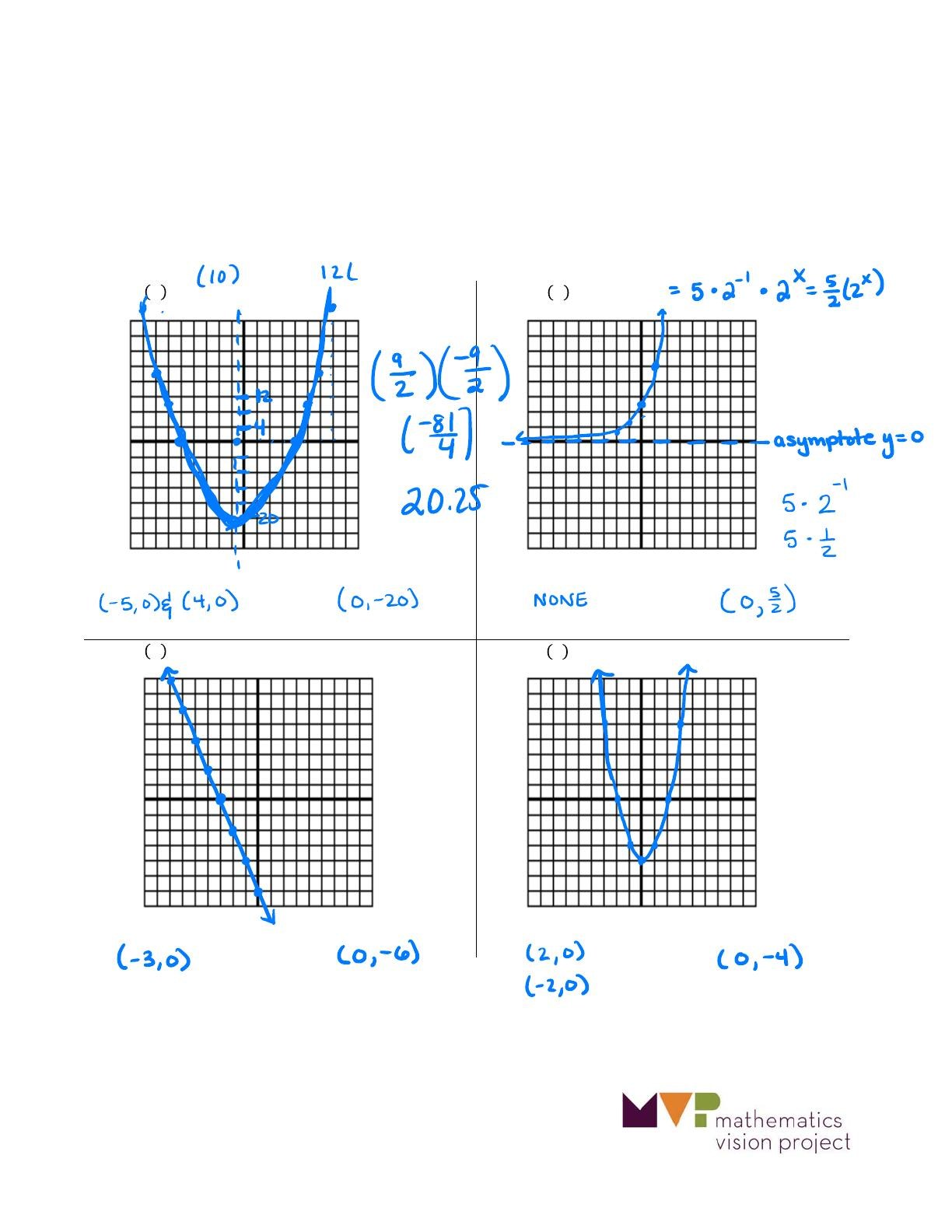
The x-intercepts and y-intercepts are crucial for graphing quadratic functions. The x-intercepts indicate where the graph crosses the x-axis, representing the solutions to the equation. The y-intercept shows where the graph crosses the y-axis, providing insight into the function's value when x equals zero. Understanding these intercepts helps in sketching accurate graphs of quadratic equations.
How are radical notation and exponential form related in this module?
Radical notation and exponential form are interconnected concepts in mathematics. The module explains that expressions can be rewritten using either radical notation, such as √a, or exponential form, such as a^(1/2). This relationship allows for flexibility in solving equations and simplifying expressions, as both forms can represent the same mathematical value.
What example problems are provided for practicing quadratic equations?
The module includes example problems that require students to solve various quadratic equations. For instance, one problem asks to rewrite an expression in factored form, while another involves finding x-intercepts and y-intercepts for a given quadratic function. These practice problems are designed to reinforce the concepts taught in the module and enhance problem-solving skills.
What is the quadratic formula and when is it used?
The quadratic formula is a method used to find the solutions of a quadratic equation in the form ax² + bx + c = 0. It is given by x = (-b ± √(b² - 4ac)) / (2a). This formula is particularly useful when the equation cannot be easily factored, providing a systematic approach to finding the roots of the equation.