The Level Two Road Test is an essential guide for new drivers in Ontario, focusing on advanced driving skills required for the G2 license. This official Ministry of Transportation (MTO) resource outlines the necessary components of the road test, including expressway driving, lane changes, and traffic checks. It serves as a comprehensive preparation tool for individuals aiming to enhance their driving abilities and ensure safety on the road. Ideal for new drivers seeking to gain confidence and competence in various driving situations, this guide provides detailed instructions and tips for successful completion of the Level Two road test.

Key Points

  • Covers advanced driving skills necessary for the G2 road test
  • Includes expressway driving requirements and traffic check procedures
  • Details lane change techniques and safe driving practices
  • Provides essential tips for passing the Level Two road test
Vĩ Hồ
29 pages
Language:English
Type:Manual
Vĩ Hồ
29 pages
Language:English
Type:Manual
224
/ 29
The Level Two Road Test
Statistics show that new drivers of all ages are far more likely than
experienced drivers to be involved in serious or fatal collisions.
To help new drivers develop better, safer driving habits, Ontario
introduced graduated licensing in 1994 for all drivers applying for their
!rst car or motorcycle licence. Graduated licensing lets you gain driving
skills and experience gradually, in lower-risk environments. The two-step
licensing system takes at least 20 months to complete and includes two
road tests. Passing the Level Two (G2) road test gives you full Class G
driving privileges.
While the Level One road test deals with basic driving skills, the Level Two
deals with advanced knowledge and skills that are generally gained with
driving experience. When you take the test, the examiner will give you
directions. As you complete the driving tasks, the examiner will watch to
make sure you successfully perform the actions associated with them.
The G2 road test includes a component of expressway driving. To proceed,
Previous (https://www.ontario.ca/document/official-mto-drivers-handbook/test-
yourself-sample-knowledge-test-questions)
Next (https://www.ontario.ca/document/official-mto-drivers-handbook/off-road-
vehicles-snowmobiles)
(https://www.ontario.ca/page/government-ontario)
you must complete and sign a “Declaration of Highway Driving
Experience” to ensure that you have su"cient expressway driving
experience to complete this component. On the form, you will indicates
how many times in the three months before the road test you have driven
on a freeway and/or a highway with a speed limit of at least 80 km/h. You
are required to indicate what was the average length of these trips (for
example, under 5 kilometres, between 5 and 15 kilometres, over 15
kilometres). Freeways include: 400, 401, 402, 403, 404, 405, 406, 407, 409,
410, 416, 417, 420, 427, Queen Elizabeth Way, Don Valley Parkway,
Gardiner Expressway, E. C. Row Expressway and the Conestoga Parkway. If
you do not have su"cient highway driving experience, the examiner must
declare the road test “out-of-order” and cancel it. You will lose 50 per cent
of your prepaid road-test fee. In order to reschedule, you will have to pay
the 50 per cent of the road-test fee lost through the out-of-order. Make
sure you obtain the required highway driving experience before
rescheduling your test.
To help you prepare, this chapter tells you the various tasks and actions
that you will be expected to perform in your Level Two road test. This is
only a guide. For more information on the driving tasks, you should review
chapters 2 and 3.
Until further notice, the G road test will not include these elements
that are already covered in the G2 road test:
parallel parking
roadside stops
3-point turn
driving in residential neighbourhoods
The test will still include all of the fundamental elements such as:
driving on major roads and expressways including merging on
and o#, maintaining appropriate speed and space, signalling and
more
turns, curves and lane changes
intersections
driving in business areas
Learn more about what’s included in the G road test
(https://www.ontario.ca/document/o"cial-mto-drivers-
handbook/level-two-road-test) .
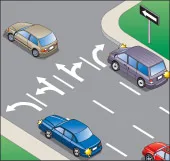
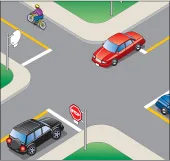
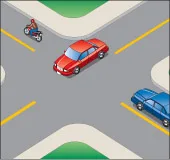
Left and right turns
Diagram 6-1-1
The approach
This driving task begins when the examiner tells you to make a left or right
turn, and ends at the point just before you enter the intersection. Make
sure you take the following actions:
Traffic check
Before slowing down, look all around you. Use your rearview and side
mirrors to check tra"c behind you. If you change lanes, remember to
/ 29
End of Document
224

FAQs

what is the Level Two Road Test about

The Level Two Road Test is a crucial step in Ontario's graduated licensing system, designed to assess advanced driving skills and knowledge.

  • It includes expressway driving, traffic checks, and safe merging.
  • The test evaluates your ability to handle various driving situations, including turns and lane changes.
  • Successful completion grants full Class G driving privileges.

what are the requirements for the Level Two Road Test

To take the Level Two Road Test, you must meet specific requirements set by the Ontario Ministry of Transportation.

  • You need to complete a "Declaration of Highway Driving Experience" form.
  • This form verifies your experience driving on highways with a speed limit of at least 80 km/h.
  • It's essential to have sufficient expressway driving experience, or the test may be declared "out-of-order."

how to prepare for the Level Two Road Test

Preparing for the Level Two Road Test involves several key steps to ensure you meet the test criteria.

  • Review the driving tasks outlined in the official guide.
  • Practice expressway driving, including merging and maintaining speed.
  • Focus on traffic checks, signaling, and safe lane changes.
  • Consider taking a mock test with a qualified instructor.

what skills are tested in the Level Two Road Test

The Level Two Road Test assesses a variety of essential driving skills.

  • These include safe merging onto expressways and maintaining appropriate speed.
  • Turning techniques, including left and right turns, are also evaluated.
  • Intersections, driving in business areas, and lane changes are critical components of the test.

what happens if you fail the Level Two Road Test

If you fail the Level Two Road Test, you will need to reschedule for a retest.

  • You will lose 50% of your prepaid road-test fee.
  • It's advisable to review the areas where you struggled and practice those skills before retaking the test.
  • Ensure you meet all requirements, including expressway driving experience, before rescheduling.

how long does the Level Two Road Test take

The Level Two Road Test typically lasts about 30 to 40 minutes.

  • During this time, the examiner will evaluate your driving skills in various scenarios.
  • Be prepared for both city and expressway driving components.
  • Make sure to arrive early to complete any necessary paperwork before the test begins.

what to expect on the Level Two Road Test

On the Level Two Road Test, you can expect a comprehensive evaluation of your driving abilities.

  • The examiner will provide directions and observe your execution of various driving tasks.
  • Key tasks include expressway merging, lane changes, and handling intersections.
  • Pay attention to traffic signs and signals throughout the test.

what are the common mistakes in the Level Two Road Test

Common mistakes during the Level Two Road Test can lead to failing the test.

  • Failing to check mirrors and blind spots before lane changes.
  • Improper signaling or forgetting to signal altogether.
  • Inadequate speed control, either too fast or too slow.
  • Not maintaining a safe following distance behind other vehicles.

how to pass the Level Two Road Test

Passing the Level Two Road Test requires preparation and practice.

  • Focus on mastering the key driving tasks outlined in the official guide.
  • Practice driving in various conditions, including highways and busy intersections.
  • Stay calm during the test and follow the examiner's instructions carefully.