Lord of the Flies, a novel by William Golding, explores the descent into savagery of a group of boys stranded on an uninhabited island. As they attempt to govern themselves, their initial camaraderie devolves into chaos and violence, highlighting themes of civilization versus barbarism. Key characters include Ralph, who represents order and leadership, and Jack, who embodies primal instincts and aggression. This classic work delves into the darkness of human nature and the loss of innocence, making it essential reading for literature students and fans of psychological fiction. The novel is often studied in high school and college literature courses, providing rich material for analysis and discussion.

Key Points

  • Explores themes of civilization versus savagery through the boys' descent into chaos
  • Features key characters Ralph and Jack, representing order and primal instincts
  • Examines the loss of innocence and the darkness of human nature
  • Often included in high school and college literature curricula for analysis
newtopiccyclegrowin
Author:William Golding
251 pages
Language:English
Type:Novel
newtopiccyclegrowin
Author:William Golding
251 pages
Language:English
Type:Novel
68
/ 251
LORD OF THE FLIES
a novel
by WILLIAM GOLDING
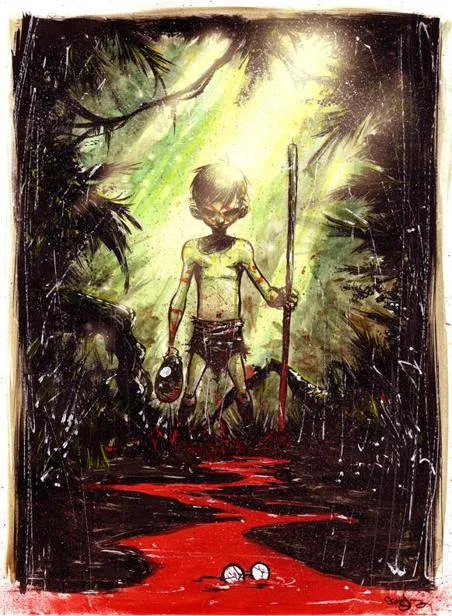
Illustration by Skottie Young http://skottieyoung.deviantart.com/
/ 251
End of Document
68

FAQs

What happens to the boys after they are stranded on the island?
After the boys are stranded on the island, they initially attempt to establish order and create a signal fire for rescue. Ralph is elected as chief, and he emphasizes the importance of maintaining the fire to signal passing ships. However, as time progresses, the boys' civilized behavior begins to deteriorate, leading to chaos and violence. The struggle for power between Ralph and Jack escalates, resulting in a division among the boys and a descent into savagery.
Who are the main characters in 'Lord of the Flies'?
The main characters in 'Lord of the Flies' include Ralph, who is elected as the leader; Jack, who becomes the antagonist and leads the hunters; Piggy, who represents intellect and reason; and Simon, who embodies natural human goodness. The dynamics between these characters highlight themes of civilization versus savagery, loss of innocence, and the inherent darkness within humanity. Each character's development reflects the broader societal breakdown on the island.
What is the significance of the conch shell in the novel?
The conch shell in 'Lord of the Flies' symbolizes order, authority, and civilization. It is used to call assemblies and grants the right to speak during meetings. As the boys' society begins to collapse, the conch's power diminishes, reflecting the decline of structured governance and the rise of chaos. Ultimately, the destruction of the conch signifies the complete breakdown of civilization among the boys and their descent into savagery.
How does the novel explore the theme of civilization versus savagery?
'Lord of the Flies' explores the theme of civilization versus savagery through the boys' gradual descent into barbarism after being isolated from society. Initially, they attempt to maintain order with rules and the conch shell, but as fear and primal instincts take over, the group fractures. Jack's tribe embraces savagery, prioritizing hunting and power over the rules established by Ralph. This conflict illustrates the fragile nature of civilization and the ease with which it can collapse under pressure.
What role does fear play in 'Lord of the Flies'?
Fear plays a crucial role in 'Lord of the Flies', driving the boys' actions and decisions throughout the novel. The fear of the unknown, particularly the imagined 'beast', leads to paranoia and irrational behavior among the boys. This fear is exploited by Jack to gain power and control, further dividing the group. As fear escalates, it transforms the boys from civilized children into savage hunters, highlighting the destructive power of fear in human nature.
What events lead to Simon's death in the novel?
Simon’s death in 'Lord of the Flies' occurs during a frenzied ritual dance led by Jack and his hunters. Mistaken for the beast, Simon is brutally killed by the boys in a moment of collective hysteria. This tragic event underscores the theme of loss of innocence and the inherent violence within humanity. Simon, who represents innate goodness and truth, is unable to communicate the real nature of the beast, leading to his demise and symbolizing the triumph of savagery over civilization.
What does the beast symbolize in the novel?
In 'Lord of the Flies', the beast symbolizes the primal instincts and inherent evil within humanity. Initially, the boys perceive it as a physical entity, but as the story progresses, it becomes clear that the beast is not an external force but rather a manifestation of their own fears and savagery. The fear of the beast drives the boys to violence and chaos, illustrating Golding's assertion that the true beast lies within each individual.