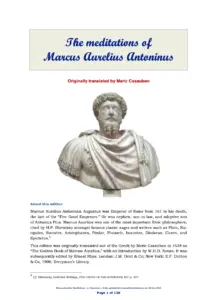
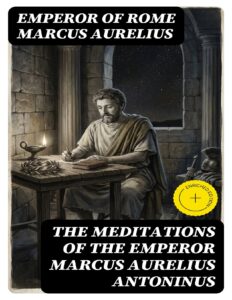
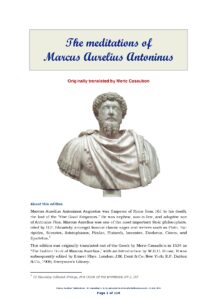
Meditations by Marcus Aurelius explores the philosophy of Stoicism and the pursuit of inner peace through self-reflection and virtue. This work is divided into twelve books, each containing personal writings and insights that encourage readers to cultivate resilience, mindfulness, and moral integrity. Aurelius emphasizes the importance of rational thought and the mastery of one's emotions as pathways to tranquility. Ideal for those interested in philosophy, self-improvement, and historical perspectives on mental well-being, this text serves as a timeless guide for navigating life's challenges.

Key Points

  • Explores Stoic philosophy and its application to daily life
  • Divided into twelve books with personal reflections and insights
  • Encourages the cultivation of virtues such as resilience and mindfulness
  • Emphasizes rational thought and emotional mastery for inner peace
farzy
Author: Marcus Aurelius More by Marcus Aurelius Meditations by Marcus Aurelius: Reflections on Stoicism Meditations by Marcus Aurelius: Reflections on Stoicism
228 pages
Language:English
Type:Book
farzy
Author: Marcus Aurelius More by Marcus Aurelius Meditations by Marcus Aurelius: Reflections on Stoicism Meditations by Marcus Aurelius: Reflections on Stoicism
228 pages
Language:English
Type:Book
153
/ 228
MARCUS AURELIUS
Meditations
Table of contents
MEDITATIONS
THE FIRST BOOK
THE SECOND BOOK
THE THIRD BOOK
THE FOURTH BOOK
THE FIFTH BOOK
THE SIXTH BOOK
THE SEVENTH BOOK
THE EIGHTH BOOK
THE NINTH BOOK
THE TENTH BOOK
THE ELEVENTH BOOK
THE TWELFTH BOOK
NOTES
GLOSSARY
/ 228
End of Document
153

FAQs

What are the main themes in Marcus Aurelius' Meditations?
The main themes in *Meditations* include the importance of virtue, the nature of the universe, and the practice of Stoicism. Aurelius emphasizes living according to nature and reason, advocating for self-discipline and moral integrity. He reflects on the transient nature of life and encourages acceptance of fate, suggesting that one should focus on what is within their control and maintain equanimity in the face of adversity.
How does Marcus Aurelius suggest one should respond to adversity?
Marcus Aurelius advises that in response to adversity, one should maintain a calm and rational mindset. He emphasizes the importance of accepting what happens as part of the natural order and encourages individuals to focus on their own actions and attitudes rather than external circumstances. By doing so, one can cultivate resilience and remain steadfast in their virtues, regardless of the challenges they face.
What lessons does Marcus Aurelius learn from his mentors?
In *Meditations*, Marcus Aurelius reflects on the lessons he learned from various mentors, including his grandfather, mother, and teachers. From his grandfather, he learned gentleness and restraint from anger. His mother taught him piety and generosity, while his teachers instilled in him the value of seeking knowledge and understanding. These reflections highlight the significance of role models in shaping one's character and ethical framework.
Which philosophical school does Marcus Aurelius align with in Meditations?
Marcus Aurelius aligns with Stoicism in *Meditations*. Stoicism emphasizes rationality, self-control, and the importance of virtue as the highest good. Aurelius discusses the Stoic belief in accepting fate and the idea that external events are indifferent to one's moral character. His writings reflect the core Stoic principles of focusing on inner virtue and maintaining tranquility amidst life's challenges.
What is the significance of self-reflection in Meditations?
Self-reflection is a central practice in *Meditations*, as Marcus Aurelius frequently examines his thoughts, actions, and motivations. He encourages readers to introspect and assess their alignment with virtue and reason. This practice of self-examination fosters personal growth and helps individuals remain true to their principles, promoting a life of integrity and purpose.
How does Marcus Aurelius view death in Meditations?
In *Meditations*, Marcus Aurelius views death as a natural part of life that should not be feared. He emphasizes that death is inevitable and that one should accept it as a return to the universe. Aurelius encourages a perspective that sees death not as an end but as a transformation, urging individuals to focus on living virtuously while they can.
What advice does Marcus Aurelius give about dealing with others?
Marcus Aurelius advises treating others with kindness and understanding, recognizing that everyone is part of a shared human experience. He emphasizes the importance of compassion, especially towards those who may act unjustly, suggesting that their actions stem from ignorance. By fostering a spirit of goodwill and patience, one can maintain inner peace and contribute positively to the community.