It is about entrepreneurship

4 | GUIDE TO GREEN ENTREPRENEURSHIP IN KIRIBATI
What is Green
Entrepreneurship?
GUIDE TO GREEN ENTREPRENEURSHIP IN KIRIBATI | 5
2: What is Green Entrepreneurship?
A business is the activity of buying and selling goods and services to make a profit (i.e., having an income or
revenue that is greater than costs). All businesses must be financially viable. Without this basic pre-condition
they cannot sustain themselves, pay their staff, and continue to produce products or offer services to the
market.
Some businesses ONLY care about this. Or they may only care about their staff’s well-being or their
environmental impact where it affects their production, reputation, and sales, and therefore, their profits.
So where does sustainability fit in?
Sustainable development (and sustainable business development) has been defined in many ways. A frequently
quoted definition is: “development that meets the needs of the present without compromising the ability of
future generations to meet their own needs.”
6
In the past, development of businesses, and the economic growth
they drive, have generally been unsustainable from an environmental perspective.
Fossil fuels, including oil, diesel, kerosene, and natural gas, which the current economic system depends on,
are finite. Burning them for energy damages the environment and contributes to climate change. Extractive
industries, such as logging and mining, remove resources
in minutes that took hundreds of millions of years to
form. Almost everything we buy is packaged in plastics
that do not decompose, but will stay in landfills, or worse,
in oceans, long after the person who used them is gone.
Businesses must be part of the solution to these
problems.
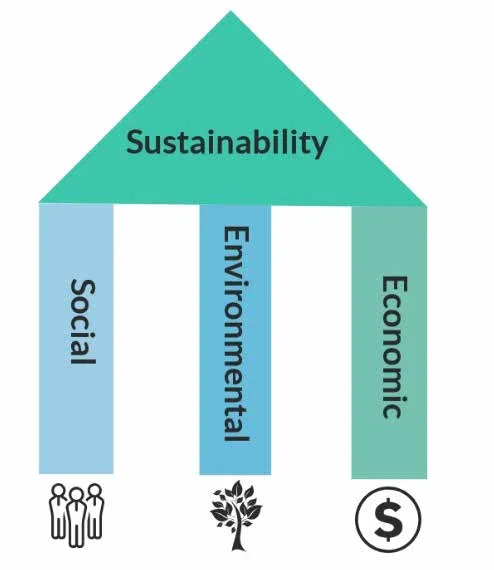
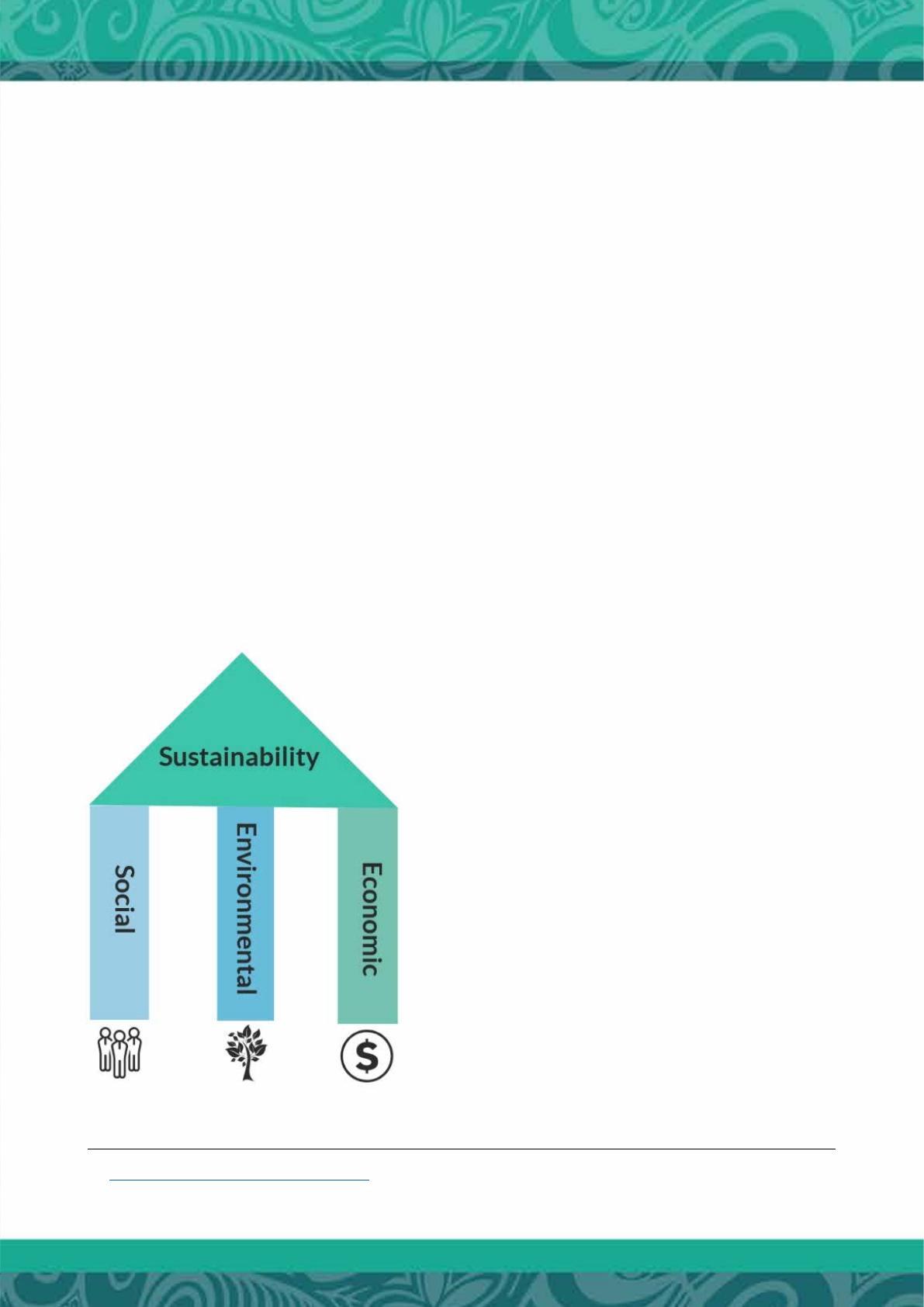
A sustainable business strives to balance the economic
(financial), social (people), and environmental
(biodiversity, ecosystems) benefits of the business as
part of its core business objective. For a business to be
sustainable, it must not exploit resources or people to
improve profit margins.
A sustainable business knows that if it depletes the
resources that it is using faster than they can be
generated, it cannot go on indefinitely. Similarly, viewing
itself as part of the broader community, it ensures that its
staff are paid fairly and have a good quality of life.
The three pillars of sustainability
7
6 Gro Harlem Brundtland, Our Common Future: Report of the World Commission on Environment and Development (Oxford University, 1987),
http://www.un-documents.net/our-common-future.pdf.
7 Graphics by Margaret Seruvatu, GGGI.

6 | GUIDE TO GREEN ENTREPRENEURSHIP IN KIRIBATI
What is a green business?
There is no single definition of a green business, but generally, it’s a business whose core business model
addresses an environmental or social issue – this is, it improves energy or resource efficiency, reduces
greenhouse gas emissions, decreases waste or pollution, protects or restores ecosystems, promotes local
culture, or supports communities.
A green business will typically do any or all of the following:
• Incorporate principles of sustainability into its businessdecisions and actively monitor them.
• Pay staff a fair wage for the work they do and ensure that they are able to maintain a good work-life
balance.
• Distribute benefits equitably across the value chain.
• Maximise the social benefits of the business (e.g., by employing marginalised groups). Some businesses
set up foundations to assist with this – but a sustainable business doesn’t confine its social activities
just to charitable donations – it looks for every opportunity to increase the social benefits of the
business in its day-to-day operations.
• Supplyenvironmentally-friendly and/or localproducts and services that replace demand for non-green
or imported products and services.
• Help its community become more sustainable (e.g., by reducing energy use or water use, or reducing
waste or pollution).
• Make efforts to reduce resource use (energy, water, materials), and replenish, enhance, or substitute an
environmental resource that is used by the business (e.g., replanting trees, enhancing soil fertility, using
renewable energy).
• Make an enduring commitment to environmental principles in its business operations. These will often
be detailed in a publicly available and regularly updated Sustainability or Environmental Policy.
Figures