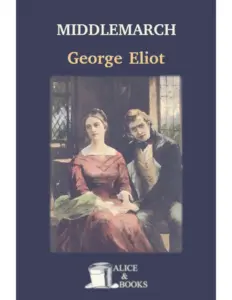
Middlemarch, a novel by George Eliot, explores the lives of the residents in a fictional English town during the early 19th century. The story centers on Dorothea Brooke, a young woman with aspirations for social reform, and her tumultuous relationships with various characters, including the ambitious Will Ladislaw and the pragmatic Casaubon. Themes of marriage, idealism, and societal constraints are intricately woven throughout the narrative. This classic work delves into the complexities of human motivations and the impact of personal choices on the community. Middlemarch remains a significant text for readers interested in Victorian literature and social commentary.

Key Points

  • Explores the life and aspirations of Dorothea Brooke in a 19th-century English town
  • Examines themes of marriage, idealism, and societal constraints
  • Features a rich cast of characters, including Will Ladislaw and Casaubon
  • Highlights the impact of personal choices on community dynamics
newtopiccyclegrowin
Author: George Eliot More by George Eliot Middlemarch by George Eliot Middlemarch by George Eliot
821 pages
Language:English
Type:Book
newtopiccyclegrowin
Author: George Eliot More by George Eliot Middlemarch by George Eliot Middlemarch by George Eliot
821 pages
Language:English
Type:Book
275
/ 821
M i d d l e m a r c h
George Eliot
New York and Boston
H. M. Caldwell Company Publishers
To my dear Husband, George Henry Lewes,
in this nineteenth year of our blessed union.
Contents
PRELUDE.
BOOK I. MISS BROOKE.
CHAPTER I.
CHAPTER II.
CHAPTER III.
CHAPTER IV.
CHAPTER V.
CHAPTER VI.
CHAPTER VII.
CHAPTER VIII.
CHAPTER IX.
CHAPTER X.
CHAPTER XI.
CHAPTER XII.
BOOK II. OLD AND YOUNG.
CHAPTER XIII.
CHAPTER XIV.
CHAPTER XV.
CHAPTER XVI.
CHAPTER XVII.
/ 821
End of Document
275

FAQs

What is the significance of Dorothea Brooke's character in Middlemarch?
Dorothea Brooke is depicted as a young woman of beauty and intellect, whose aspirations extend beyond the conventional expectations of her society. She is characterized by her idealism and desire for a meaningful life, which leads her to seek a marriage that aligns with her lofty ideals. However, her intense nature and unconventional views on life create challenges in her romantic prospects, as potential suitors may hesitate due to her strong opinions and fervent beliefs. This complexity makes Dorothea a central figure in exploring themes of ambition, societal expectations, and the role of women in 19th-century England.
How does the character of Mr. Brooke influence the lives of Dorothea and Celia?
Mr. Brooke, their uncle and guardian, plays a significant role in shaping the lives of Dorothea and Celia. He is described as having a benevolent but indecisive nature, which leads to a lack of direction in their upbringing. His rambling habits and uncertain opinions create an environment where the sisters experience both privilege and instability. While Dorothea is portrayed as ambitious and eager for a purposeful life, Mr. Brooke's lax attitude towards his estate and finances contrasts sharply with her aspirations, highlighting the tension between familial duty and personal ambition.
What are the main themes presented in the prelude of Middlemarch?
The prelude of Middlemarch introduces themes of idealism versus reality, particularly through the lens of female ambition and societal constraints. It reflects on the lives of women like Saint Teresa, who sought epic lives but often faced limitations due to their circumstances. The text suggests that many women experience a struggle between their aspirations and the societal expectations that confine them, leading to a sense of inconsistency and unfulfilled potential. This theme sets the stage for the exploration of women's roles and the quest for meaning throughout the novel.
How does the relationship between Dorothea and Celia differ in terms of their personalities?
Dorothea and Celia Brooke exhibit contrasting personalities that shape their relationship. Dorothea is characterized by her intense idealism and a yearning for greatness, often leading her to pursue lofty goals and spiritual depth. In contrast, Celia is portrayed as more practical and grounded, possessing common sense that allows her to navigate societal expectations with ease. This difference creates a dynamic where Dorothea's fervor is both admired and viewed with skepticism by those around her, while Celia's amiability and innocence make her more relatable to their rural community.
What role does religion play in Dorothea Brooke's character development?
Religion significantly influences Dorothea Brooke's character development, as it shapes her worldview and moral compass. Her deep engagement with Christian ideals leads her to prioritize spiritual concerns over materialistic pursuits, making her dismissive of societal norms related to fashion and social status. This spiritual intensity contributes to her desire for a meaningful existence, but it also complicates her relationships, as her fervent beliefs may alienate potential suitors who are not aligned with her ideals. Dorothea's struggle to reconcile her spiritual aspirations with the realities of her social environment is a key aspect of her character arc.
What is the significance of the title 'Middlemarch' in relation to the story?
The title 'Middlemarch' signifies both a geographical location and a metaphorical representation of the middle ground in life and society. It reflects the provincial setting where the story unfolds, emphasizing the ordinary lives of its characters and the complexities of their interactions. The term 'Middlemarch' also suggests a transitional space, where characters navigate the challenges of personal ambition, societal expectations, and moral dilemmas. This duality encapsulates the themes of the novel, exploring the intersection of individual desires with the broader social fabric.